This article is published in Aerospace Daily & Defense Report part of Aviation Week Intelligence Network (AWIN), and is complimentary through Oct 16, 2026. For information on becoming an AWIN Member to access more content like this, click here.
USSF Preps First Space Surveillance Squadron Before New MTI Launches
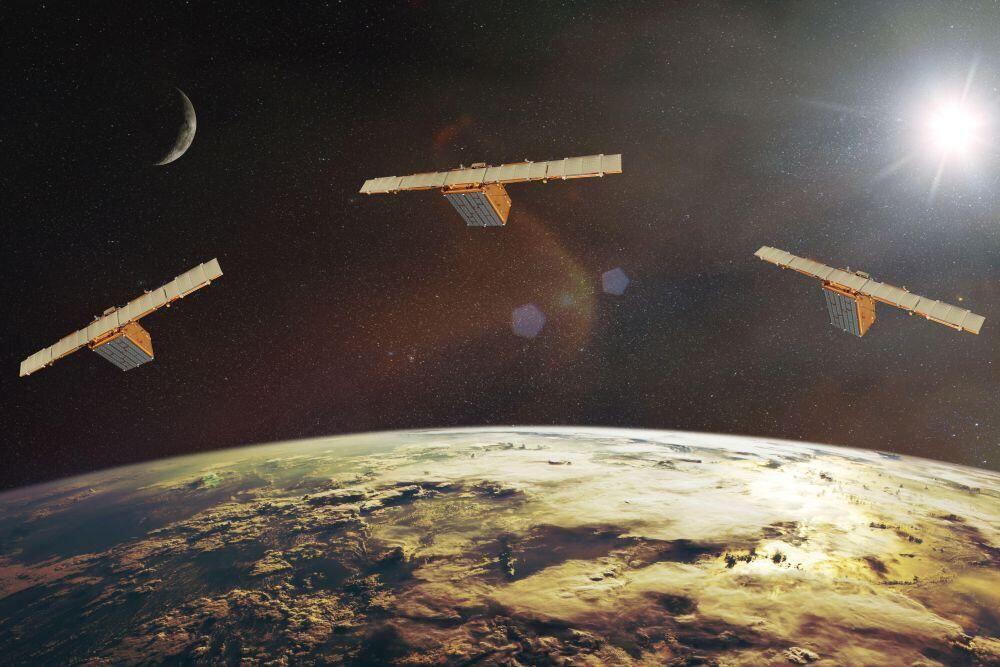
NATIONAL HARBOR, Maryland—The U.S. Space Force has established its first operational unit dedicated to space-based moving target indication as the service prepares to launch the first air moving target indication (AMTI) satellites within the next month and the first ground moving target indication (GMTI) satellites within two years.
The service’s Combat Forces Command stood up the 77th Space Surveillance Squadron last month in anticipation of these new capabilities, Commander Lt. Gen. Gregory Gagnon said Sept. 16 in a media roundtable at the Air & Space Forces Association’s Air, Space and Cyber Conference here.
The new unit would support a forthcoming GMTI constellation called Resilient Radar System/Ground (RRS/G), in development by Northrop Grumman and due to launch in less than two years, he said.
The service will likely consolidate surveillance operations for moving target indication initially, “since it’s a similar mission area,” he said. “It’s all sensing from space, but it’s sensing targets on different layers, whether they’re maritime, on the ground, or in the air.”
The Space Force is co-developing GMTI satellites with the National Reconnaissance Office (NRO), service officials previously said. The NRO is already supporting the GMTI mission to an undetermined degree with its proliferated network in low Earth orbit, which counts more than 200 satellites.
An NRO spokesperson declined to discuss specifics on systems development or contractor relationships in an emailed response to Aviation Week on Sept. 16. But the spokesperson said the office is “developing, acquiring, and operating space and ground systems that support the moving target indicator mission” and is also integrating those systems into its broader intelligence, surveillance and reconnaissance architecture in support of the intelligence community and the Pentagon’s space-based sensing and targeting mission.
Northrop Grumman referred a request for comment regarding RRS/G to the Space Force in a Sept. 16 email. “We have a deep, operational understanding of the threats our warfighters face and are focused on delivering capability at the speed and scale required to stay ahead of them,” the company said.
The Space Force is separately developing AMTI satellites under the recently established portfolio acquisition executive for space-based sensing and targeting, with at least 13 companies added to a new vendor pool established this spring. Federal contracting notices posted as of Sept. 16 show that the pool includes the following companies: Anduril; Boeing; Blue Origin; L3Harris Technologies; Lockheed Martin; Northrop Grumman; Rocket Lab; SpaceX; Systems and Technology Research (STR); Visto 360 AI; Wildstar; Umbra; and York Space Systems.
The first launch of AMTI satellites is expected later this month, Air Force Secretary Troy Meink said Sept. 14 here.
Adversaries have built anti-access, area-denial weapon systems that push military aircraft—including those that have traditionally provided MTI for the Joint Force—farther out of reach, Gagnon said. “With their air defense systems, our aircraft can’t get close enough to develop those tracks with enough custody on the track to be able to engage it,” he said. Putting those capabilities in space will help operators track adversary air forces, he added.
The mission area is one of several new responsibilities for the maturing Space Force, which wants to scale its force to 25,000 guardians in the next five years. About two-thirds of that expected growth would join Combat Forces Command, Gagnon said.
U.S. Space Command is also preparing for operational MTI satellites.
Space-based targeting is maturing, “but it still has a long way to go,” Commander Gen. Stephen Whiting said in a Sept. 16 keynote speech at the annual Advanced Maui Optical and Space Surveillance Technologies (AMOS) conference in Maui.
“We don’t have robust target folders like the Joint Force does in other domains,” he said, according to prepared remarks.
Whiting told reporters in a virtual roundtable that he recently met with the NRO to discuss the MTI mission area, and that the command is developing the concepts of operations for how those systems would be used in partnership with other combatant commands and the intelligence community.
“This will be new and different as we elevate AMTI [and] GMTI to space, but we do have decades of lessons learned from AMTI and GMTI in other domains,” he said.