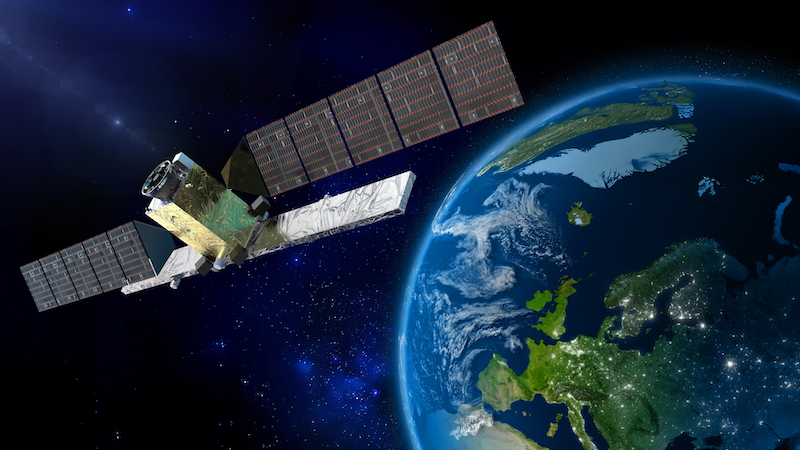
Credit: Thales Alenia Space/Briot
BERLIN—The European Space Agency (ESA) has awarded Thales Alenia Space a contract to develop and build the Copernicus Sentinel-1 Next Generation Earth-observation satellite. The signature at the ILA Berlin air show unlocks the first elements of a €700 million ($810 million) contract to build two...

Subscription Required
Thales Alenia Space To Build Next Copernicus Sentinel-1 Satellite is published in Aerospace Daily & Defense Report, an Aviation Week Intelligence Network (AWIN) Market Briefing and is included with your AWIN membership.
Already a member of AWIN or subscribe to Aerospace Daily & Defense Report through your company? Login with your existing email and password.
Not a member? Learn how you can access the market intelligence and data you need to stay abreast of what's happening in the aerospace and defense community.
Related Content