This article is published in Aerospace Daily & Defense Report part of Aviation Week Intelligence Network (AWIN), and is complimentary through Feb 12, 2026. For information on becoming an AWIN Member to access more content like this, click here.
SpaceX has acquired artificial intelligence (AI) company xAI, SpaceX and xAI founder Elon Musk said, days after the space company disclosed plans for a vast constellation of data center satellites.
Musk, in a Feb. 2 blog post, did not disclose the price that SpaceX paid for the company, but the billionaire has long had a focus on AI. He backed OpenAI a decade ago before leaving the company amid a rift with its management. He founded xAI in 2023 in part to take on OpenAI and others, such as Microsoft.
Musk said the deal is intended to create “the most ambitious, vertically integrated innovation engine on (and off) Earth, with AI, rockets, space-based internet, direct-to-mobile device communications,” among other factors.
SpaceX, in a Jan. 30 regulatory filing, said it would deploy as many as 1 million satellites into low Earth orbit as part of the project. The actual constellation would likely be much smaller. The satellites would operate at altitudes of 500 km (300 mi.) and 2,000 km, the company said. The spacecraft would come in different versions for best performance, depending on the orbital shells.
“The basic math is that launching a million tons per year of satellites generating 100 kW of compute power per ton would add 100 gigawatts of AI compute capacity annually, with no ongoing operational or maintenance needs. Ultimately, there is a path to launching 1 TW/year from Earth,” Musk said in the blog post.
“My estimate is that within 2 to 3 years, the lowest-cost way to generate AI compute will be in space,” he said.
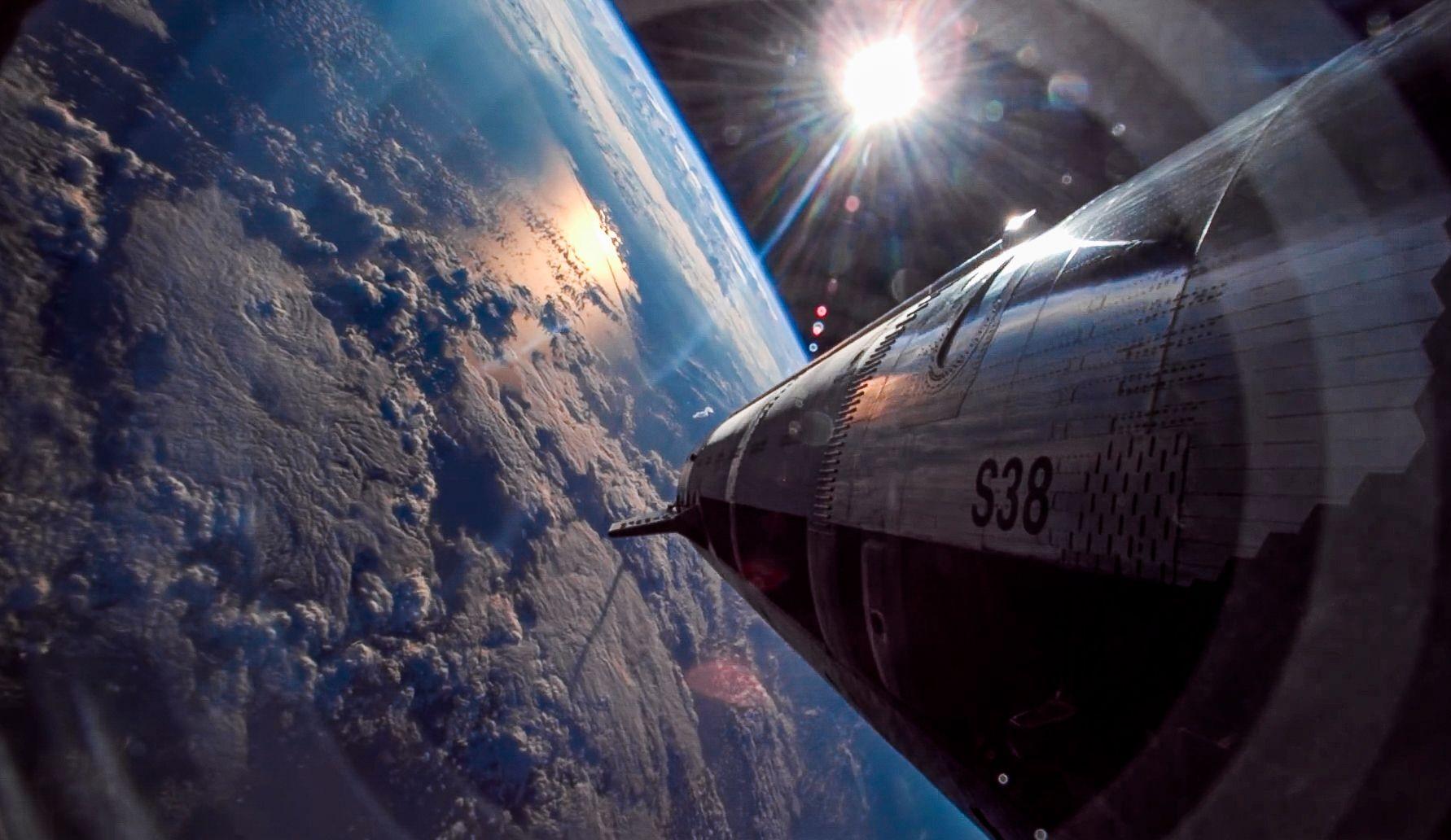
SpaceX will be able to use its Starship rocket also to take the space-based data center technology elsewhere, Musk said.
Musk, who has long articulated a vision for human settlements beyond Earth, said in the blog post that “the capabilities we unlock by making space-based data centers a reality will fund and enable self-growing bases on the Moon, an entire civilization on Mars and ultimately expansion to the universe.”