This article is published in Aerospace Daily & Defense Report part of Aviation Week Intelligence Network (AWIN), and is complimentary through Apr 03, 2026. For information on becoming an AWIN Member to access more content like this, click here.
WASHINGTON—Space42's boss is looking to get the go-ahead for a new generation of Earth-observation systems, while also finalizing with Viasat an expansion of their Equatys direct-to-device satellite communications effort by adding another industrial partner.
The two parallel efforts are part of Space42 Managing Director Karim Sabbagh’s push to gain traction on the company’s four growth pillars. Some of those, including Earth observation, have only gotten more relevant for the United Arab Emirates-based company due to the fighting in the region, he said in an interview on the sidelines of SATShow 2026 here in Washington.
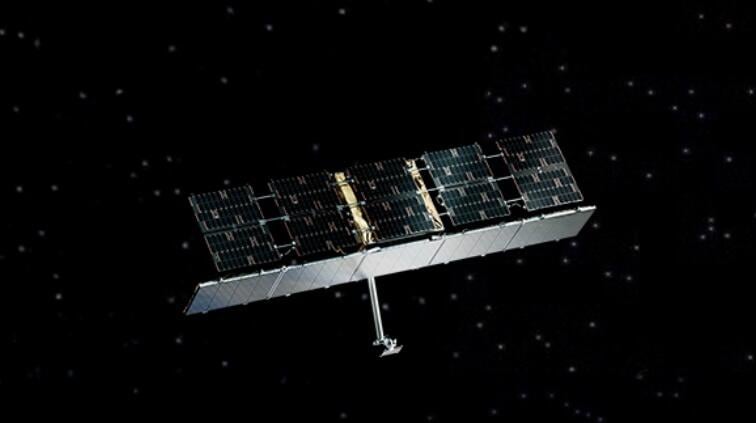
Space42 has been in the Earth-observation business through its partnership with Finnish synthetic aperture radar (SAR) satellite provider Iceye building the Foresight constellation. But the Middle East company is now looking to go further.
“The next step is to think about a multi-sensor system,” Sabbagh said. The new constellation would add electro-optical imaging capability, while retaining SAR. Other payloads may also be part of the system, he noted.
“Recent events have put more emphasis on the relevance of what we're doing,” he added. The company still needs to secure buy-in from the local government for what would be a “meaningful” financial commitment but could start deploying what Sabbagh referred to as Foresight 2.0 in roughly two years from approval.
The constellation would build on the baseline SAR satellites already deployed. The Foresight 3/4/5 spacecraft launched last year are due for commissioning around May, with two more to be launched in 2027. The company will then also look to replace Foresight 1 and 2, which were earlier-generation designs.
Possibly more near term, though, could be a significant shift in the Equatys program that Space42 and Viasat formally launched in September to deliver connectivity from low Earth orbit. From the outset, the two companies said they were open to bringing others onboard.
Sabbagh said that expansion is now about to happen. The agreement to bring on a third strategic partner is in the final stages of contract finalization, he said. The grouping may also bring in two to three financial investors.
Space42 alone plans to put about $600 million into Equatys, with the goal of starting to launch satellites in 2028 and being operational either late that year or early 2029. The team is looking to secure launch capacity for what could evolve into a 2,800-satellite constellation.
One of the key issues for Equatys will be the cost of service delivery to customers. To maximize customer uptake, Sabbagh wants to keep the incremental cash outlay to customers at 4% to 5% beyond what they already pay for their service. That could unlock a market larger than the combined top line of satellite operators today, he said.
“We have a fantastic opportunity before us,” he added.