This article is published in Aerospace Daily & Defense Report part of Aviation Week Intelligence Network (AWIN), and is complimentary through Feb 09, 2026. For information on becoming an AWIN Member to access more content like this, click here.
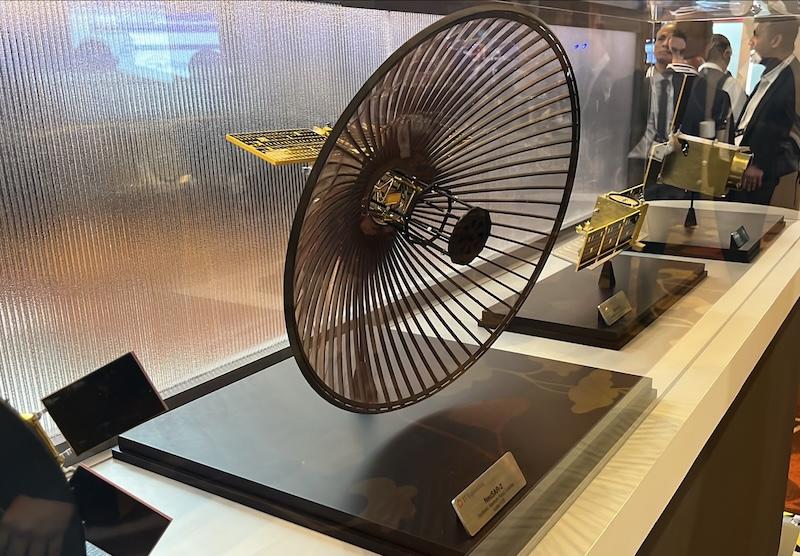
A NeuSAR-2 satellite model on display at the Singapore Airshow.
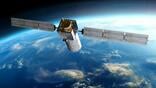
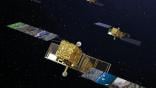
SINGAPORE—Singapore is set to deploy a new constellation of synthetic aperture radar (SAR) satellites as it builds out its Earth-observation portfolio, including through a partnership with Airbus.
The first NeuSAR-2 satellite is due for deployment next year, Low Jin Phang, COO for defense at ST Engineering, says here at the Space Summit 2026. The entire constellation is due to be deployed in 2030.
The constellation is supposed to allow for 16 daily revisits along the equatorial region, he says. The satellites will be used for environmental monitoring, supporting maritime security efforts and disaster response, Low said on the eve of the Singapore Airshow.
The spacecraft will weigh less than 280 kg (617 lb.).
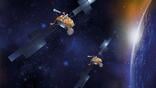
Airbus signed a memorandum of understanding with the Singapore-based company for a next-generation SAR system to deliver 3D data, says Airbus Defense and Space boss, Michael Schoellhorn. The “3D SAR” multi-static setup has one satellite transmit radar signals and three others receiving from multiple angles. “By combining these perspectives, the system can generate richer, more detailed and more reliable 3D models of the Earth’s surface,” Airbus says in a statement.
ST Engineering also is developing a new electro-optical satellite called Polaris. The company has not yet set a launch date for the design. It will feature onboard artificial intelligence processing.
Low says the company this year also plans to deploy the Nebula satellite, a pathfinder spacecraft for Singapore to validate intra-satellite laser links. The goal is to test gigabit-per-second data transfer.
Airbus and ST Engineering also agreed to cooperate on development of generative artificial intelligence for imagery analysis.