This article is published in Aerospace Daily & Defense Report part of Aviation Week Intelligence Network (AWIN), and is complimentary through Jul 16, 2026. For information on becoming an AWIN Member to access more content like this, click here.

City Labs Launches Small Sat Demonstrator With Nuclear Battery

Credit: City Labs

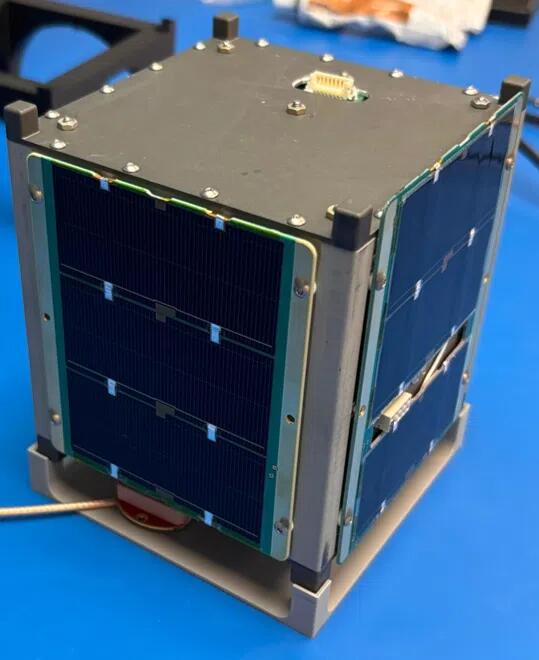
City Labs' nuclear battery pathfinder, the BOHR, appears to be a 1U cubesat.


Credit: City Labs

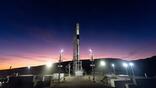
City Labs has launched a nuclear-battery powered cubesat into orbit from the SpaceX Transporter-17 rideshare mission.

The Betavoltaic Orbital High-Reliability (BOHR) satellite was deployed successfully from the SpaceX Falcon 9 and is intended to serve as a pathfinder for future nuclear-battery powered spacecraft for civil and national security missions, City Labs said on July 7. The cubesat appears to be 1U in size: 10 cm. x 10 cm x 10 cm.

The BOHR satellite uses City Lab’s NanoTritium betavoltaic technology as a dedicated payload power source, independent of electricity generated from solar panels.

“The mission proves nuclear micropower can operate where solar can't, from lunar-night survival to persistent autonomous sensors, and sets a regulatory precedent that could open the door for [NASA Commercial Lunar Payload Services] companies and primes to specify nuclear micropower in future programs,” City Labs says.

Tritium is a radioactive isotope of hydrogen that emits beta particles as it decays; energy that the City Labs’ NanoTritium betavoltaic converts to electricity. The tritium has a 12.3-year half-life, allowing for more than 20 years of “predictable power,” the company says.

City Labs says the key advantage of its NanoTritium betavoltaic technology is that it stores tritium in a solid form within metal hydrides, allowing it to be integrated into solid-state materials.

The demonstrator satellite used the FAA pathway for nuclear launch approval as outlined in National Security Presidential Memorandum-20 issued in 2019, City Labs adds.

Garrett Reim

Based in the Seattle area, Garrett covers the space sector and advanced technologies that are shaping the future of aerospace and defense, including space startups, advanced air mobility and artificial intelligence.