This article is published in Aerospace Daily & Defense Report part of Aviation Week Intelligence Network (AWIN), and is complimentary through Jul 09, 2026. For information on becoming an AWIN Member to access more content like this, click here.
Amazon says it is ready to commence initial service with its low-Earth-orbit broadband offering following the deployment of 29 satellites on an Atlas V rocket.
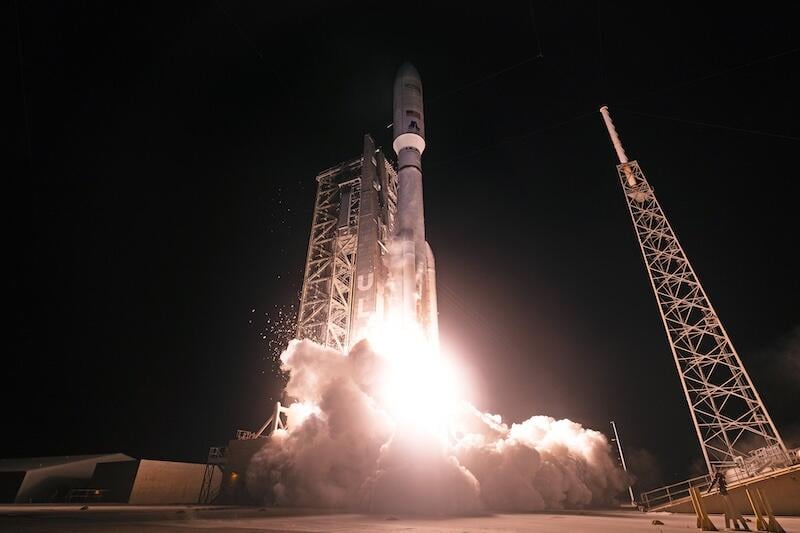
The Atlas V lifted off at 12:30 a.m. ET from Space Launch Complex-41 at Cape Canaveral SFS in what was the rocket's final mission for Amazon, launch services provider United Launch Alliance says. It deployed 29 satellites, growing the Amazon Leo constellation to more than 390 satellites.
“We’ve completed enough launches for initial service this [year], and future missions just add coverage and capacity,” Chris Weber, Amazon's vice president leading the program, says on social media. The satellites now in orbit would allow continuous service across initial latitudes, he notes.
Amazon has been using a variety of launchers to deploy the constellation in its race to take on SpaceX’s Starlink. Most of the launches are with United Launch Alliance, with 38 Vulcan rocket missions planned, each carrying more than 40 satellites.
Launcher bottlenecks have also held back deployment of the network, however, forcing the company to seek a waiver for its Federal Communications Commission license tied to satellite deployments. The FCC granted the waiver last month.
The launcher problems were compounded by the May explosion of a Blue Origin New Glenn rocket on its launchpad during static fire testing. The rocket was being prepared to fly 48 Amazon Leo satellites, which were not on the rocket at the time of the accident. ULA has also had problems with the Vulcan rocket, pausing its launches. Amazon has continued to deploy its satellites using the Arianespace Ariane 6 rocket and also has flown on SpaceX’s Falcon 9.