2026 Aviation Week Photo Contest Editors’ Picks: Space
Aviation Week StaffNovember 23, 2026
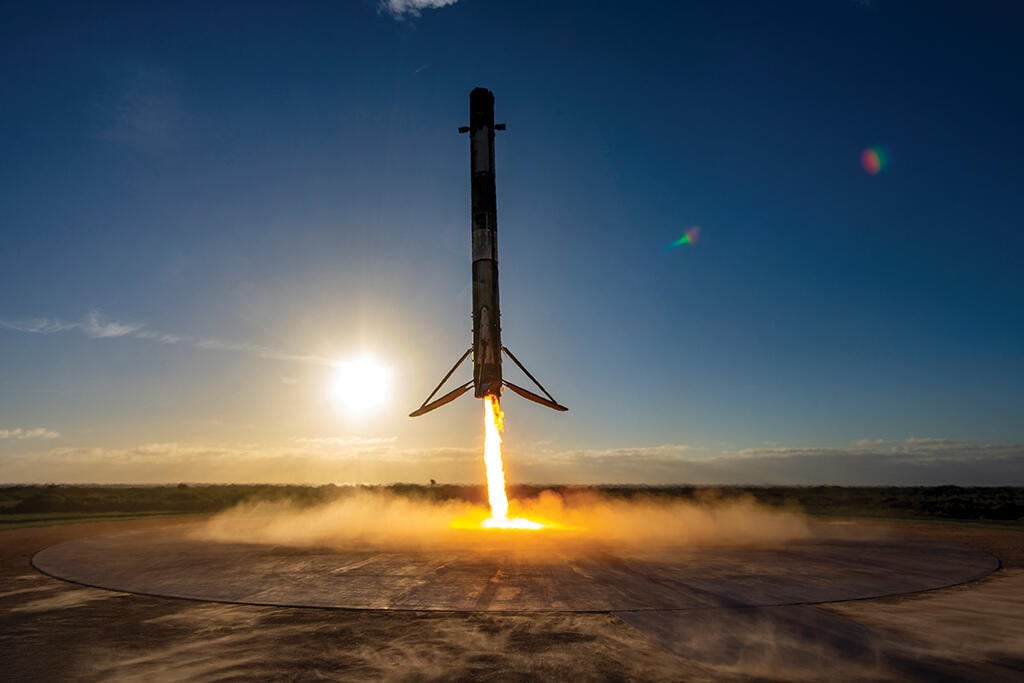
Credit: Ben Cooper/Orlando, Florida
A SpaceX Falcon 9 launch vehicle touches down on April 11 after launching a Northrop Grumman Cygnus XL cargo ship for the NG-24 mission to deliver supplies to the International Space Station.
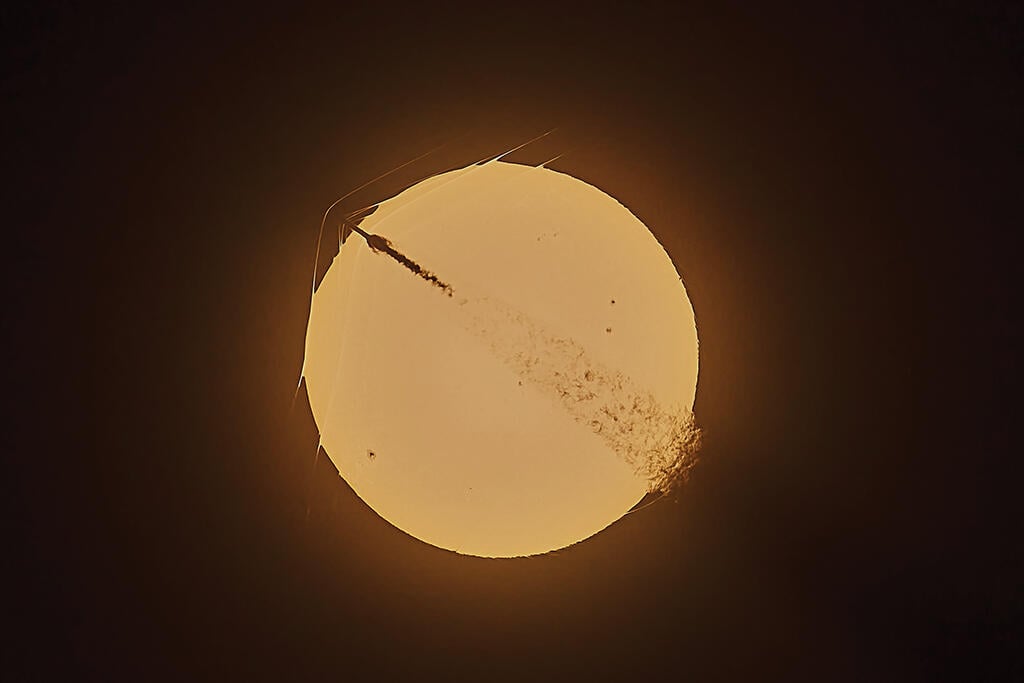
Credit: John Winkopp/Cocoa Beach, Florida
Most solar-transit launch photos are captured just after liftoff. This image of Starlink mission 10-53 was taken about 73 sec. following launch—after the Falcon 9 had reached supersonic speed—offering a rare chance to capture the shock waves illuminated by the Sun ahead of the rocket’s nose.
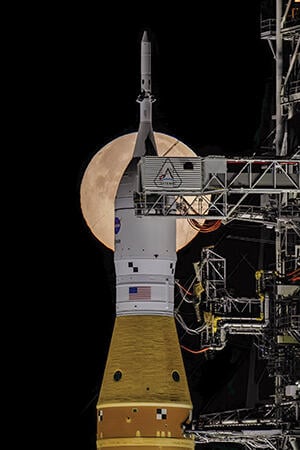
Credit: Jim Ross/Lancaster, California
The Moon sets behind NASA’s Space Launch System booster and the Orion spacecraft at Kennedy Space Center during the Artemis II wet dress rehearsal on Feb. 1. The historic flight two months later carried astronauts around the Moon and safely back to Earth—marking the first time humans had left the planet’s orbit since the Apollo 17 mission in 1972 and making astronaut Christina Koch the first woman to travel beyond low Earth orbit.
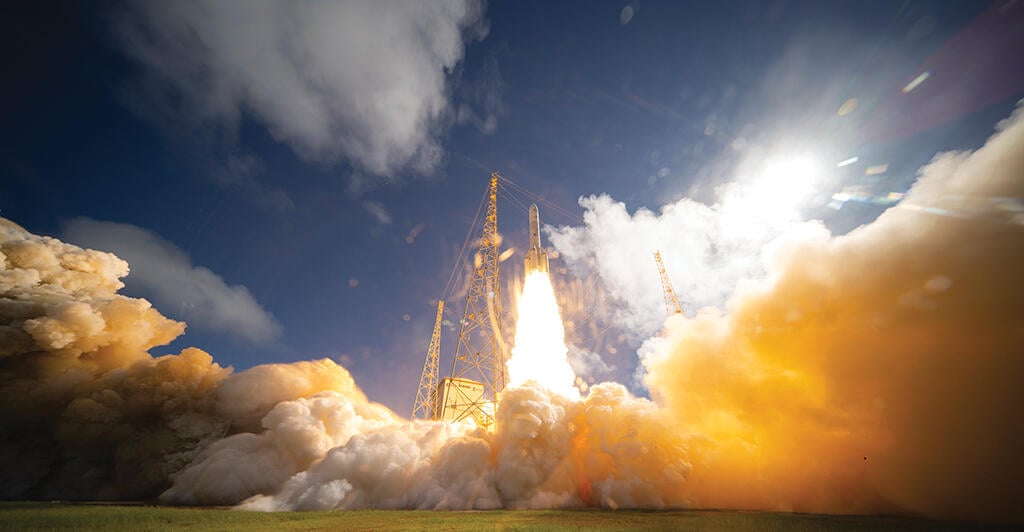
Credit: Stéphane Corvaja/Le Plessis-Robinson, France
Liftoff of Ariane 64 VA269, the first with the booster’s Block 2 configuration, carries Amazon’s Leo LE-03 mission from Europe’s spaceport in Kourou, French Guiana, on June 17. The Arianespace launch, Ariane 6’s commercial debut, used more powerful P160C boosters rather than the P120Cs from previous flights.
Credit: Erik Kuna/Oldsmar, Florida
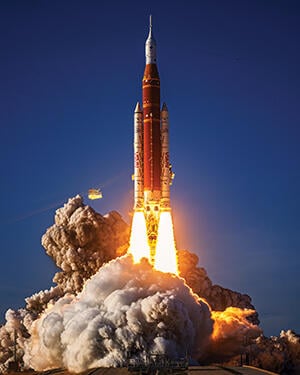
NASA’s Space Launch System rocket clears the launchpad, sending an Orion spacecraft and its four astronauts on their way toward the Moon for the Artemis II flight test. Vibrations from the liftoff at Kennedy Space Center’s Launch Complex 36B sent the baskets from the pad’s emergency escape system sliding down cables, pictured to the left of the solid rocket boosters.
Credit: Ben Cooper/Orlando, Florida
A SpaceX Falcon Heavy rocket launches NASA’s Nancy Grace Roman Space Telescope on Aug. 30 from Launch Complex 39A at the Kennedy Space Center. Named for the “mother of the Hubble Space Telescope,” it has a field of view 100 times larger than Hubble’s. During its five-year primary mission, the observatory is expected to measure light from 1 billion galaxies in an effort to answer questions about dark energy and dark matter. It also will look for exoplanets and planet-forming disks.
Credit: Richard P. Gallagher/Merritt Island, Florida
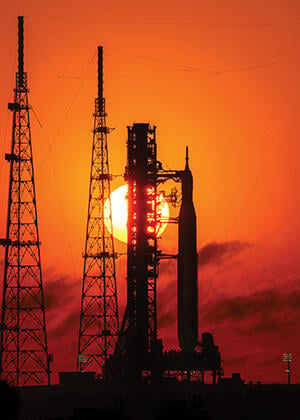
NASA’s Space Launch System rocket and Orion spacecraft stand at Kennedy Space Center’s Launch Complex 39B a week before launch on the Artemis II mission, the first crewed flight into deep space since 1972. Artemis, goddess of the Moon in Greek mythology, is the sister to Apollo, the Sun god whose name was the inspiration for NASA’s first lunar exploration program.
Credit: Ashley Askew/Hampton, Georgia
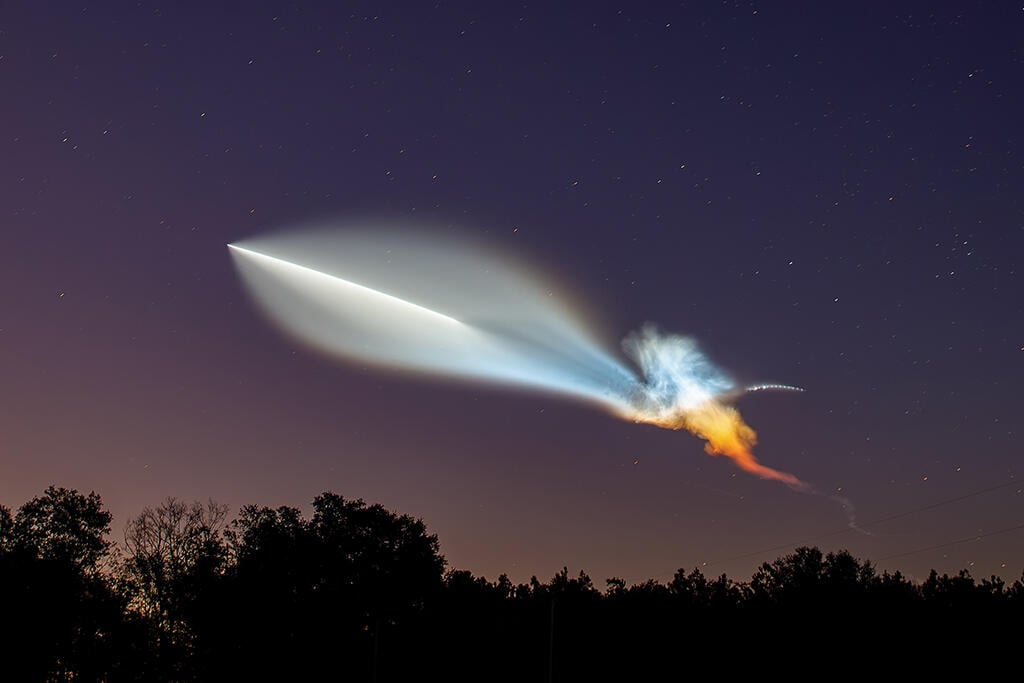
The Oct. 13 predawn launch of a Falcon 9 rocket, sending a SpaceX Dragon cargo ship on its way to the International Space Station, paints the skies over the southeastern U.S. with an enormous “space jellyfish,” which is caused by sunlight illuminating the rocket’s high-altitude exhaust plumes.
Credit: Max Evans/Titusville, Florida
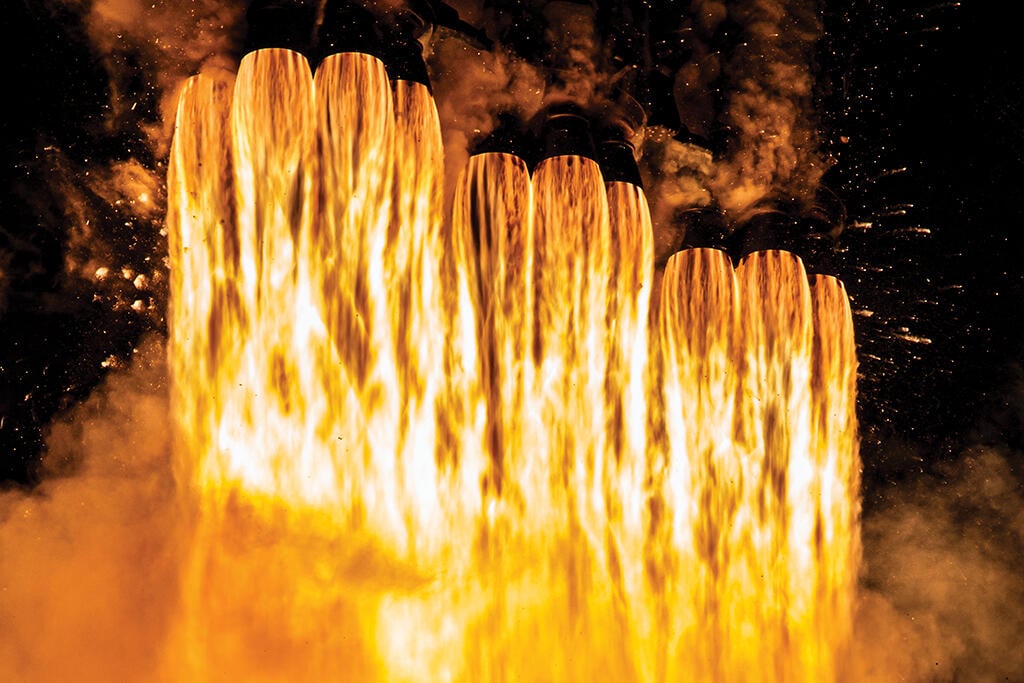
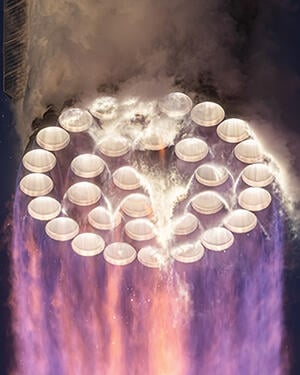
Thirty-three Raptor 3 engines powering SpaceX’s Super Heavy booster roar in unison to begin the 14th flight test in the Starship program from the company’s Starbase, Texas, launch site.
Credit: Scott Slingsby/Francestown, New Hampshire
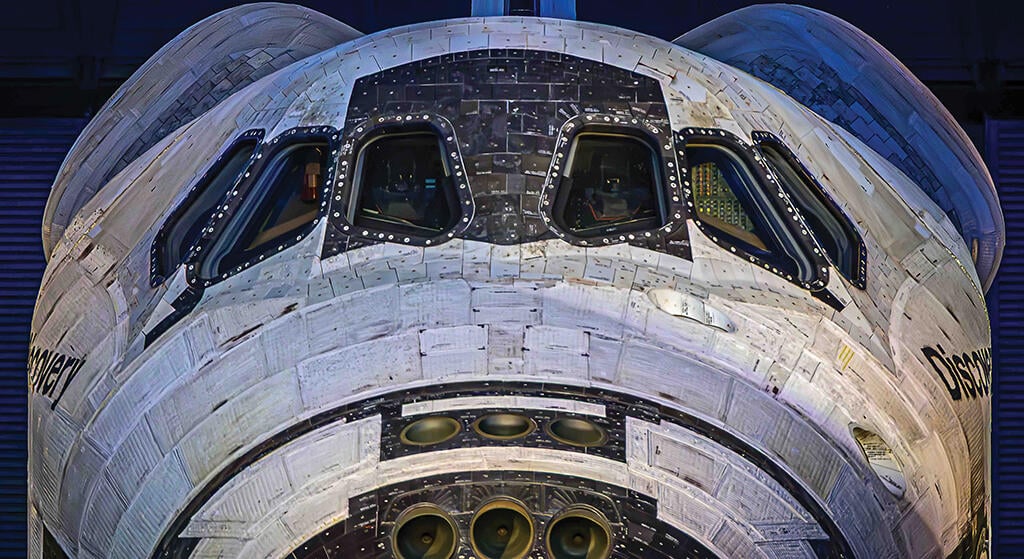
The shuttle orbiter Discovery is one of the anchor exhibits at the Steven F. Udvar-Házy Center in Chantilly, Virginia, adjacent to Washington Dulles International Airport.
This year’s space photos reveal amazing details like the shock wave from a launch and emergency egress baskets that crews could use to escape a launchpad mishap.