How Lanteris Space Powers NASA’s Gateway With Solar Electric Propulsion
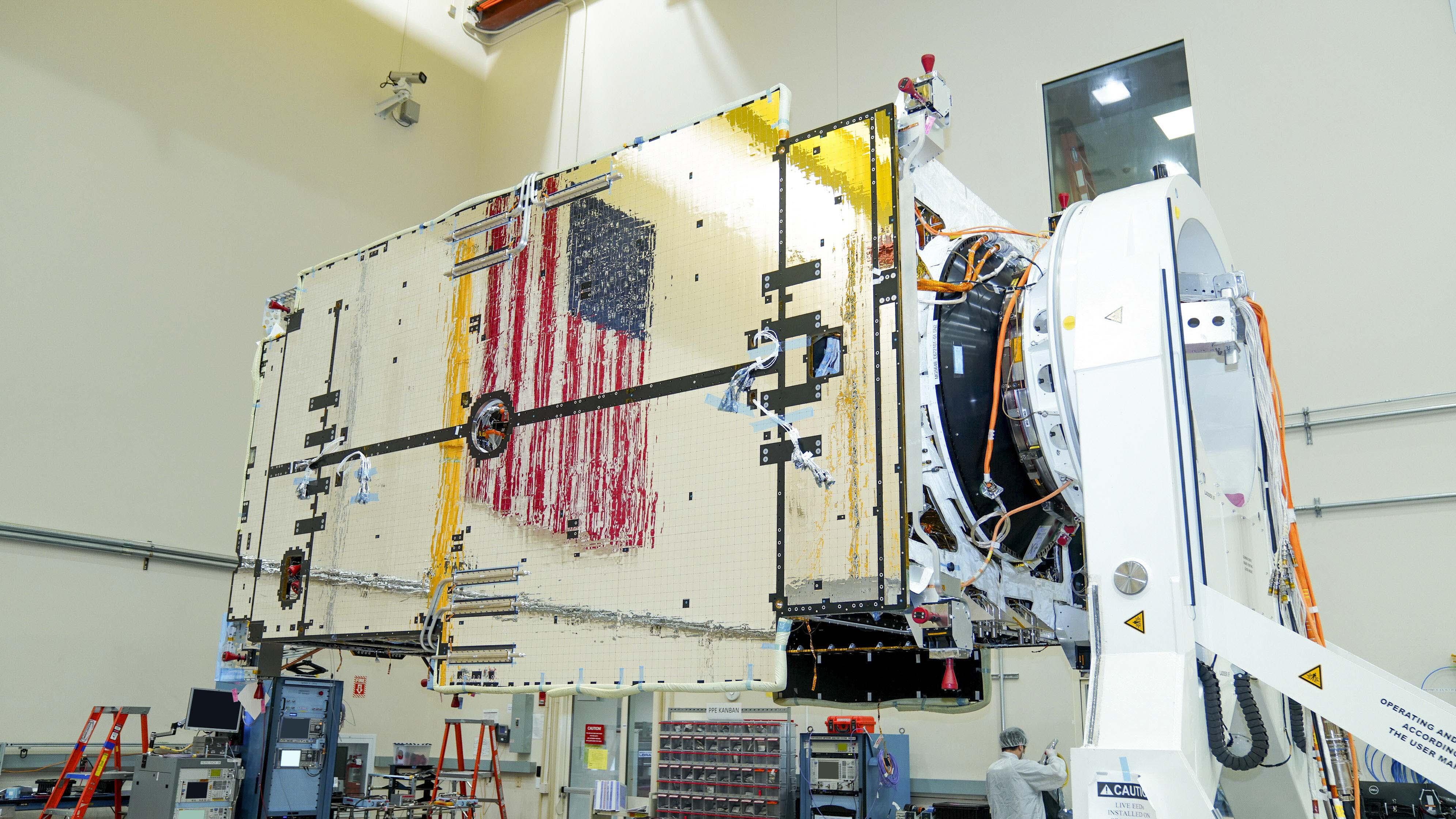
At the core of NASA’s Artemis mission is Gateway, a lunar outpost that demands advanced power and propulsion. Aviation Week spoke with Chris Coker about how the company’s commercial spacecraft heritage is driving development of the Power and Propulsion Element (PPE), which will serve as Gateway’s electric power source and maneuvering system.

Aviation Week: How does PPE represent a shift toward commercial partnership in deep space missions?
Chris Coker: PPE represents a “best of both worlds” approach —combining NASA’s oversight with proven commercial spacecraft practices. We’ve flown 100+spacecraft on our Lanteris 1300 ™ platform. NASA chose us for our reliability and proven electric propulsion experience, not to reinvent commercial processes. This partnership has been collaborative from the start.
AW: What commercial technologies are being applied to PPE?
CC: Modular scalability is the foundation. Foreseeing future needs for high power capabilities, we built scalability into the Lanteris 1300 platform from day one. Our platform also provides scalability for electric propulsion, which is more fuel-efficient than traditional chemical propulsion. For PPE, we simply scaled our power and electric propulsion architecture to satisfy mission requirements.
AW: What challenges did you face adapting commercial technology for the lunar environment?
CC: Mission-specific challenges were overcome by selecting components that withstand the cislunar radiation environment, enable long distance communication, and maximize spacecraft autonomy. Our work on the Psyche spacecraft gave us a strong starting point. Understanding that proven processes result in a safer mission, NASA collaborated with us to satisfy human safety standards through inspections and tests instead of changing our commercial practices.
AW: How does PPE lay groundwork for future Mars missions?
CC: NASA’s mission with Artemis is returning to deep space permanently — first the Moon, then Mars. Gateway is the first permanent piece of this infrastructure. Science payloads hosted on Gateway will provide continuous radiation data which will improve our understanding for future deep space manned missions.
Related Content