This article is published in Aerospace Daily & Defense Report part of Aviation Week Intelligence Network (AWIN), and is complimentary through Aug 13, 2026. For information on becoming an AWIN Member to access more content like this, click here.
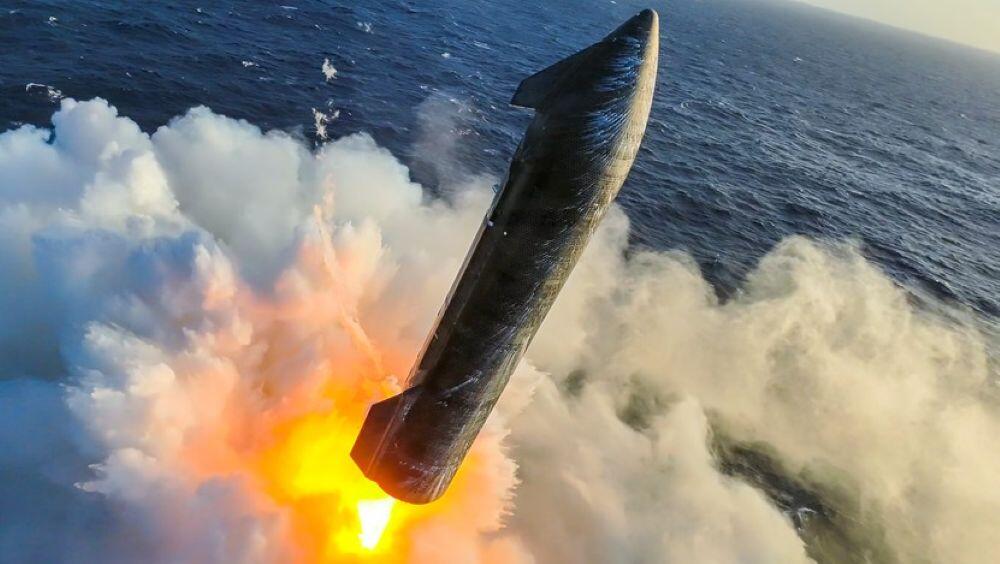
SpaceX will drastically pick up the pace of Starship flights, CEO Elon Musk says, as the company prepares to potentially attempt to catch the vehicle’s upper stage on the coming mission.
“We expect the cadence of flights to be increasing rapidly. And probably a year from now we will be doing at least one flight a day, possibly more,” Musk, known for his optimistic projections, told analysts and investors Aug. 4 during the company’s first quarterly results call.
Musk said the next Starship mission, Flight 14, could come before the end of the month. The company aims to catch the first and the second stage of Starship V3 this year, he said, noting “we could possibly catch the ship as soon as the next flight.” The company deliberately had the vehicle splash down in the Indian Ocean in the most recent mission.
Musk said he now considers the heat shield questions for Starship resolved, even if further improvements may come.
The next test mission should also see Starship deploy its first Starlink Version 3 satellites to operational orbit. Those satellites should spur Starlink sales growth, Musk said, given the greater power.
Among the coming steps for the Starship are on-orbit propellant transfer and docking with an Orion spacecraft as part of NASA’s Artemis 3 mission next year, followed by an uncrewed, direct lunar cargo mission, Chief Operating Officer Gwenn Shotwell said. “Then we want to put boots on the ground, boots on the Moon in 2028,” she added.
Musk said the company could achieve the level of reliability and safety to put humans on Starship by the end of 2027.
Musk also said the company could start to deploy its data center satellites, known as Starmind AI, next year, a year earlier than previously forecast. The company plans for the so-called AI1 satellites to use NVIDIA Rubin graphic processing units and Vera central processing units.
The company that went public on June 12 posted second-quarter sales of $7.8 billion, up about 90% from the prior year, with $4.3 billion generated by the connectivity business with Starlink subscriptions doubling to 12 million. The operational loss came in at $143 million. SpaceX also disclosed another massive quarter of capital expenditure of $18.4 billion as it looks to scale up its artificial intelligence activities, with plans to remain at around that level for the current and next quarter.
Musk said the company now expects to achieve $1 trillion in annual revenue in 2030, a year earlier than planned, with a chance of hitting that milestone even in 2029.
The company known for its fast clip of launch operations also reported a drop in quarterly launches from the year prior, with 38 flights, down from 46 in the year-earlier period. Mass to orbit also fell. Sales in the space segment rose 29%, though, reflecting a higher number of large customer launches, it said.
Only the connectivity business delivered an operating profit. The bulk of sales came from consumers, though about 40% was generated by governments, such as the Starshield program for the Pentagon, and businesses. Shotwell said the enterprise and government business will likely grow to match or exceed consumer sales.
In the second quarter, SpaceX secured $6 billion in U.S. government business for Starshield, and Shotwell said “we see even more room for growth in this sector in this coming year.”
Aviation is a growth opportunity, Shotwell said, noting the company has only 10% penetration in the segment.
Average revenue per user fell more than 20% from the year-ago quarter, though, while remaining flat from the first-quarter figure. Chief Financial Officer Bret Johnsen said the figure could fall further as Starlink rolls out further globally, while noting topline growth should continue.
SpaceX has taken investors on a wild ride since the initial public offering. The company that priced each share at $135 for the IPO saw the shares surge as high as $225.64 on June 16, bringing the business close to a $3 trillion valuation. Since then the shares have given back all those gains, falling to as low as $104.83 recently, before closing Tuesday at $125.33. The stock fell in post-market trading after posting results.
The CFO also projected SpaceX would reach $100 billion of annual recurring revenue by year’s end.
Another important date for SpaceX is on the calendar soon. The earnings report triggers the end of certain lockup periods for investors, freeing them to sell stock, which could put downward pressure on shares as some holders in the company may look to cash in on their holdings.