This article is published in Aerospace Daily & Defense Report part of Aviation Week Intelligence Network (AWIN), and is complimentary through Aug 20, 2026. For information on becoming an AWIN Member to access more content like this, click here.
Avionics installation in Delta 1 has taken longer than expected, delaying commercial operations to February 2027.
COLORADO SPRINGS—Space company Virgin Galactic says avionics and systems installation delays have forced it to slide the start of commercial suborbital flights using its Delta-class SpaceShip from late this year to February 2027.
The schedule slip, which sent shares in the company tumbling by 15% in after-hours trading, came even as Virgin Galactic powered up systems on vehicle for the first time on Aug. 12. The comanay says it remains confident of accelerating to a high cadence of three flights per week next year.
The company now expects to ferry the first Delta spaceship from the company’s Mesa, Arizona, assembly site to its New Mexico operating base at Spaceport America in October, rather than August as originally planned.
“We’re guiding that we’re going to make the target of flights we projected for 2027, even though we’re starting just a few months late,” says Mike Moses, president of Virgin Galactic Spaceline. “We’ll be able to make that up pretty easily. The second Delta spaceship will show up in March, and it’ll immediately enter the fleet and start commercial service as well.”
The availability of the two Delta spaceships, which are designed for greater capacity payloads and higher mission cadence, will enable operations to “rapidly ramp up to three flights a week, which will be groundbreaking and revolutionary for what we do in space travel,” Moses says. The company aims to reach a rate of 10 or more flights per month by the end of the second quarter in 2027.
Delays have largely been attributed to disruption to holdups in parts delivery and longer-than-expected installation times, all leading to out-of-sequence build schedules, Moses says. Speaking to Aviation Week ahead of the company’s second-quarter earnings call on Aug. 12, he added, “we were probably a little overzealous in our estimates of what it took. The delivery of parts had so many hiccups and challenges that we shuffled that build sequence all along the way.”
Lessons learned will be applied to the second Delta vehicle, parts assembly for which is now well underway. “We will be able to clean up with Delta Two. All those parts are here, and we’ll be able to just put them together in the order we had originally planned,” Moses says.
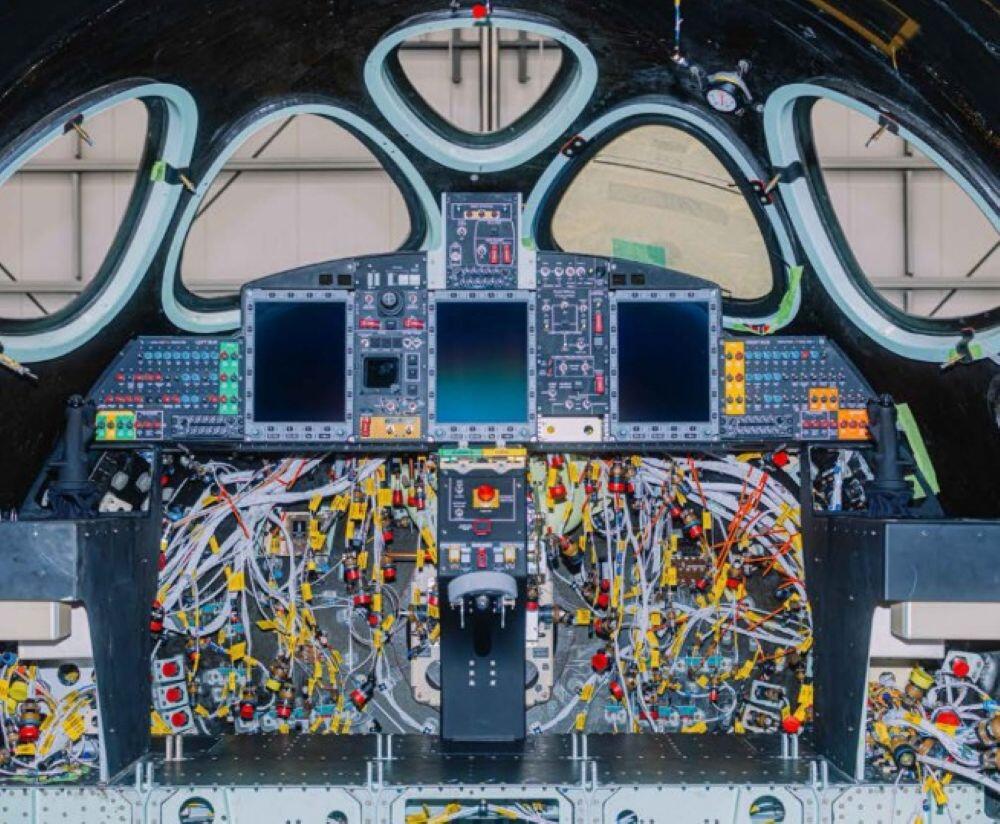
As well as new sidestick flight control inceptors and updated displays, the Delta class vehicles have around 12 mi. of wiring–more than the predecessor vehicle Unity.
“Under the floorboards in the back of the cabin, there was a significant amount of change [compared] to the old ship. There were a lot of analog control systems back there, and push rods and cables. And now it is all digital, so a lot of all that has been rerouted, and there is a lot more equipment under the floorboards and the pilot seats,” he adds.
“Many of the hundreds of preparation and installation tasks have required more time to complete than we had estimated,” company CEO Michael Colglazier says. “We expect to wrap all this phase up later this month. We’ll start our integrated vehicle ground testing efforts through there,” adds Colglazier, who spoke at the earnings call.
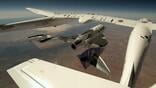
Unity, which made the company’s last revenue-earning spaceflight in June 2024, has meanwhile been reused for crew training and familiarization in the run-up to Delta flight tests, which are expected to begin shortly after the October captive-carry transit from Arizona. The carrier aircraft, Eve, which will transport Delta 1 to New Mexico, is also being flown regularly to maintain flight crew currency.
“Unity’s gone back up in the air once, and we plan to go a couple more times. That’s mostly to get the teams ready for when Delta arrives,” Moses says. “With Delta sliding a little bit, we’ve slid those a little bit too.”
Following a cold-soak evaluation of the Delta 1’s systems during its captive carry ferry flight to New Mexico, a follow-on sequence of six glide tests is planned to test entry and landing dynamics from a release altitude of around 50,000 ft. This initial phase will pave the way for a short, powered flight test effort before commercial operations begin in February.
Virgin Galactic, meanwhile, says its recently opened tranche of spaceflight tickets priced at $750,000 for flights in 2028 “was oversubscribed and booked out ahead of schedule,” Colglazier says. The bookings represent an add-on of more than $50 million in expected future spaceflight revenue, he adds.
Unlike earlier ticket sales, Colglazier says new bookings in the latest tranche included a larger number of multi-seat groups which accounted for 60% of the new tally. The company plans to open a new tranche of ticket sales at a higher price this fall. It adds that interest also continues in research flights.
Virgin Galactic meanwhile reported a net loss of $56 million, compared to a $67 million net loss in the second quarter of 2025, with the improvement primarily driven by a reduced debt and lower operating expenses. The company also raised $134 million through an equity offering program, growing its cash reserves to $286 million, but cautioned that expected expenses will rise next quarter after it brought in extra resources to support completion of the first Delta vehicle.