This article is published in Aerospace Daily & Defense Report part of Aviation Week Intelligence Network (AWIN), and is complimentary through Dec 18, 2026. For information on becoming an AWIN Member to access more content like this, click here.
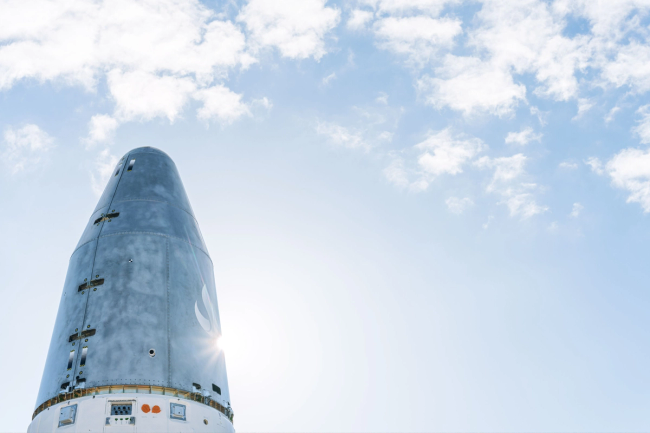
BREMEN, Germany—Seops Space has secured launch capacity on Stoke Space’s rocket to help underpin its long-term role as a rideshare service provider.
The missions, due to start in 2029, will support Seops’s Waymaker rideshare program. They also represent another bet by the company on a rocket that has yet to fly.
Seops has been working with Stoke for several years ahead of this launch commitment. Seops President Evan Hoyt says the company has built confidence in the Stoke team and so when it came time to place the launch commitment it was “an easy decision.”
Stoke Space has said it aims to fly the Nova Pathfinder rocket early next year from Space Launch Complex 14 at Cape Canaveral Space Force Station. More Pathfinder flights are due through 2028. The higher-capacity Nova Block 2 that can place 15 metric tons into low Earth orbit is due to fly in 2029. Seops is ordering the Block 2 version.
Seops’s first dedicated Waymaker mission is due in early 2028, using a SpaceX Falcon 9 for payloads to mid-inclination orbits. Another Falcon 9 mission later that year is due to service customers that need payloads placed in Sun-synchronous orbit.
Seops also said Nov. 17 that it is adding a late 2028 Falcon 9 Waymaker mid-inclination rideshare opportunity.
The company has already committed to using Isar Aerospace’s Spectrum rocket ahead of its first successful flight. It has since topped up the initial deal.
Seops placed the order with Stoke launchers ahead of its rocket's first flight in part because waiting would put it behind the demand curve, Hoyt suggests. Satellite customers, in the face of an acute launch bottleneck, also are willing to commit to a new rocket early, Hoyt says. Seops has already begun talks with potential users of its initial Nova rocket. “The risk tolerance of customers is being reset as well,” he says, pointing to the launcher shortage.
Seops has not yet settled on the orbital target for the first Nova flight, though it is likely to aim to satisfy customers looking for mid-inclination slots.
Hoyt says the company is exploring adding other launchers to its pool of service providers in a bid to provide customers ample choice in terms of launchers and timing.
Seops also is developing a launch cost insurance product to help make it easier for satellite makers to sign on to its flight offering.

Related Content