This article is published in Aerospace Daily & Defense Report part of Aviation Week Intelligence Network (AWIN), and is complimentary through Aug 13, 2026. For information on becoming an AWIN Member to access more content like this, click here.

Rocketdyne Officially Reborn As New Company

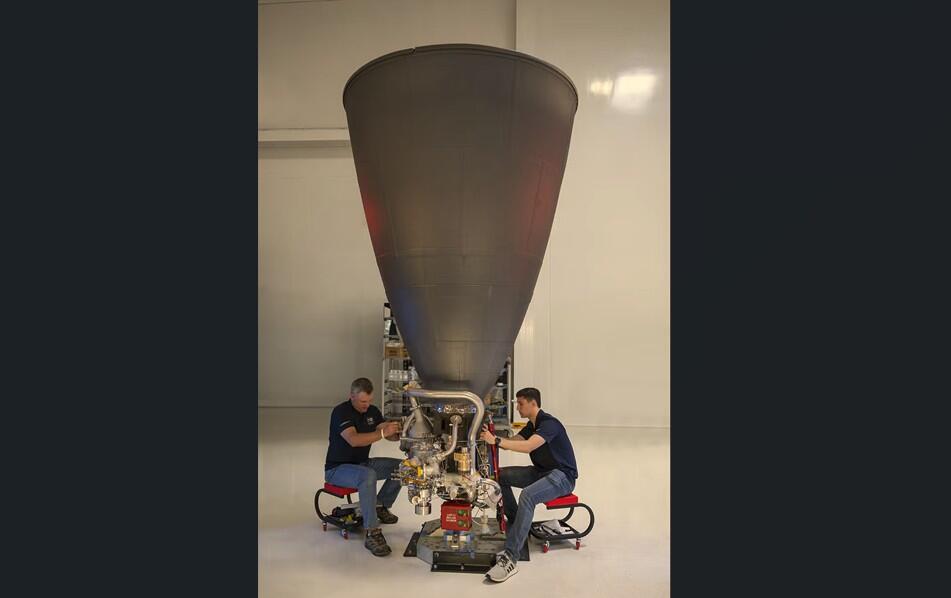
Rocketdyne will retain the RL10 upper stage rocket engine business  Credit: L3Harris

Rocketdyne will retain the RL10 upper stage rocket engine business.

Credit: L3Harris

Rocketdyne, the storied rocket engine developer that has been bought, merged and spun off multiple times, officially unveiled itself as a new, standalone company on Aug. 4.

Founded in 1955 as the rocket engine operations of North American Aviation, Rocketdyne was instrumental in developing engines for several of NASA’s crewed spaceflight programs. The company’s A-7 engine powered the Mercury-Redstone vehicle that carried Alan Shepard, the first American in space. Five of its F-1 engines later powered the first stage of the Saturn V rockets that launched Apollo crews toward the Moon. It subsequently developed the reusable Space Shuttle Main Engine, later dubbed the RS-25.

Since its inception, Rocketdyne has been moved around about half a dozen times, including in 2023 when L3Harris acquired the then-independent Aerojet Rocketdyne. In January, private equity firm AE Industrial Partners agreed to acquire a 60% controlling interest in Rocketdyne—with L3Harris keeping a 40% stake—and to carve out the company as a separate entity. L3Harris will continue to be a “strategic partner,” AE Industrial says.

Kristin Houston was named CEO of the new entity, which is headquartered in Melbourne, Florida. She previously was the president of Aerojet Rocketdyne’s Space Propulsion & Power Systems sector. The company also has facilities in Jupiter, Florida; Daytona Beach, Florida; Mason, Ohio; Los Angeles, and Redmond, Washington.

The iconic RS-25 engine, four of which power the Space Launch System’s (SLS) core stage, will stay with L3Harris, which will also retain its solid rocket motor and propellant-tank manufacturing businesses.

Rocketdyne will focus on launch vehicle propulsion, spacecraft electronics, spacecraft propulsion, and space nuclear power and propulsion products, Houston says.

Houston says the fast-growing space industry, especially the rapidly growing amount of money dedicated to national security space by the U.S. government, is an opportunity for Rocketdyne’s propulsion business.

“The Space Force budgets are dramatically increasing the need for dynamic space operations and maneuvering without regret,” she says. “We have it all—chemical propulsion, electric propulsion, nuclear propulsion.”

The company will also continue pursuing business with NASA and will remain the manufacturer of the RL10 upper-stage engine used on the SLS upper stage and on the United Launch Alliance’s heavy-lift Vulcan Centaur launch vehicle. It also is pursuing space nuclear propulsion programs, including NASA’s Space Reactor-1 Freedom, an uncrewed nuclear-electric-propulsion pathfinder mission designed to fly by Mars and deploy a scientific payload.

AE Industrial says it will invest in Rocketdyne’s core capabilities, including upgrading the technology and manufacturing of the RL10, ramping up production of in-space propulsion thrusters and further development of space nuclear power technologies.

Facing a growing crop of startups developing similar products, Houston says she believes the 1,300-employee company can compete by streamlining its operations. Rocketdyne has begun eliminating processes and layers of management, she says.

“As an independent, standalone company, we can move faster, make decisions closer to the customer, and pursue opportunities that simply weren’t available to us inside a larger organization,” Houston says.

Garrett Reim

Based in the Seattle area, Garrett covers the space sector and advanced technologies that are shaping the future of aerospace and defense, including space startups, advanced air mobility and artificial intelligence.