This article is published in Aerospace Daily & Defense Report part of Aviation Week Intelligence Network (AWIN), and is complimentary through Jan 15, 2026. For information on becoming an AWIN Member to access more content like this, click here.

White House Issues Executive Order On Space Superiority

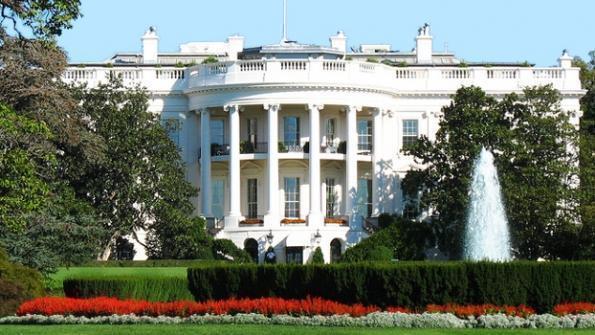
white House
Credit: U.S. government

The White House issued an executive order framing its near-term plans and policy ambitions for the space domain.

By 2030, according to President Donald Trump’s administration, Washington will have developed new prototype missile warning capabilities, deployed a nuclear reactor on orbit and on the lunar surface, returned Americans to the Moon, and ensured U.S. dominance in the commercial space sector and in spectrum management—while also protecting the domain from on-orbit threats, including possibly nuclear weapons.

The order, issued Dec. 18, calls for a policy “that will extend the reach of human discovery, secure the nation’s vital economic and security interests, unleash commercial development, and lay the foundation for a new space age.”

In the national security area, the order calls for detecting, identifying and countering threats from very low Earth orbit throughout cislunar space, including “any placement of nuclear weapons in space.” U.S. officials have increasingly warned that Russia may be developing nuclear weapons in space.

“We’ve seen the reports over the last two years that Russia might be considering an on-orbit nuclear weapon,” U.S. Space Command Commander Gen. Stephen Whiting said Dec. 11 at the Space Force Association’s Spacepower Conference in Orlando, Florida. “That’s not a world we want to live in.”

It also reaffirms the Trump administration’s desired 2028 deadline to develop and demonstrate prototype missile defense technologies under the Golden Dome for America program.

Concerning civil space, the order says that Americans will return to the Moon by 2028 via NASA’s Artemis program. The nation will stand up a permanent lunar outpost by 2030 and take the next steps toward Mars exploration, while “prioritizing lunar exploration.”

The order also calls for deploying nuclear reactors on the Moon and in orbit and to launch a lunar surface reactor by 2030.

The administration is promoting acquisition reform to maintain timelines and to prioritize commercial integration, while Trump also wants to attract at least $50 billion of additional investment in U.S. space markets by 2028.

Under the order, the Secretary of Commerce and the NASA administrator are charged with reforming their respective agency’s space acquisition processes within six months, with several recommended reforms.

Cost-plus contracts are put on the back burner, with fixed-price contracts and other transaction authority agreements declared a priority. The administration is also interested in “as-a-service” models for both space- and ground-based segments to provide space and Earth weather forecasting.

Allied and partner contributions also get a shout-out, with a call for increased space security spending, operational cooperation, basing agreements, and ally and partner investments within America’s space industrial base.

Vivienne Machi

Vivienne Machi is the military space editor for Aviation Week based in Los Angeles.