Progress So Far
Credit: Eric Drouin/Safran
Since the April 17 CFM56-7B engine failure onboard Southwest Airlines on April 17 and the subsequent FAA airworthiness directives (AD), around 500 CFM experts from GE and Safran have been supporting affected airlines on what GE describes as an “aggressive inspection program.” To date, more than 78,000 blades have been inspected via ultrasonic and other non-destructive tests (NDT).
According to Rick Kennedy, manager of media relations for GE Aviation, affected airlines are now 100% compliant with the 20-day inspection requirement and the 20,000 cycle inspections are more than 50% complete.
Since the April 17 CFM56-7B engine failure onboard Southwest Airlines on April 17 and the subsequent FAA airworthiness directives (AD), around 500 CFM experts from GE and Safran have been supporting affected airlines on what GE describes as an “aggressive inspection program.” To date, more than 78,000 blades have been inspected via ultrasonic and other non-destructive tests (NDT).
According to Rick Kennedy, manager of media relations for GE Aviation, affected airlines are now 100% compliant with the 20-day inspection requirement and the 20,000 cycle inspections are more than 50% complete.
How Ultrasonic Works
Credit: Southwest Airlines
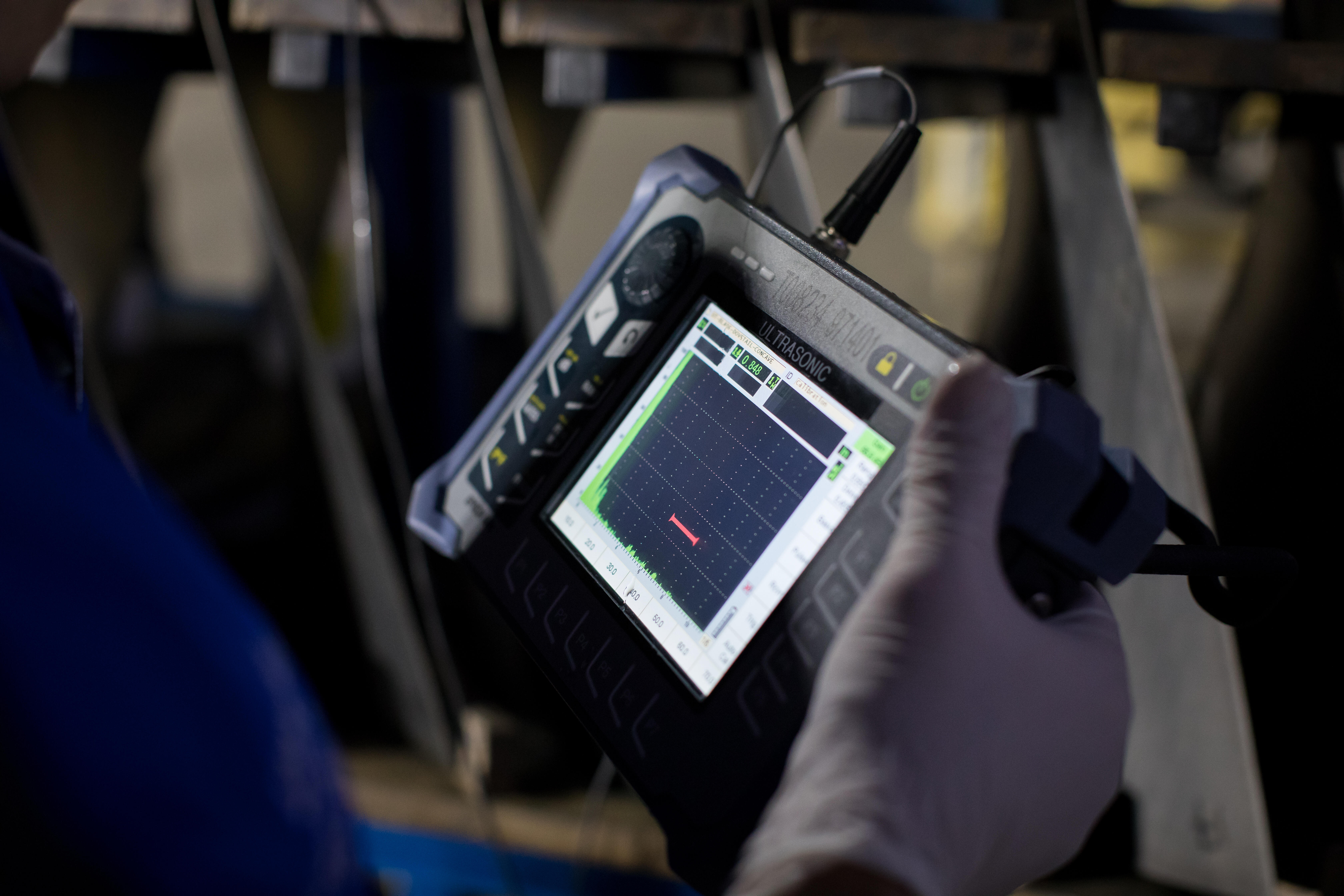
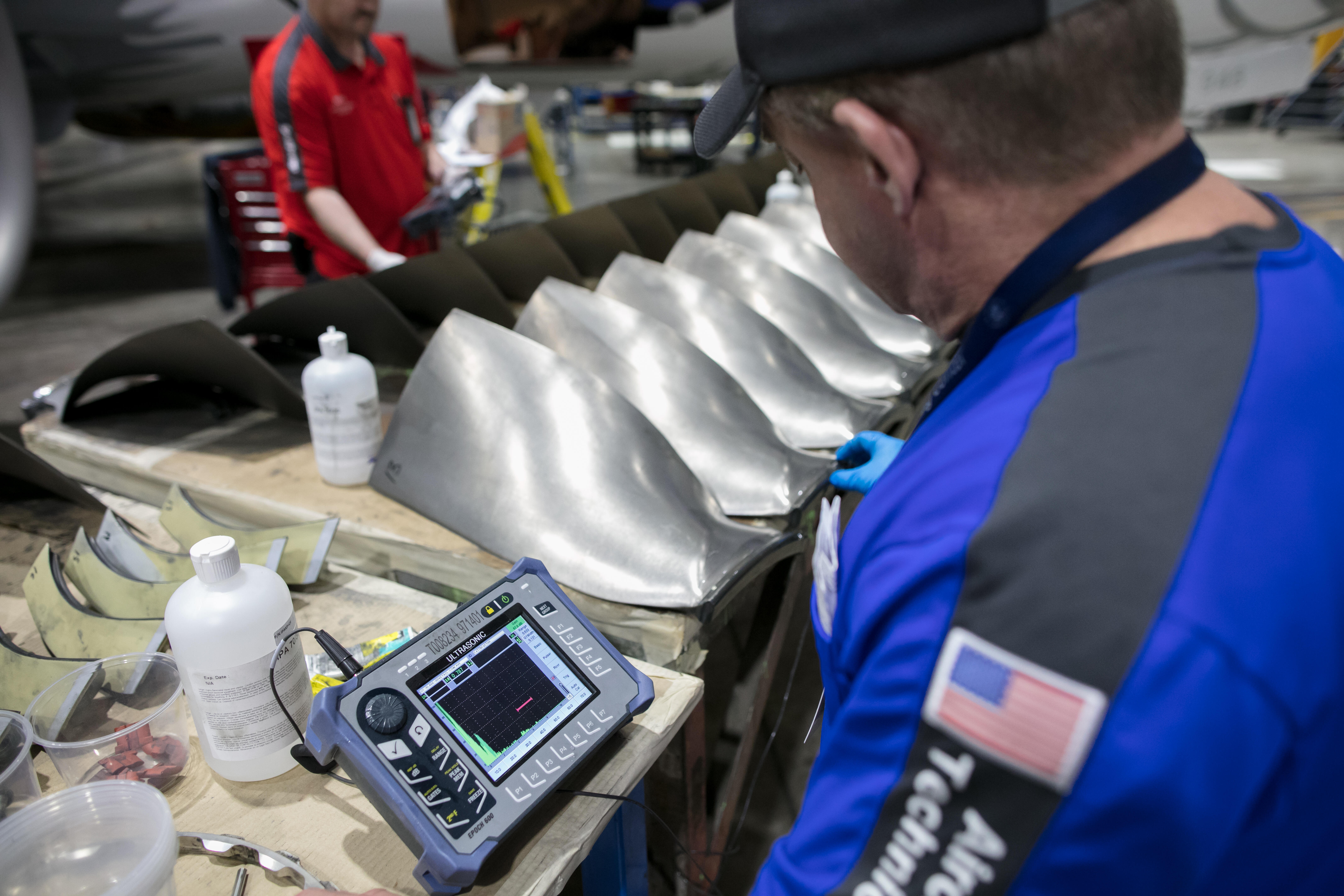
The inspections being carried out involve an ultrasonic probe being run along the surface of a CFM56-7B engine blade. Using pulses of high-frequency sound energy, ultrasonic testing (UT) equipment is able to detect both surface and subsurface flaws, including cracks, corrosion and delamination, based on how sound waves are reflected back.
Kennedy says that if these tests indicate any sort of defect, the blades are put through an eddy current inspection. This type of inspection uses coils to apply an electromagnetic field into conductive material—such as metal—and determines defects through disruption of the electromagnetic current’s field. While Kennedy says many blades are cleared of concern after an eddy current inspection, blades still exhibiting possible cracks will undergo further testing, which involves cutting the blade apart and analyzing it to better understand potential issues that might exist. Details of findings on these blades could take months.
The inspections being carried out involve an ultrasonic probe being run along the surface of a CFM56-7B engine blade. Using pulses of high-frequency sound energy, ultrasonic testing (UT) equipment is able to detect both surface and subsurface flaws, including cracks, corrosion and delamination, based on how sound waves are reflected back.
Kennedy says that if these tests indicate any sort of defect, the blades are put through an eddy current inspection. This type of inspection uses coils to apply an electromagnetic field into conductive material—such as metal—and determines defects through disruption of the electromagnetic current’s field. While Kennedy says many blades are cleared of concern after an eddy current inspection, blades still exhibiting possible cracks will undergo further testing, which involves cutting the blade apart and analyzing it to better understand potential issues that might exist. Details of findings on these blades could take months.
Pros And Cons of Ultrasonic
Credit: Eric Drouin/Safran
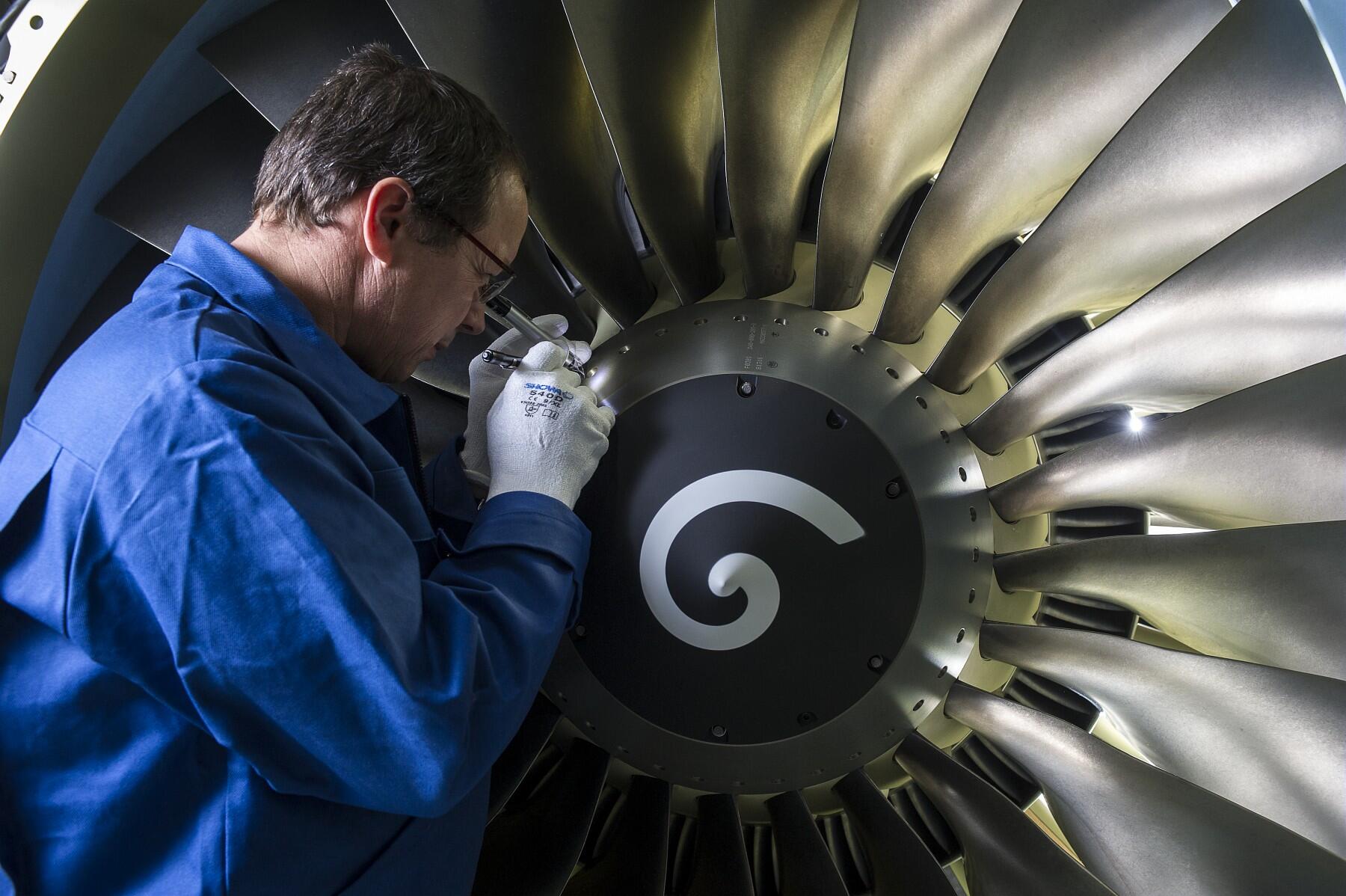
So why is UT chosen for inspections of this kind rather than other common NDT techniques, such as penetrant and magnetic particle testing? For starters, UT is categorized as a volumetric technique, which is able to detect flaws inside a component rather than just on the surface. Additionally, NDT techniques such as penetrant and magnetic particle testing can be time-consuming and messy while providing limited results.
Even still, there are differences within UT itself. According to Zetec, which provides instruments, software, training and support for UT and other NDT methods, there is a significant difference between standard UT and phased-array UT. Standard UT, which is extremely common in the aviation industry, uses a probe capable of generating and receiving a single ultrasonic sound wave.
So why is UT chosen for inspections of this kind rather than other common NDT techniques, such as penetrant and magnetic particle testing? For starters, UT is categorized as a volumetric technique, which is able to detect flaws inside a component rather than just on the surface. Additionally, NDT techniques such as penetrant and magnetic particle testing can be time-consuming and messy while providing limited results.
Even still, there are differences within UT itself. According to Zetec, which provides instruments, software, training and support for UT and other NDT methods, there is a significant difference between standard UT and phased-array UT. Standard UT, which is extremely common in the aviation industry, uses a probe capable of generating and receiving a single ultrasonic sound wave.
Standard vs. Phased-Array
Credit: Southwest Airlines
"It's very easy to deploy, but the drawback is you have one ultrasound beam that travels in one direction," says Daniel Richard, technology manager at Zetec. Richard says that while flaws and defects can be detected if they are located in the direction an inspector is looking, they can be easily missed if they are not located in one specific place. "You have to plan in advance where you're going to look. With phased-array, you can see a wide range of angles all at once."
Phased-array UT, which uses multiple individual elements in a probe to produce a precise beam shape and generate two and three-dimensional views of a flaw, can offer greater speed and accuracy. Zetec says this type of UT provides a significant advantage for inspecting complex geometries, such as engine fan blades, and can improve the probability of detecting flaws. However, phased-array UT can be significantly more expensive, so Richard says companies will sometimes choose standard UT if it comes down to cost selection.
"It's very easy to deploy, but the drawback is you have one ultrasound beam that travels in one direction," says Daniel Richard, technology manager at Zetec. Richard says that while flaws and defects can be detected if they are located in the direction an inspector is looking, they can be easily missed if they are not located in one specific place. "You have to plan in advance where you're going to look. With phased-array, you can see a wide range of angles all at once."
Phased-array UT, which uses multiple individual elements in a probe to produce a precise beam shape and generate two and three-dimensional views of a flaw, can offer greater speed and accuracy. Zetec says this type of UT provides a significant advantage for inspecting complex geometries, such as engine fan blades, and can improve the probability of detecting flaws. However, phased-array UT can be significantly more expensive, so Richard says companies will sometimes choose standard UT if it comes down to cost selection.
Future Outlook
Credit: Philippe Stroppa/Safran
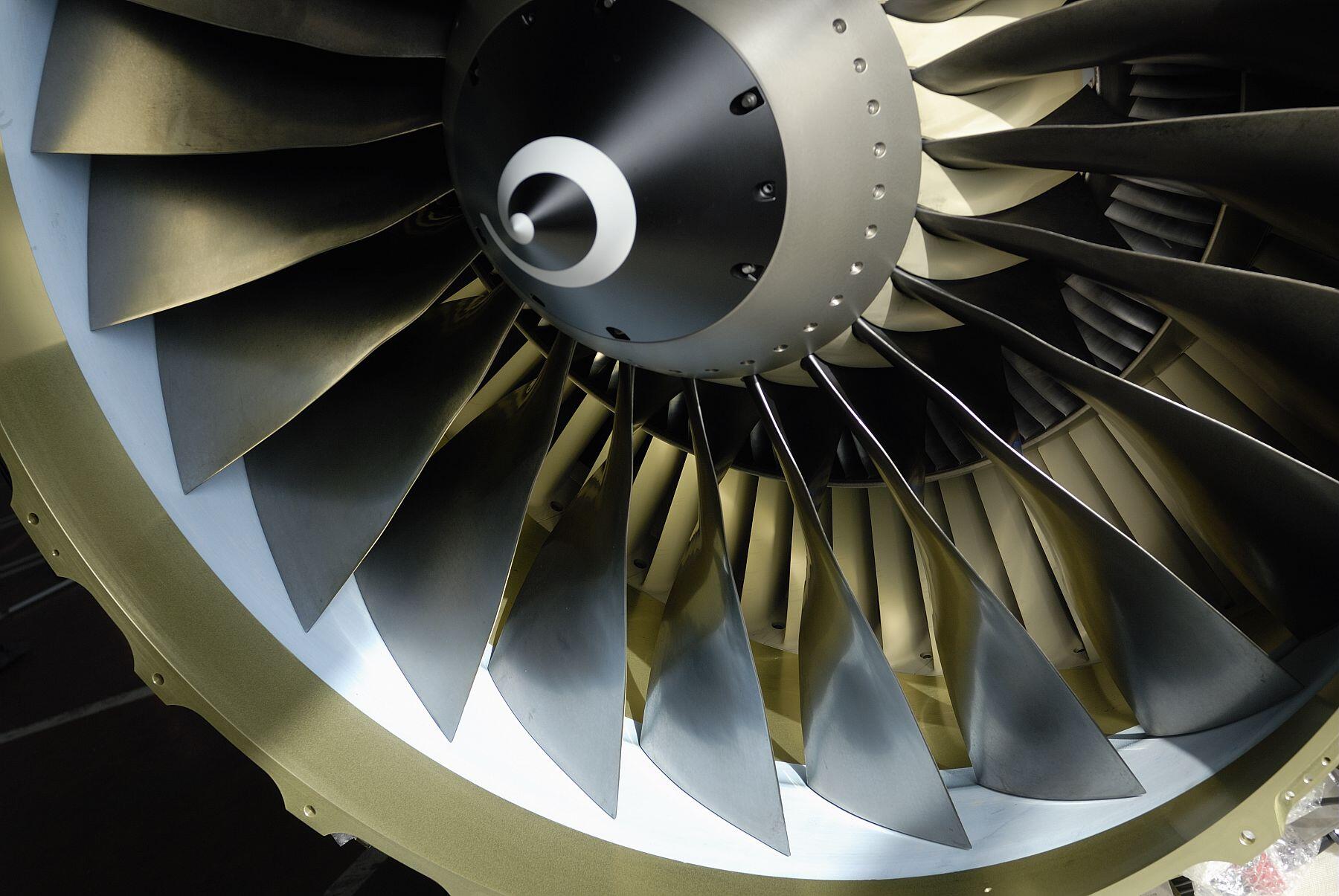
Still, Zetec says phased-array is becoming more widely adopted due to its benefits. According to Richard, examples such as the CFM56-7B situation may just be the catalyst to prompt this move toward phased-array. "People may want to move away from standard UT and go with the more expensive, but capable solution that will be covering a broader field of vision and would have perhaps been able to find that flaw," he says.
Carrying Out Inspections
Credit: Southwest Airlines
As for carrying out UT inspections in general, the expertise required can provide its own challenges. According to Walter Chan, business and technology development manager for M1 Composites Technology, only licensed NDT technicians can perform these inspections. To perform ultrasonic inspections, a technician must have a Level II NDT license (with licenses ranging from Level I to Level III). Chan says this requirement often means companies will bring in a licensed NDT technician to perform these inspections rather than employ their own.
According to Kennedy, many larger airlines are well-equipped to handle ultrasonic inspections, but smaller operations need assistance. "The small operators rely on GE and Safran for support—so our teams are moving quickly from operator to operator," he says. "CFM was very fortunate that the main ultrasonic probe suppliers had surplus kits available to handle the capability."
As for carrying out UT inspections in general, the expertise required can provide its own challenges. According to Walter Chan, business and technology development manager for M1 Composites Technology, only licensed NDT technicians can perform these inspections. To perform ultrasonic inspections, a technician must have a Level II NDT license (with licenses ranging from Level I to Level III). Chan says this requirement often means companies will bring in a licensed NDT technician to perform these inspections rather than employ their own.
According to Kennedy, many larger airlines are well-equipped to handle ultrasonic inspections, but smaller operations need assistance. "The small operators rely on GE and Safran for support—so our teams are moving quickly from operator to operator," he says. "CFM was very fortunate that the main ultrasonic probe suppliers had surplus kits available to handle the capability."
Moving Forward
Credit: Eric Drouin/Safran
Kennedy adds that the biggest challenge has not been these field inspections themselves, but tracking and identifying the oldest blades in the field. "If an airline doesn't know the cyclic history of the blades, it gets inspected, period. So that has been the biggest challenge."
The FAA's May 16 airworthiness directive amendment mandates the prioritization of engines with fan blades that have completed more than 20,000 cycles, with inspections needing to be completed by June 30th. Kennedy says this revision is intended to ensure that the oldest blades are first in line. Inspections of the remaining engines should be completed by August 31.
Kennedy adds that the biggest challenge has not been these field inspections themselves, but tracking and identifying the oldest blades in the field. "If an airline doesn't know the cyclic history of the blades, it gets inspected, period. So that has been the biggest challenge."
The FAA's May 16 airworthiness directive amendment mandates the prioritization of engines with fan blades that have completed more than 20,000 cycles, with inspections needing to be completed by June 30th. Kennedy says this revision is intended to ensure that the oldest blades are first in line. Inspections of the remaining engines should be completed by August 31.
The recent CFM56-7B probe has thrust ultrasonic testing into the forefront within aviation, but just why is ultrasonic being used compared to other non-destructive testing techniques and how exactly does it work? Read on to learn more about the testing progress so far, why it is ideal for engine fan blade inspections and what trends experts predict for ultrasonic in the near future.