A Peek Inside
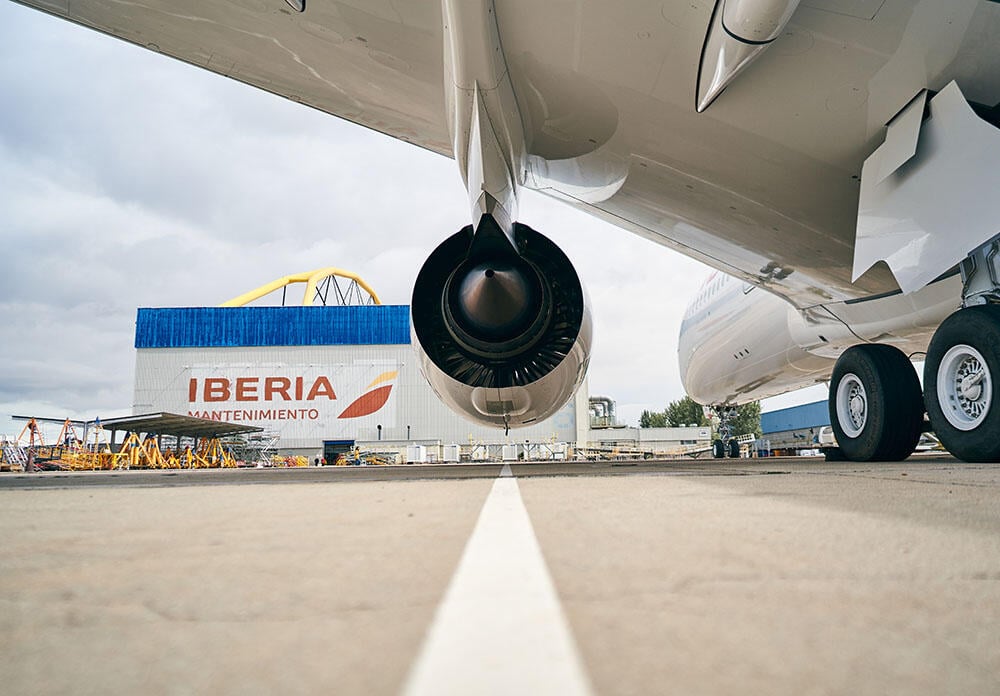
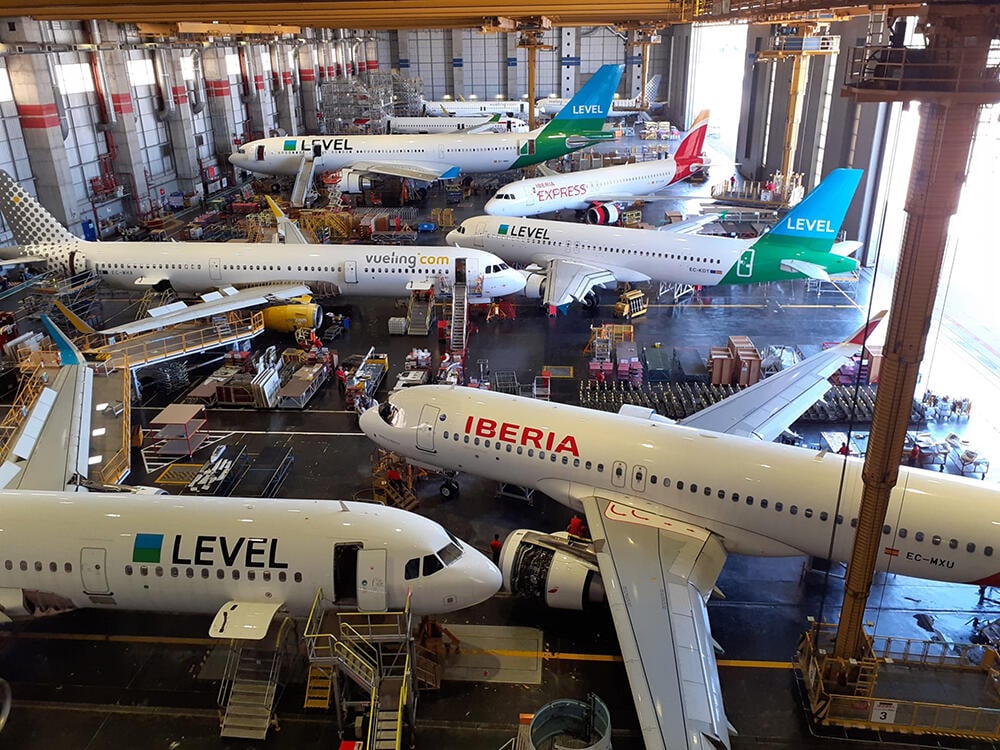
Iberia Maintenance operates three hangars in Madrid and one in Barcelona. Aviation Week Network took a look inside the company’s La Muñoza hangar, near Adolfo Suárez Madrid–Barajas Airport. The facility employs 2,100 staff, with around 1,000 working in the base maintenance section.

Customer Portfolio
Aside from supporting Iberia’s fleet, the La Muñoza facility mainly services International Airlines Group (IAG) carriers, including Aer Lingus, British Airways and Spanish low-cost carrier Level.
New-Generation Engine Prep
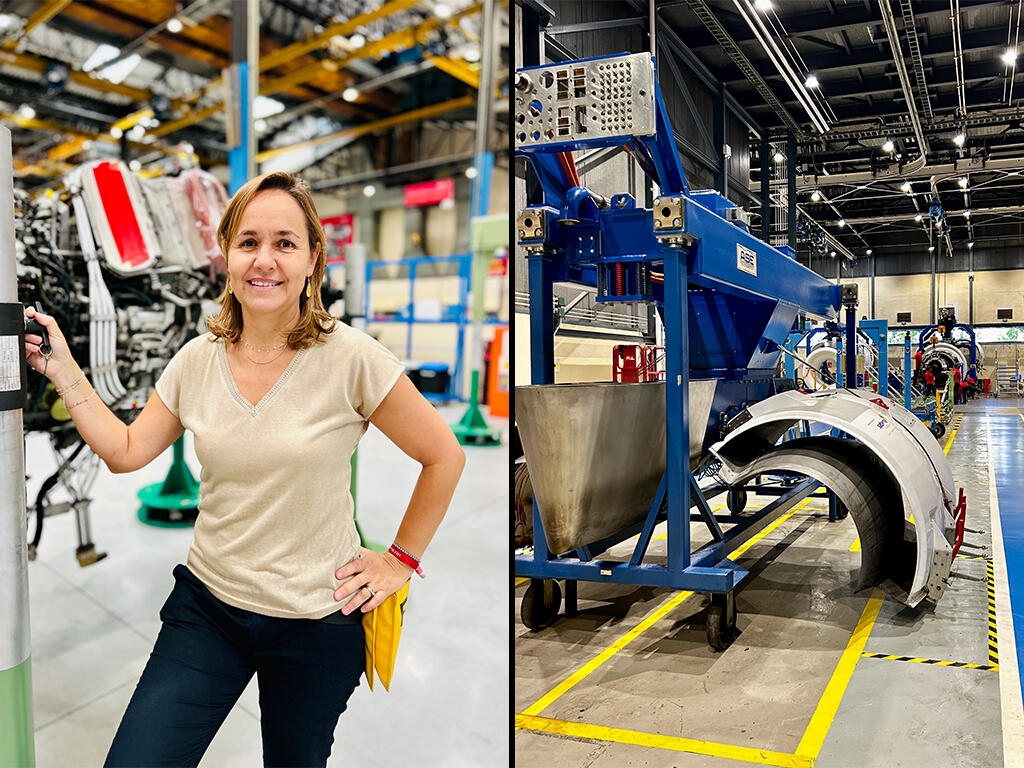
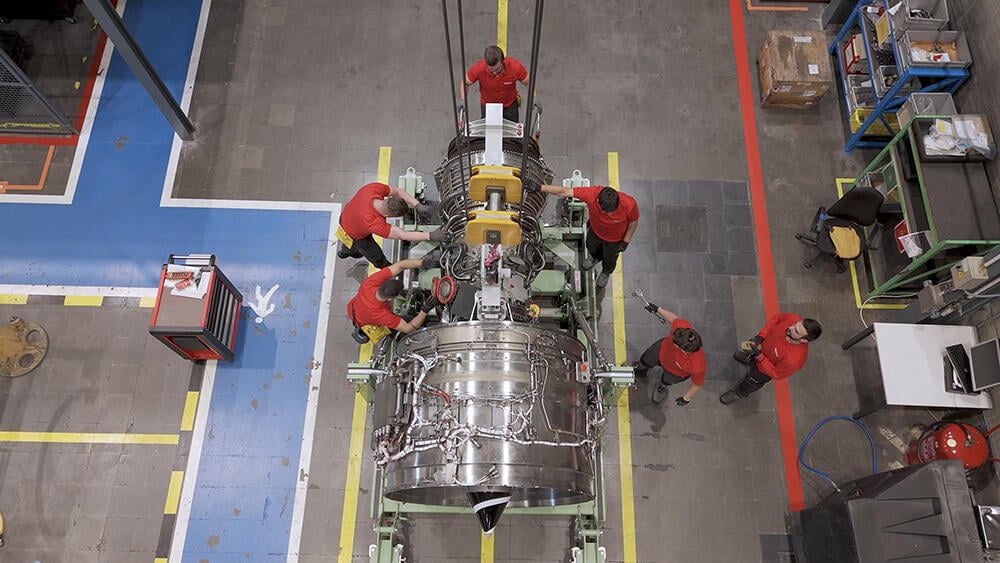
Eylo González, engine services director (pictured left), says Iberia wants to set a benchmark in repairing narrowbody engines. The share of IAG-focused engine repair in La Muñoza is between 10-15%; the rest is comprised of third-party business from airlines around the world. Iberia Maintenance is preparing for more work related to new-generation engines and to increase its portfolio with the Pratt & Whitney PW1100G. Its mechanics are also preparing for the CFM International Leap-1A and -1B.
Changing Workload
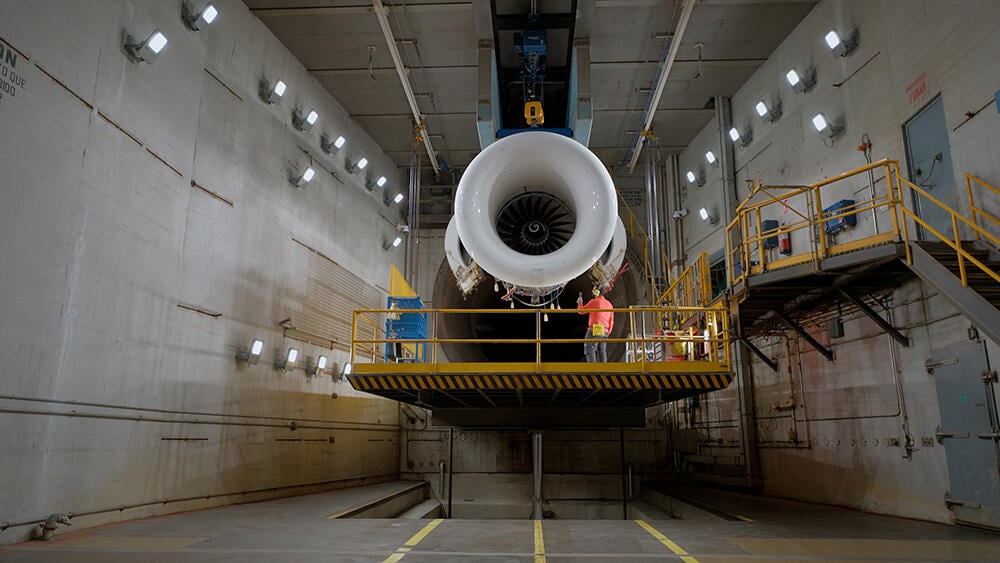
Pictured here is the site’s engine test cell. Approximately 40% of the site’s workload involves International Aero Engines (IAE) V2500 engines, while CFM engines comprise 50% and Pratt & Whitney geared turbofan (GTF) engines make up the remaining 10%. “We are young with the GTF, but this segment is increasing and the other decreasing,” González says.
Base Maintenance
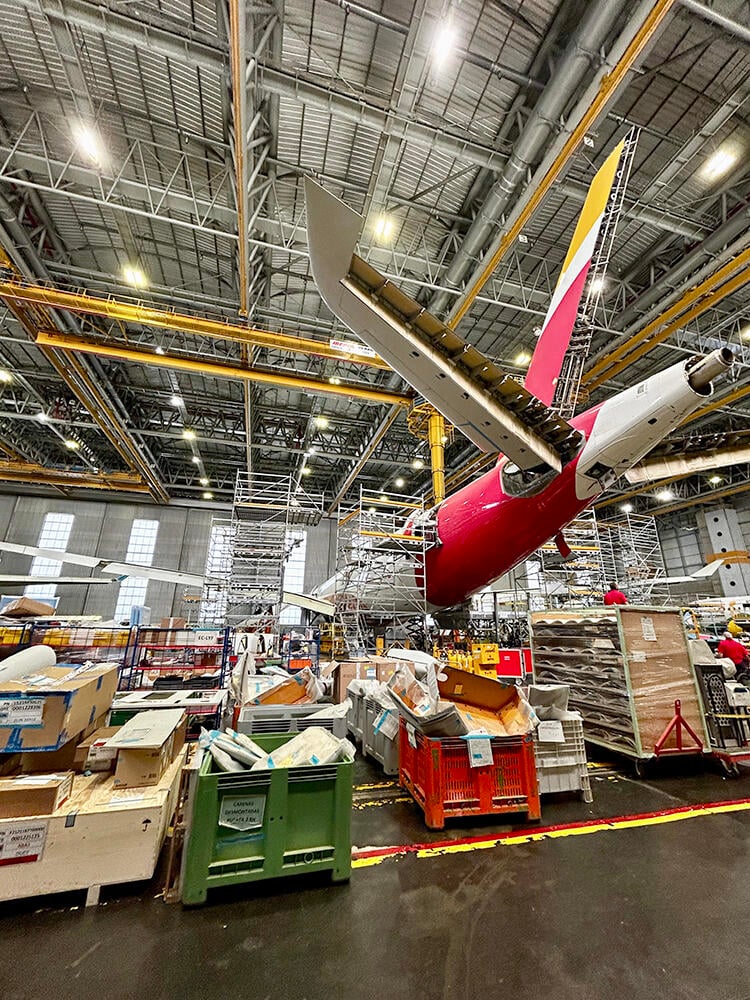
An Iberia Airbus A330-300 undergoes base maintenance work in La Muñoza. Currently, the facility performs base maintenance on all Airbus A319/320/321ceo and A320/321neo family aircraft, as well as the recently introduced A321XLR and the A330-200/-300.
12-Year Inspection
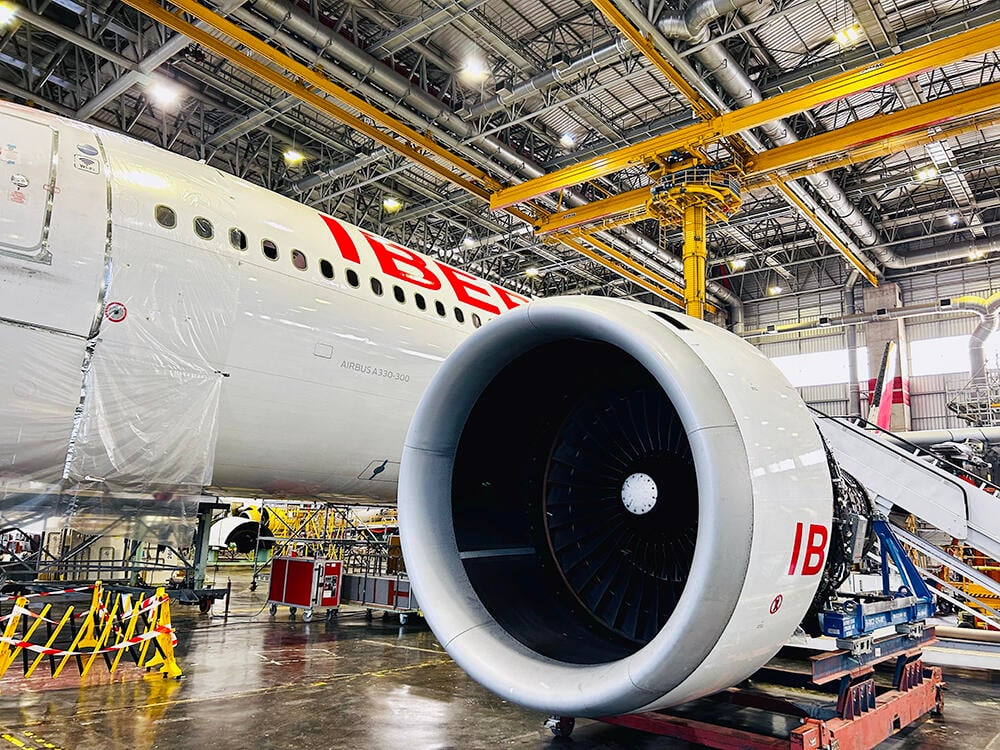
During Aviation Week’s visit, an engine replacement was being performed on an A330-300. A 12-year inspection on an A330 includes 20,000 work hours and takes around 40 days. During the winter season, Iberia carries out 180–200 base maintenance checks.
In-House Considerations
Iberia is analyzing bringing Airbus A350 base maintenance in-house as its widebody fleet continues to grow. “I hope that early next year we [will] have the final decision,” says Natalia Martínez del Río, airframe services director. “We estimate that the preparation for new capacity in heavy maintenance can take up to around a year and a half.”
Wheel Removal
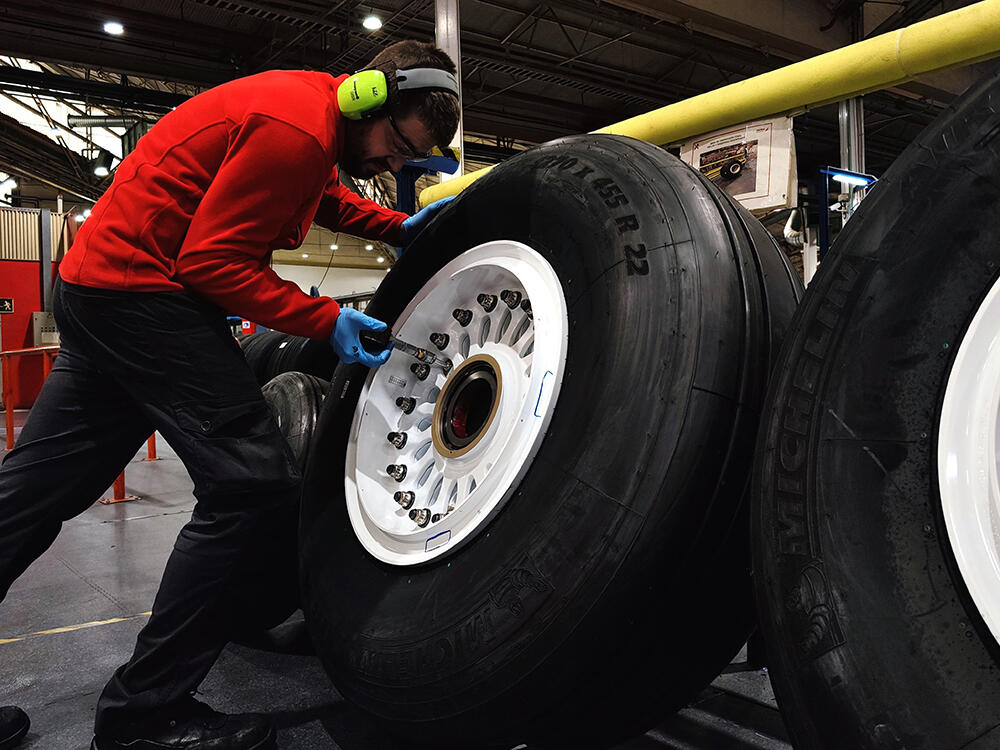
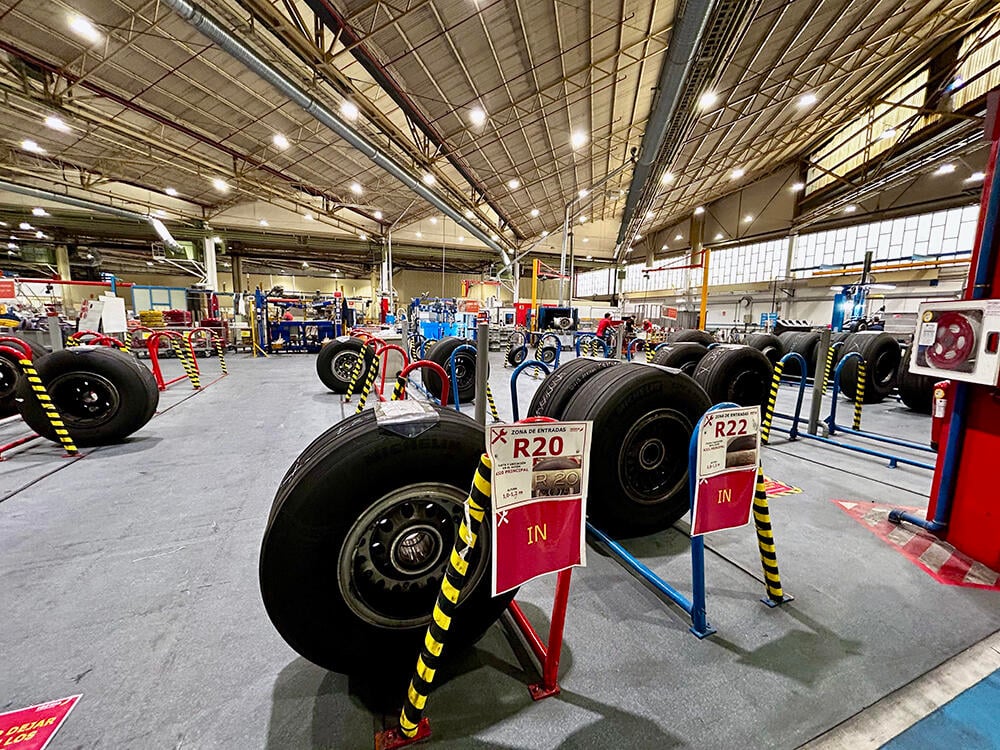
Wheels are typically removed from an aircraft after an average of 250 cycles, depending on the environment in which the aircraft operates.
Engine Repair
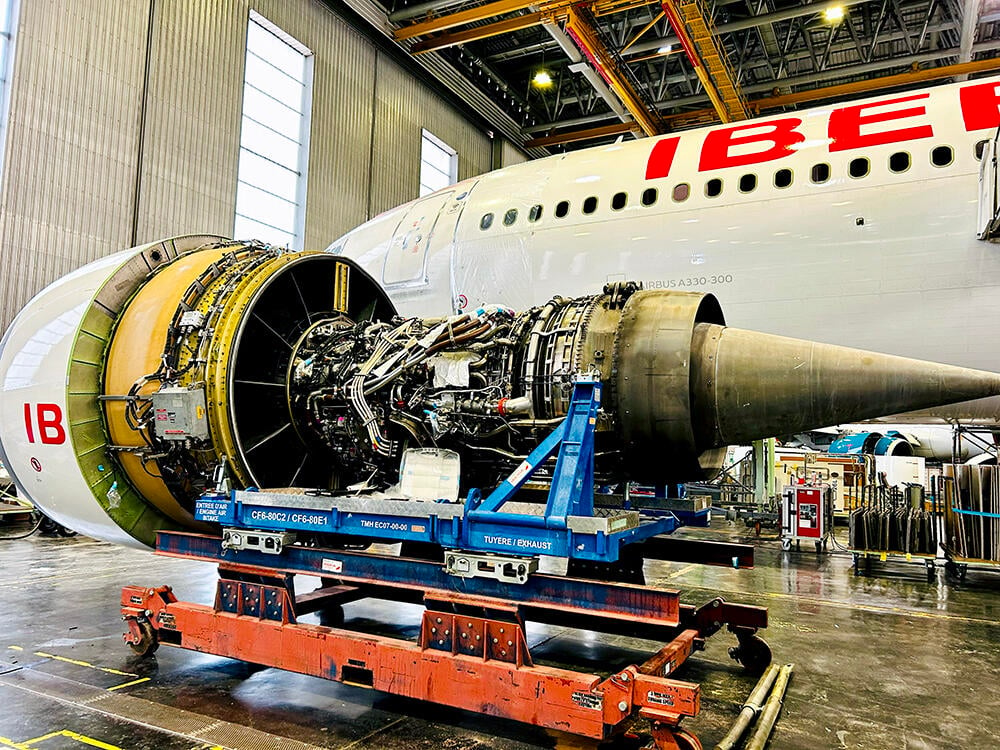
Another view of an engine repair. Iberia Maintenance has been overhauling CFM56 engines since 1992. The company is part of the IAE engine MRO network.
Components Section
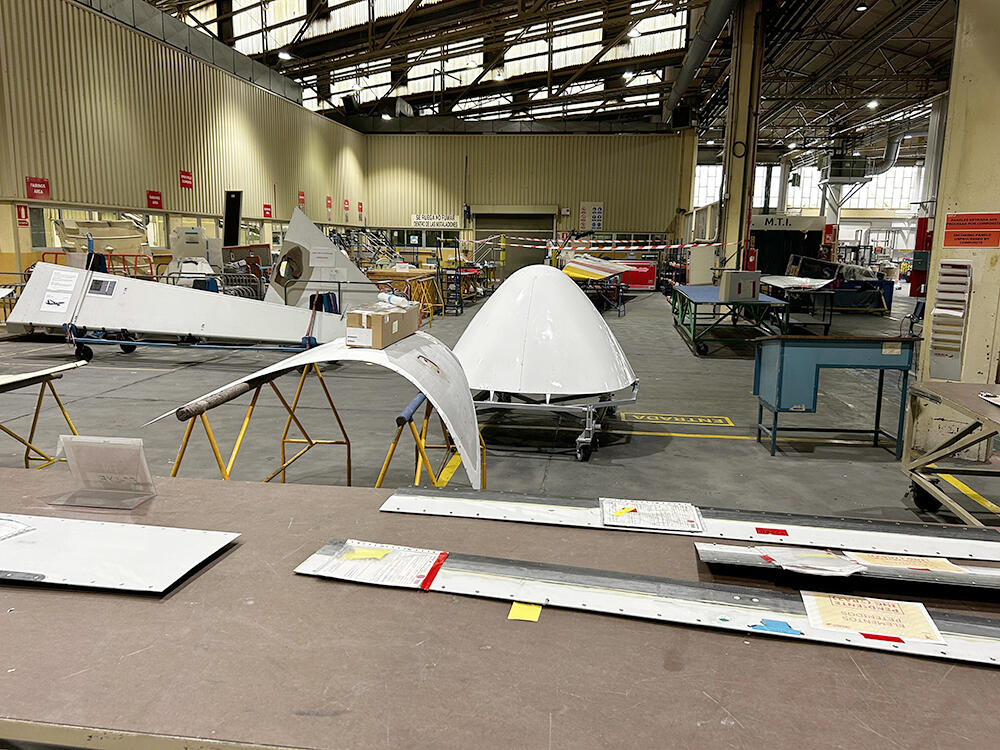
The La Muñoza site has 34,350 m2 (approximately 370,000 ft.2) of component shop facilities.
Component Capabilities
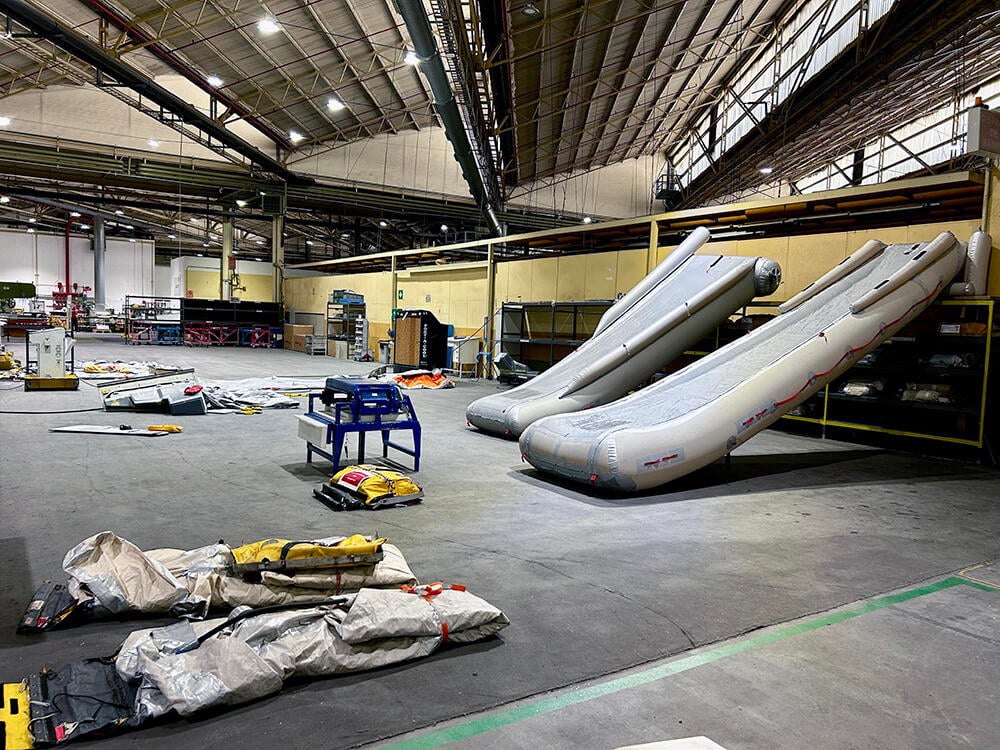
Teresa Martín Laso, Iberia’s components management senior manager, says the site has 10 specialized production lines for overhaul, repair, exchange, replacement and testing of aircraft components and engine accessories. It focuses mainly on components for Airbus aircraft.
Component Inventory
The site has 3,000 m2 (approximately 32,000 ft.2) of component workshops and more than €10 million ($11.7 million) in inventory dedicated to high-rotation elements, such as batteries, wheels and brakes.
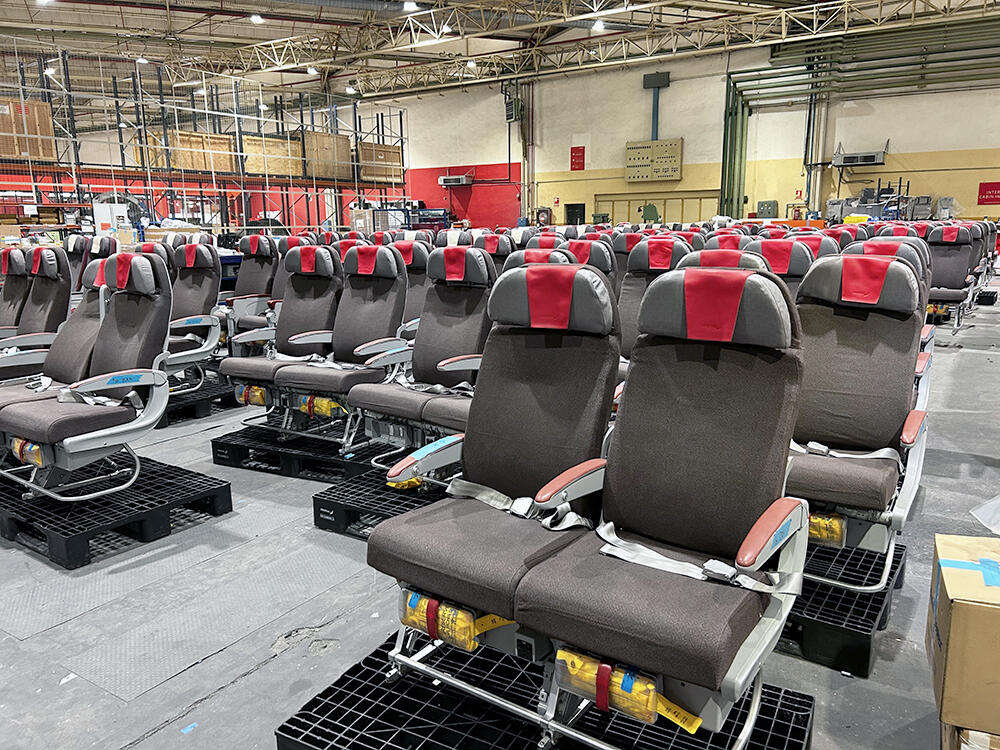
Have A Seat
The facility also offers passenger seat repair and maintenance.
Aviation Week Network takes a look inside Iberia Maintenance’s La Muñoza MRO facility, near Adolfo Suárez Madrid–Barajas Airport.