
Gallery: Inside Horizon Air’s PDX Maintenance Base
April 09, 2026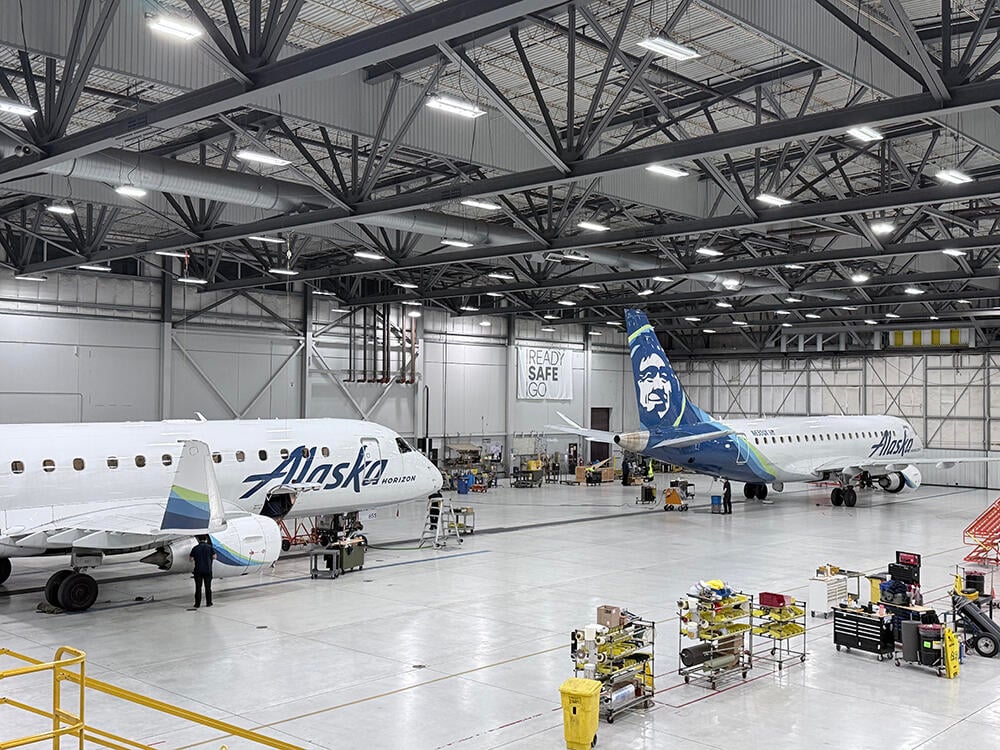
Behind The Scenes
Horizon Air’s Portland International Airport (PDX) maintenance facility is around 180,000 ft.2 and features a hangar that can accommodate up to seven Embraer 175s. It also includes an engine shop, parts warehouse, engineering department, training facilities and a variety of back shops, including sheet metal, composites, accessories, nondestructive testing, tires and batteries.
Staffing Up
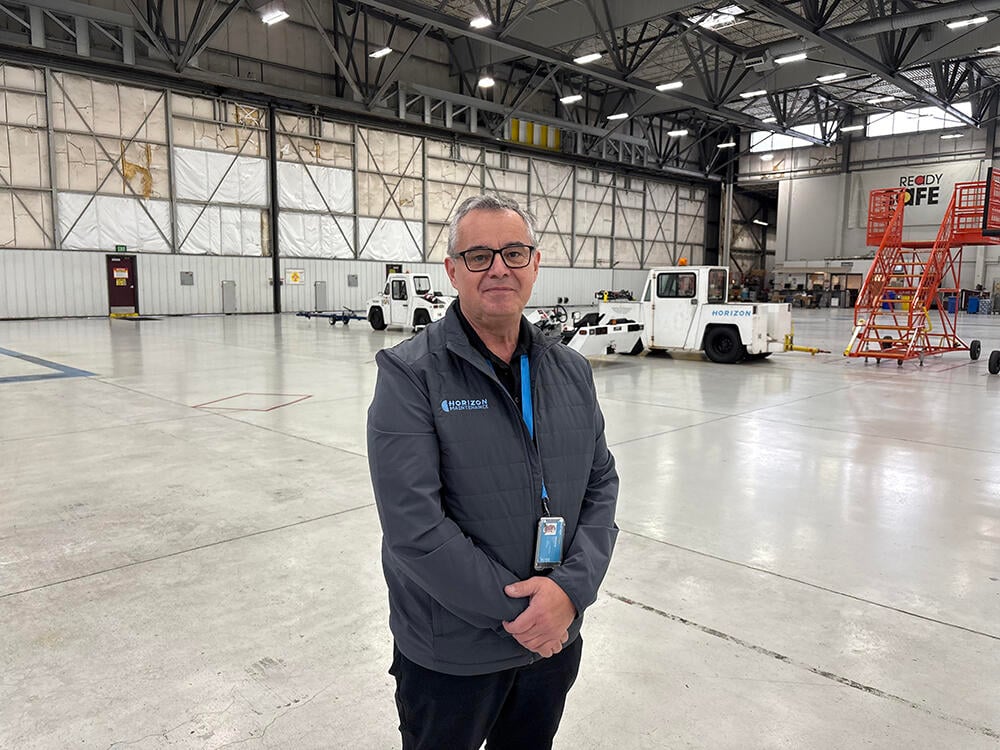
Archie Vega, Horizon Air’s director of maintenance, planning and development (pictured here), said the facility employs 122 mechanics and around 60 support staff. Typically, the facility has 18 maintenance staff working the day shift and around 30 working the night shift.
Growing Fleet
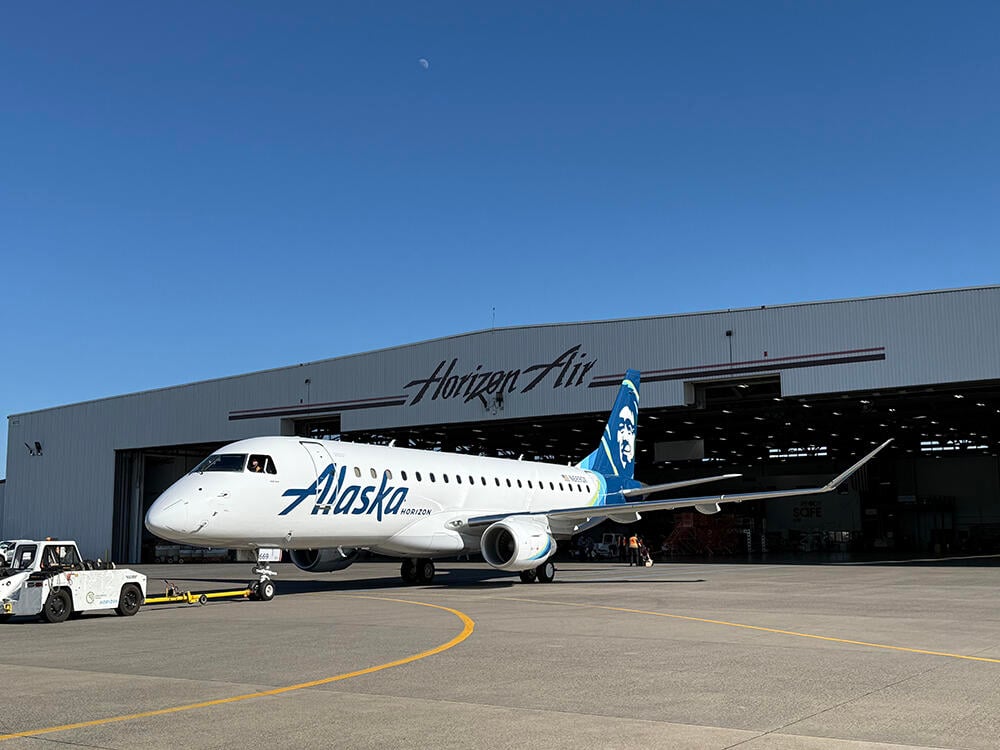
The facility focuses entirely on the airline’s E175 fleet, which will be growing to 50 aircraft when Horizon Air takes delivery of three more E175s in May and June. “It’s a lot easier to go out and buy Embraers than it is [to buy] Boeing or Airbus,” said Vega. “If we put in an order this year, we can start getting them next year.” The fleet is relatively young—Vega said the oldest E175 is around 11 years old.
Maintenance Partners
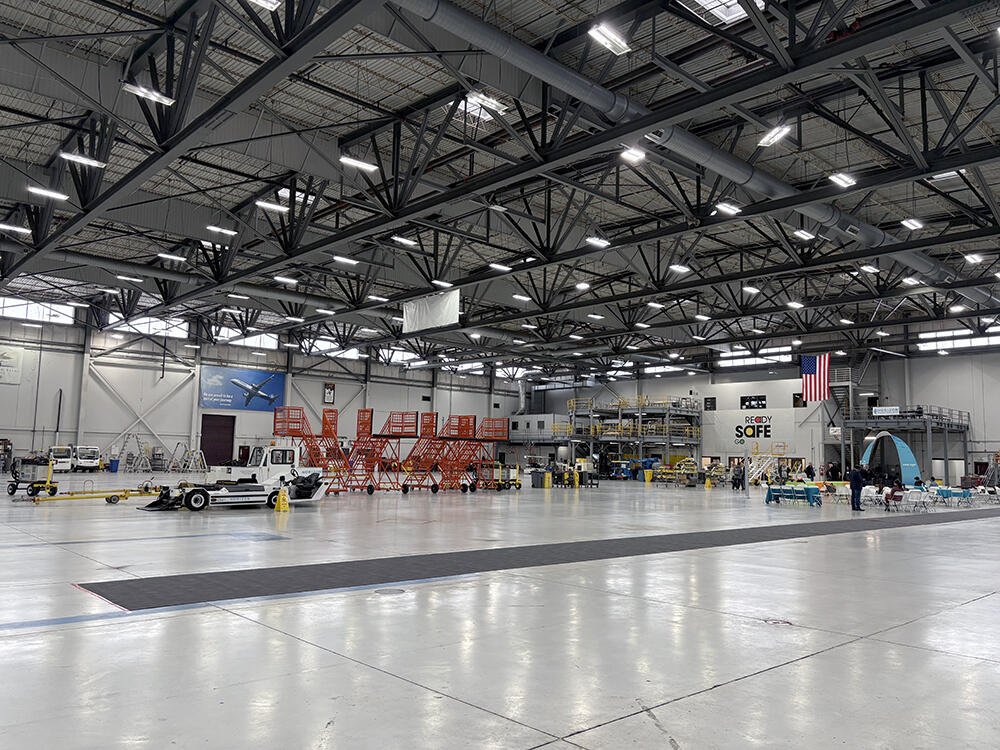
Horizon Air outsources some maintenance to AAR, but Vega said the airline tries to perform many services in-house. The airline also has maintenance facilities in Anchorage, Alaska; Everett, Redmond and Spokane, Washington; Boise, Idaho; and Las Vegas, Nevada. Vega said Horizon Air takes advantage of some maintenance synergies across the Alaska Air Group—for instance, Horizon performs maintenance for Alaska Airlines in Boise, while Alaska performs maintenance for Horizon in cities such as Los Angeles and San Diego.
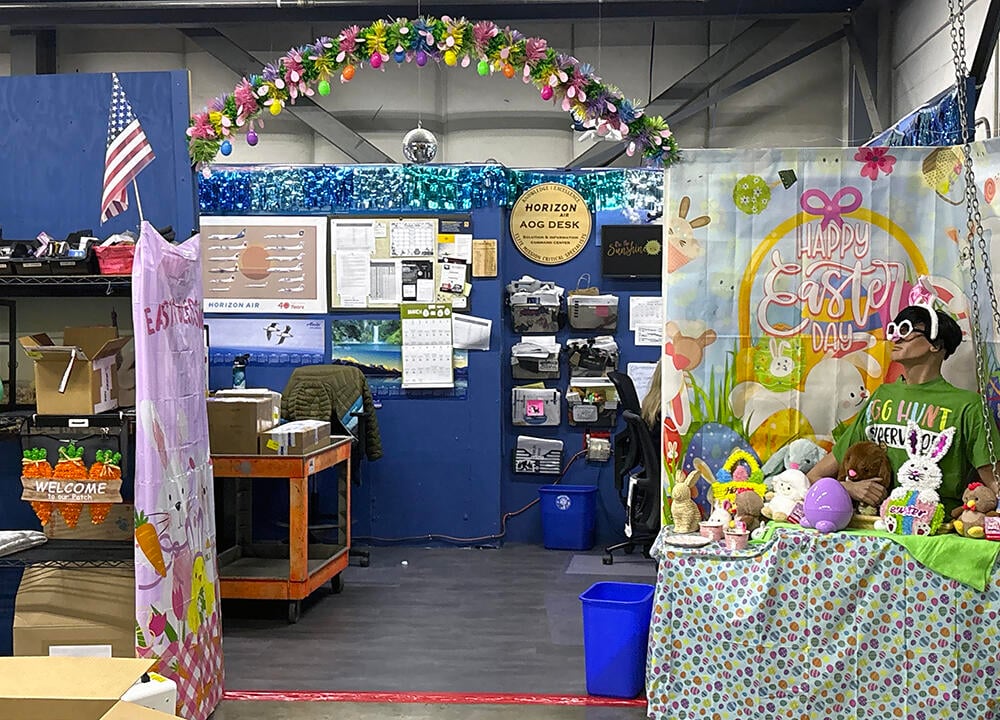
Festive Support
Horizon Air’s aircraft-on-ground desk at PDX features rotating holiday décor. During Aviation Week’s visit on April 1, it was decked out for Easter.

Engine Overhauls
Horizon’s PDX engine shop performs many maintenance tasks in-house, but overhauls are outsourced to GE Aerospace’s facility in Strother, Kansas. The airline has a power-by-the-hour contract with GE.
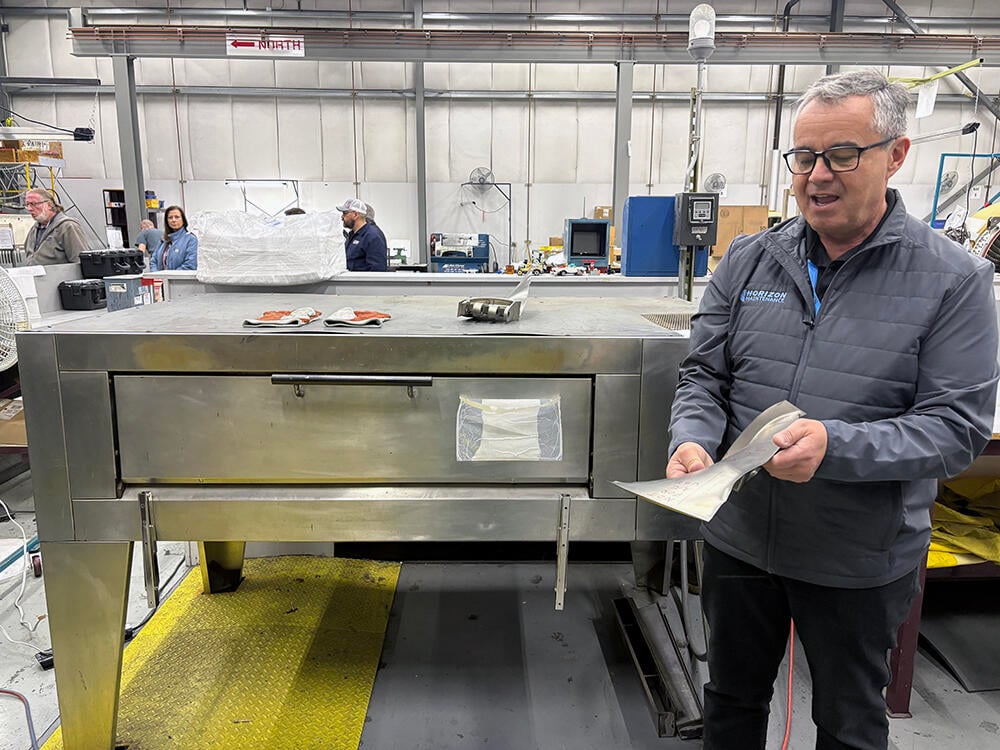
Blade Considerations
Vega said the engine shop most frequently deals with blade pins and blades. In this photo, Vega is standing in front of the “pizza oven,” which is used to bake or cure Molykote (an industrial lubricant) onto the engine fan blades and the fan blade retaining pins. He is holding a damaged blade that Horizon brings to show students at local schools. These blades cost $26,000 apiece when purchased new.
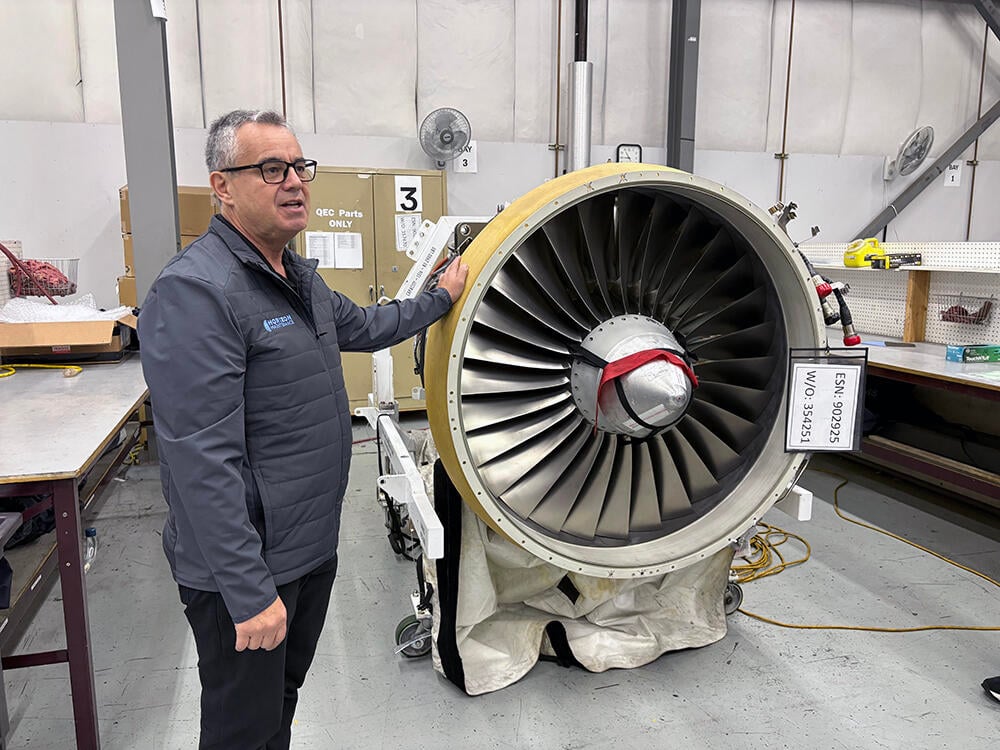
Engine Reliability
According to Vega, Horizon Air has never experienced an engine failure in its 10 years of operating E175s. During this period, the airline has only had two unscheduled engine removals.

Scheduled Removals
Vega said Horizon performed 1-2 scheduled engine removals a month last year, and this year, the airline only has one scheduled. “That’s why you see so many spare engines in here right now,” he said. “Normally, we only keep one spare and they’re constantly in overhaul, but we’ve been extremely lucky.”
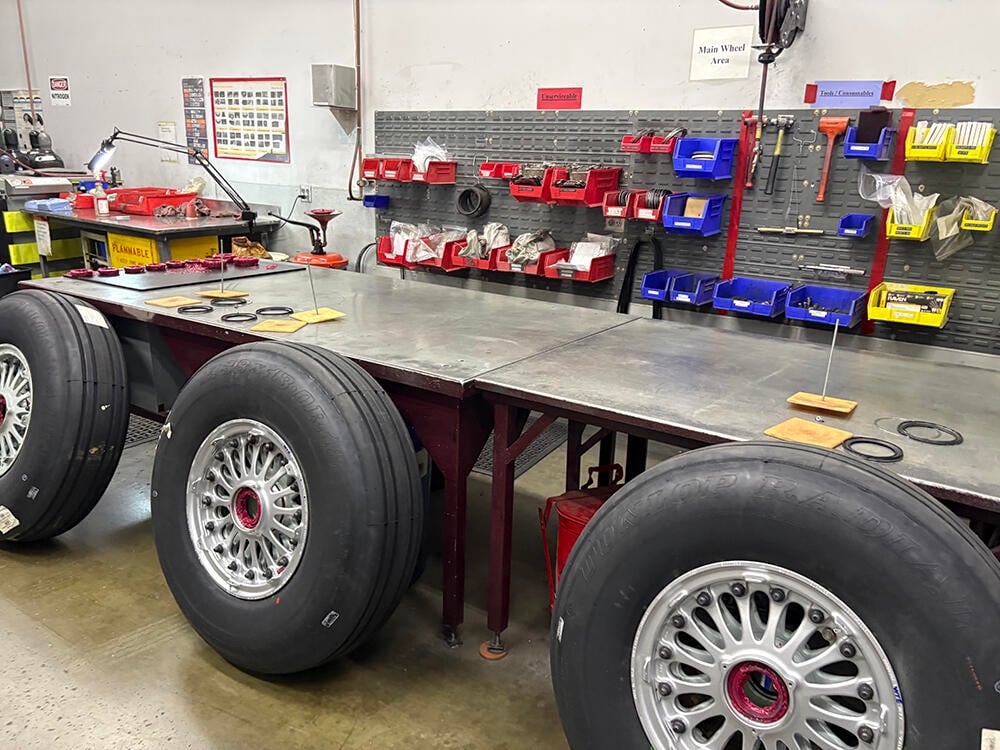
Tire Maintenance
Horizon performs its own tire maintenance work at PDX. Vega said this allows the airline to keep lower inventory levels due to higher control.
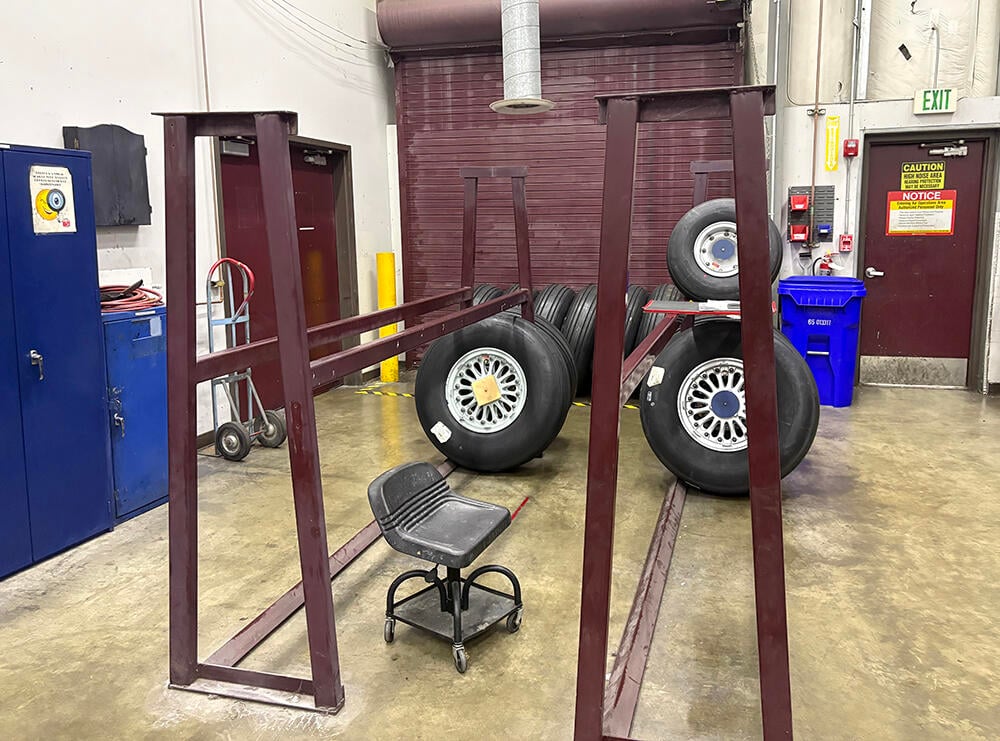
Switching It Up
The airline decided to switch from bias tires to radial tires for its aircraft main tires a few years ago. Since then, Vega said Horizon has gained about 2,000 cycles for them.
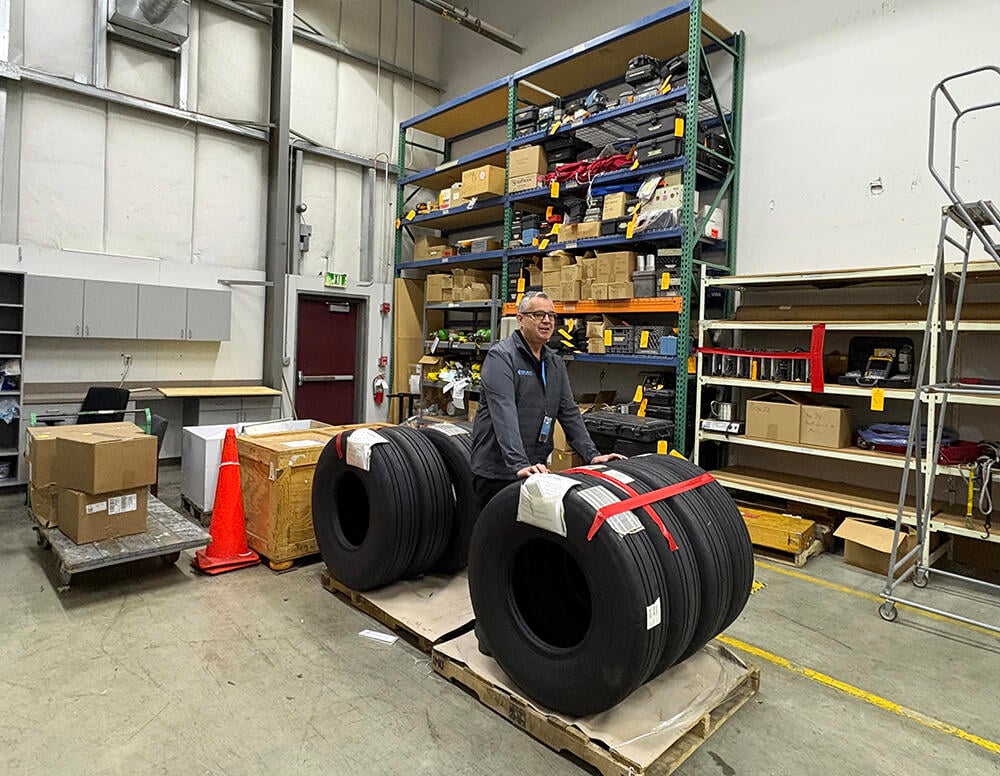
Tire Swaps
Pictured here are bias tires in what Vega calls the facility’s “junk” parts room. “The new airplanes get delivered and the first thing we do is take off the tires and swap them out,” he said.
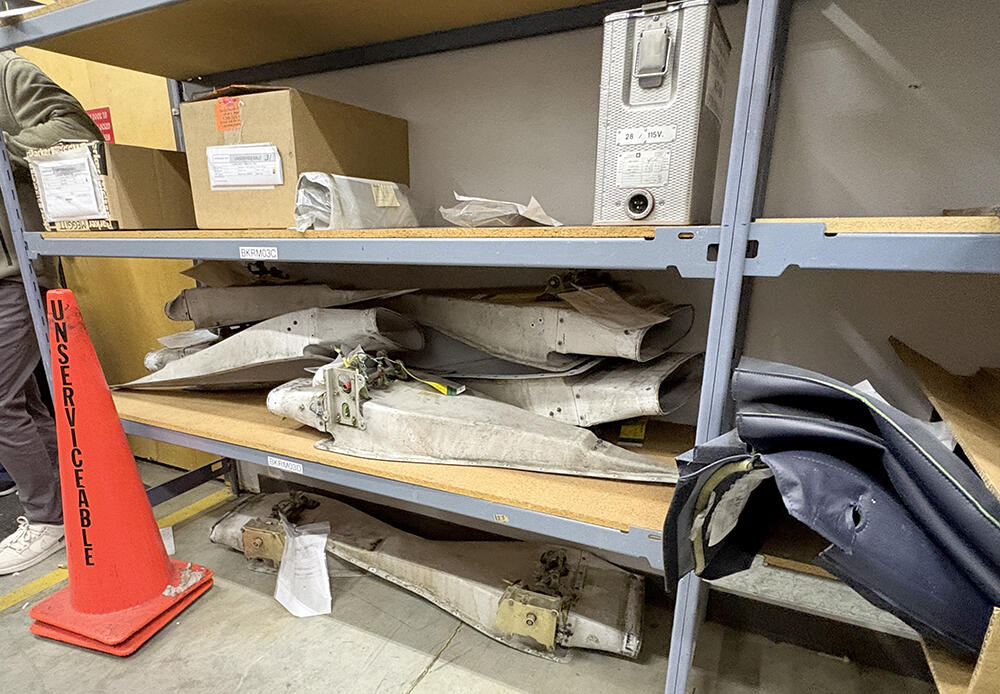
Junk Parts
The “junk” parts room features components from old De Havilland Canada Q400 aircraft that Horizon phased out and unserviceable E175 parts. These parts are placed on the market or donated to local schools. Horizon also donates leftover chemicals to local schools, which reduces the need to deal with hazmat disposal and results in “a win-win for everybody,” said Vega.
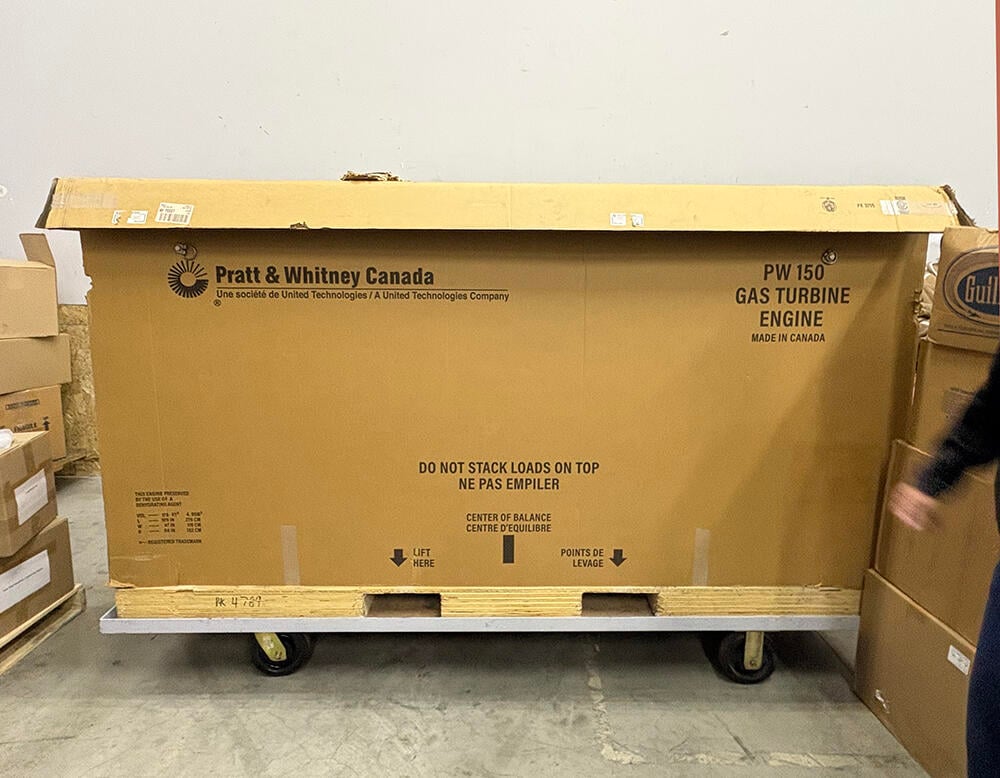
Engine Up For Grabs?
Pictured here is a Pratt & Whitney Canada PW150 engine, which would have powered a Q400. Vega fielded a barrage of donation requests for the engine from aviation maintenance technician school instructors who were also visiting the PDX facility alongside Aviation Week.
Inventory And Innovations
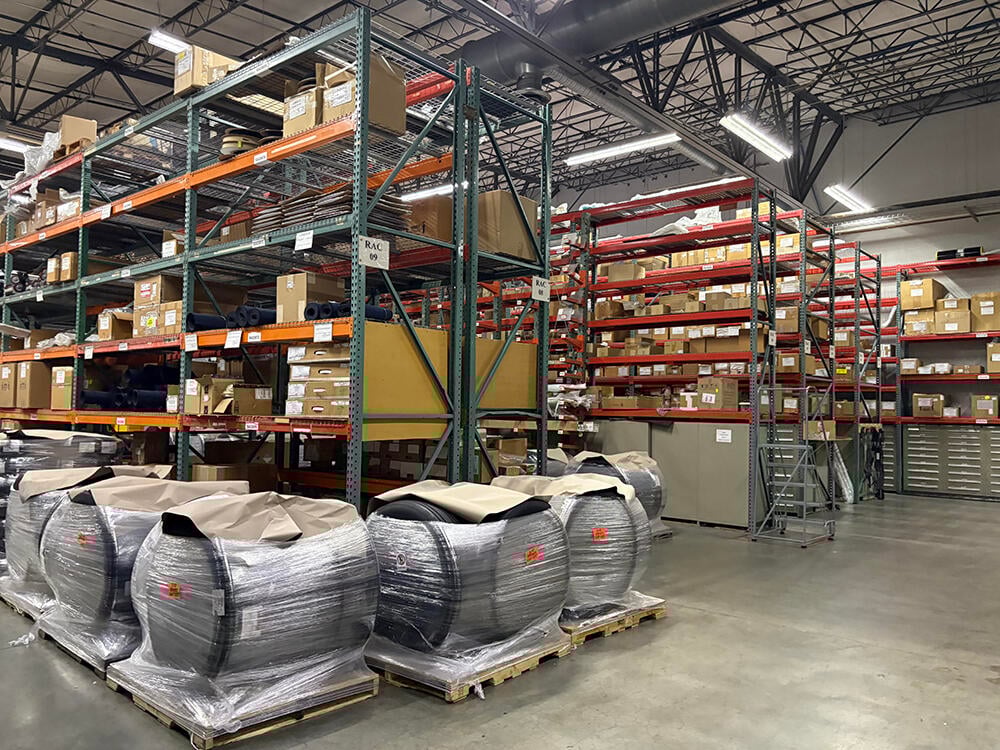
The facility also holds around $55 million worth of parts inventory in this warehouse. Horizon Air uses Trax software for inventory management, tracking and maintenance logbooks. Vega said the facility is not yet 100% paperless because some older-generation technicians prefer to use paper task cards. The airline is also now using an in-house artificial intelligence (AI) tool built through the Alaska Air Group for things like risk analysis and projections for when components such as brakes will need to come off the aircraft.
Top Expense
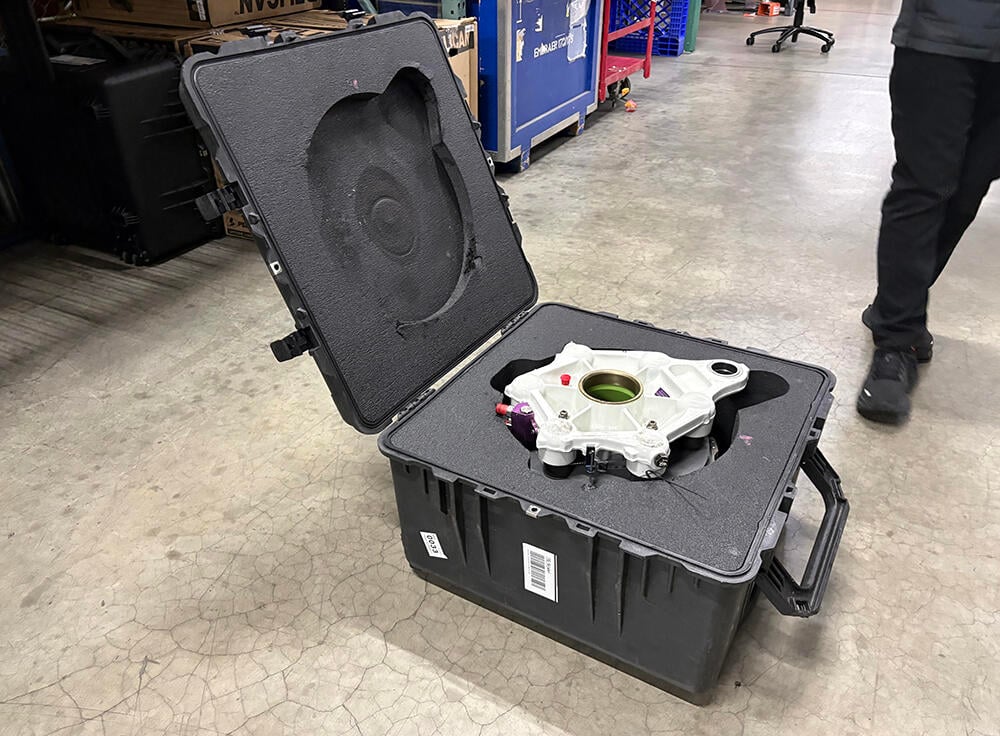
Vega said brakes are Horizon Air’s top rotable expense. Pictured here are brakes in a custom Pelican case that the airline uses to move them around more easily and safely. He noted that the airline’s brakes experience more wear and tear when operating in Alaska.
Accessory Shop
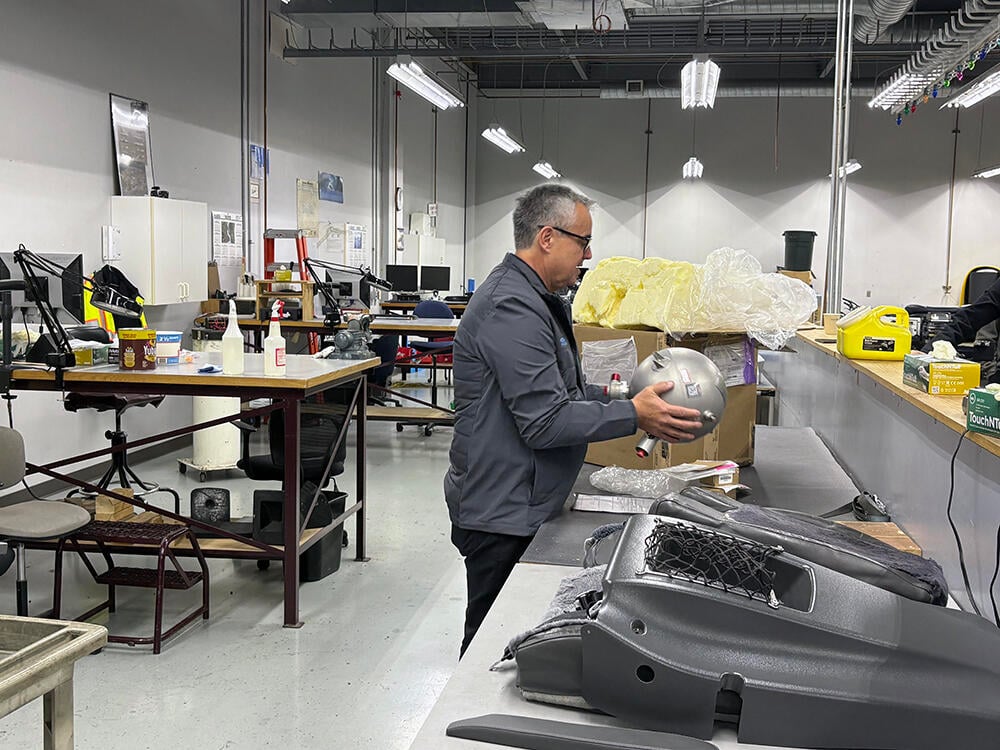
Horizon Air’s accessory shop focuses on ATA Chapter 25 parts—“Basically everything we do inside the aircraft,” said Vega. In this photo, he is holding up an aircraft fire bottle, which is a pressurized container that holds fire suppressants.
Sustaining Seats
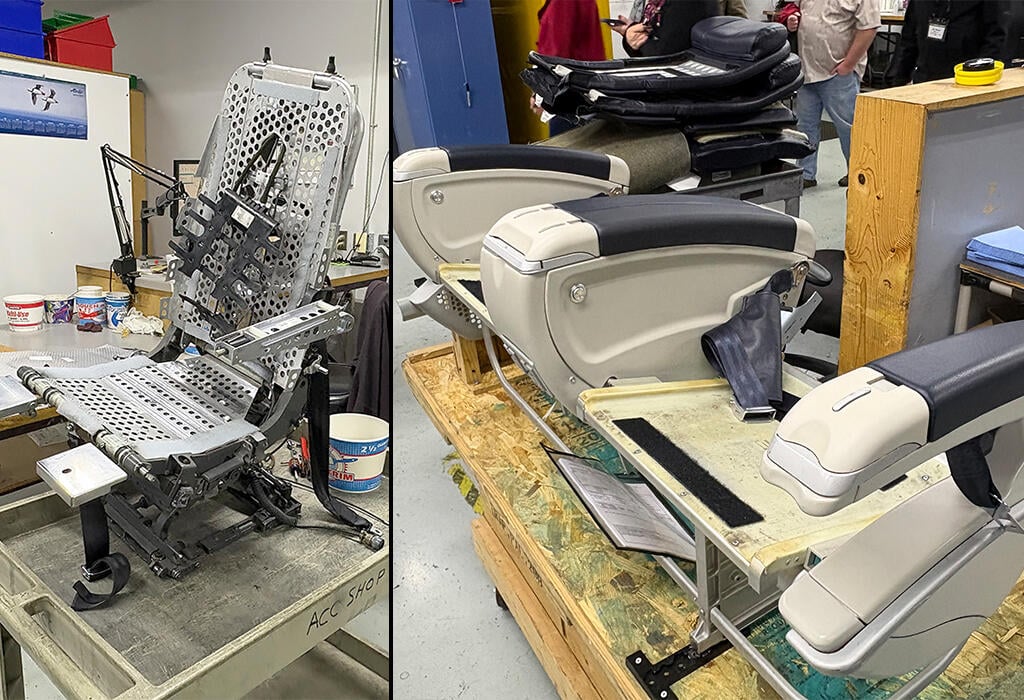
Pilot and passenger seats being repaired and refurbished inside the accessory shop.

NDT Conundrum
Inside Horizon Air’s nondestructive testing (NDT) shop, Vega noted that the PDX facility only has three employees who are Level 2-qualified in NDT—all of whom will be retiring soon—so he is worried about finding qualified replacements. “Even if we started now, it would take us about four or five years to get all the time that’s required to become a Level 2 [NDT technician],” he said.
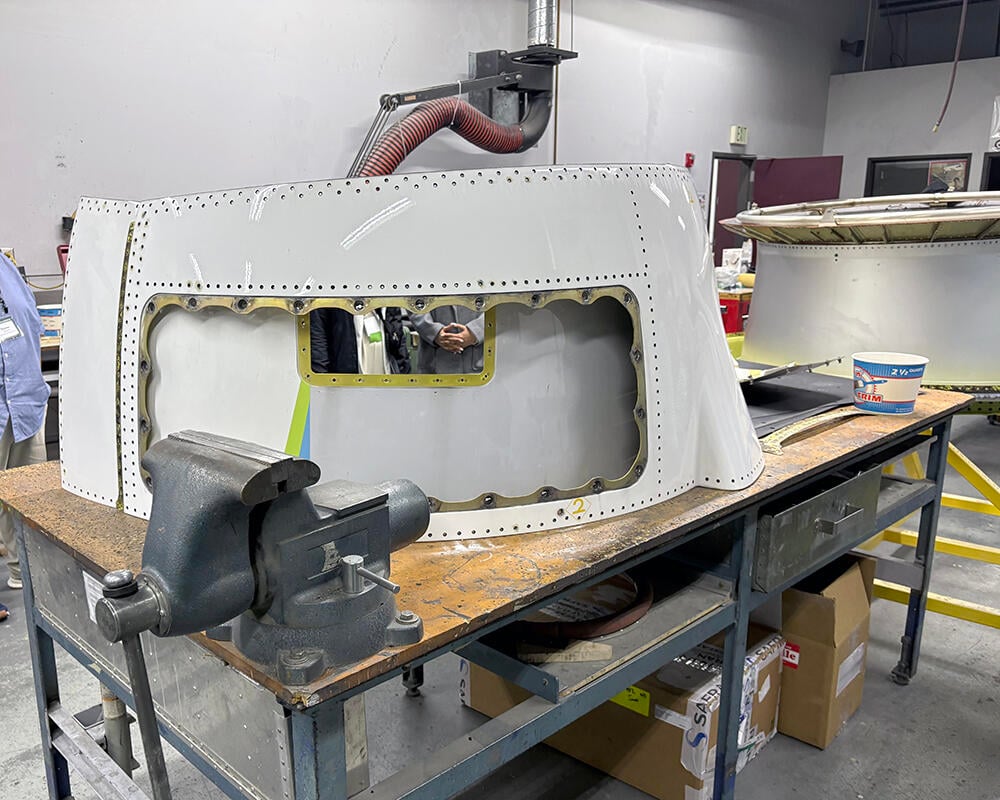
Sheet Metal Shop
Pictured here are engine inlet components inside Horizon’s sheet metal shop. Vega said sheet metal is another skill area in which it is difficult to find qualified talent.
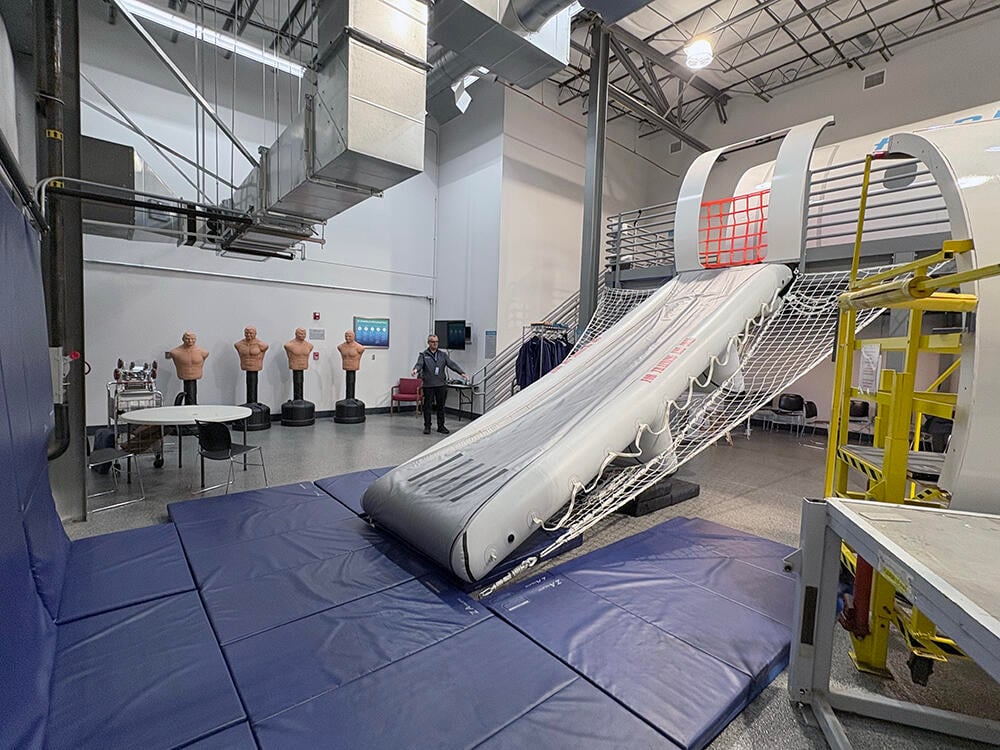
Sliding Prep
Pictured here is Horizon Air’s on-site training room for cabin safety features such as evacuation slides and doors. The airline’s ground operations, flight operations, flight attendants and maintenance staff must all be qualified to operate the aircraft doors.
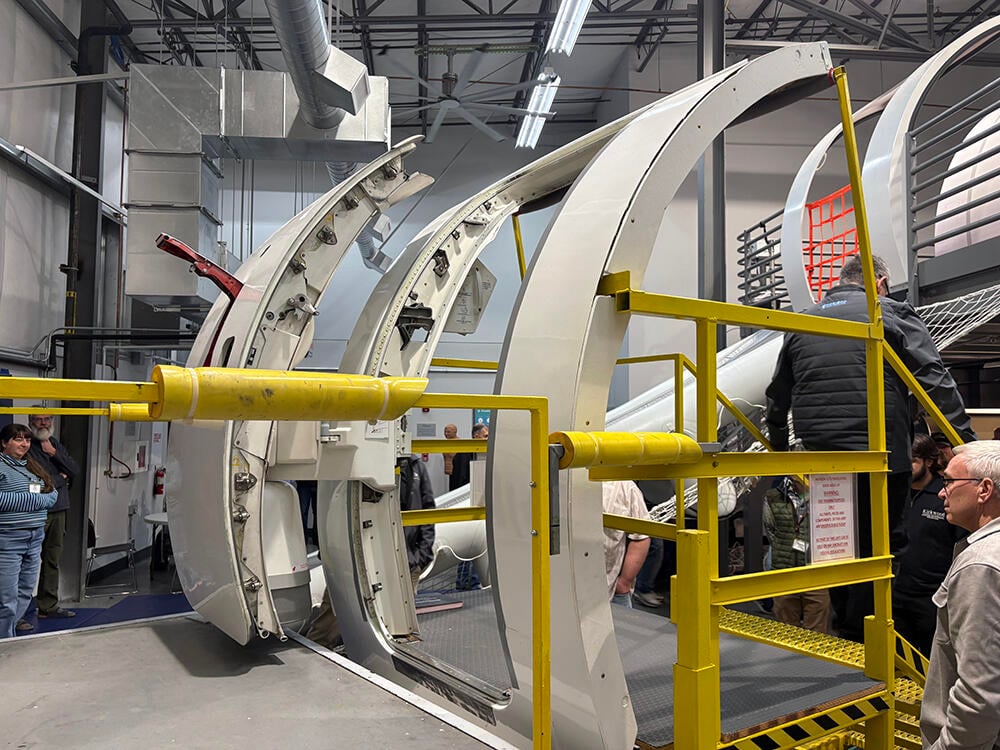
Maintaining Trainers
This door trainer was cut out of an aircraft parked in the desert and Horizon’s PDX sheet metal team built all of the support components around it. Vega said the PDX maintenance team performs all services on this room’s training equipment, keeping logbooks for maintenance records on the training equipment the same way they would for in-service components.

Giving Back
Horizon Air’s maintenance team at PDX builds bikes that are donated to local children in foster families on Aviation Maintenance Technician Day.
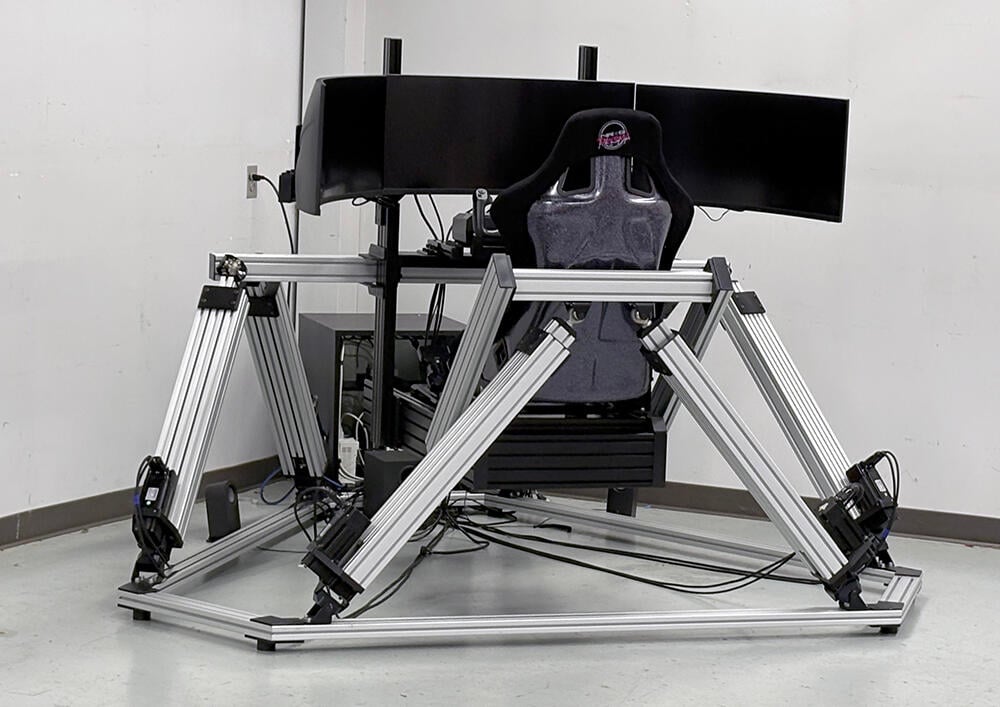
Flight Simulator
This flight simulator was built by high school students in the Oregon Aerospace Careers for Everyone program who interned at Horizon last year. “Now we own it and we bring it out when we have kids here,” said Vega. “When we open up the hangars and put that on the hangar floor, they love it.”
Aviation Week takes a look inside Horizon Air’s Portland International Airport maintenance facility.