https://aviationweek.com/themes/custom/particle/dist/app-drupal/assets/awn-logo.svg
Skip to main content
  • Market Sector
    • Aerospace
    • Air Transport
    • MRO
    • Defense
    • Space
    • Business Aviation
  • Markets
    • Aerospace
      • Aircraft & Propulsion
      • Connected Aerospace
      • Emerging Technologies
      • Manufacturing & Supply Chain
      • Advanced Air Mobility
      • Sustainability
    • Air Transport
      • Aircraft & Propulsion
      • Interiors & Connectivity
      • Airports & Networks
      • Airlines & Lessors
      • Safety, Ops & Regulation
      • Maintenance & Training
      • Sustainability
    • MRO
      • Aircraft & Propulsion
      • Interiors & Connectivity
      • Emerging Technologies
      • Supply Chain
      • Safety, Ops & Regulation
      • Workforce & Training
      • Sustainability
    • Defense
      • Aircraft & Propulsion
      • Sensors & Electronic Warfare
      • Missile Defense & Weapons
      • Supply Chain
      • Budget, Policy & Operations
      • Sustainability
    • Space
      • Launch Vehicles & Propulsion
      • Commercial Space
      • Space Exploration
      • Satellites
      • Budget, Policy & Regulation
      • Operations & Safety
    • Business Aviation
      • Aircraft & Propulsion
      • Interiors & Connectivity
      • Airports, FBOs & Suppliers
      • Flight Deck
      • Safety, Ops & Regulation
      • Maintenance & Training
      • Sustainability
    • In Focus
      • Middle East & Africa
  • Marketplace
  • Services
    • Services
      • Advertising
      • Marketing Services
      • Fleet, Data & APIs
      • Research & Consulting
      • Network and Route Planning
      • Marketplace
  • Store
    • Market Sector

      • Aerospace
      • Air Transport
      • MRO
      • Defense
      • Space
      • Business Aviation
    • Type View All Products
      • Intelligence Bundles
        • AWIN - Premium
        • AWIN - Aerospace and Defense
        • AWIN - Business Aviation
        • AWIN - Commercial Aviation
      • Market Briefings
        • Advanced Air Mobility Report
        • Aerospace Daily & Defense Report
        • Aviation Daily
        • SpeedNews
        • The Weekly of Business Aviation
      • Directories
        • Air Charter Guide
        • Aviation Week Marketplace
        • Route Exchange
        • The Engine Yearbook
      • Data Services
        • AC-U-KWIK
        • Aircraft Bluebook
        • Airportdata.com
        • ASM Global Route Development
        • CAPA – Centre for Aviation
        • Catchment Analyzer
        • Defense Market Analyzer
        • Fleet Discovery Civil
        • Fleet Discovery Military
        • Fleet & MRO Forecast
        • MRO Prospector
        • Tracked Aircraft Utilization
      • Publications
        • African Aerospace
        • Air Transport World
        • Arabian Aerospace
        • Aviation Week & Space Technology
        • Aviation Week & Space Technology - Inside MRO
        • Business & Commercial Aviation
        • CAPA - Airline Leader
        • Routes magazine
        • Show Business
  • Events
    • Recent webinars
    • Events View All Events
      • MRO
        • MRO Americas
        • MRO Asia
        • MRO Australasia
        • MRO Baltics & Eastern Europe Region
        • MRO Europe
        • MRO Greater China
        • MRO Latin America
        • MRO Middle East
        • MRO Southeast Asia
        • Military Aviation Logistics and Maintenance Symposium (MALMS)
      • Commercial Aviation/A&D
        • Aero-Engines Americas
        • Aero-Engines Europe
        • Aero-Engines Asia-Pacific
        • Engine Leasing Trading & Finance Europe
        • Engine Leasing, Trading & Finance Americas
      • Air Transport
        • Routes Americas
        • Routes Europe
        • Routes World
        • CAPA Airline Leader Summit - Airlines in Transition
        • CAPA Airline Leader Summit - Americas
        • CAPA Airline Leader Summit - Latin America & Caribbean
        • CAPA Airline Leader Summit - Australia Pacific
        • CAPA Airline Leader Summit - Asia & Sustainability Awards
        • CAPA Airline Leader Summit - World & Awards for Excellence
        • GAD Americas
        • GAD World
      • Aerospace and Defense
        • Defense Conference
      • Awards
        • Aviation Week 20 Twenties
        • Aviation Week Laureate Awards
        • ATW Airline Awards
        • Program Excellence Awards and Banquet
        • CAPA Asia Aviation Summit & Awards for Excellence
        • Space Tech Challenge Awards
  • About
    • About Aviation Week Network
      • Our Story
      • Content and Data Team
      • Aviation Week & Space Technology 100-Year
    • Contact Us
      • Subscriber Services
      • Advertising, Marketing Services & List Rentals
      • Content Sales
      • Events
      • PR & Communications
      • Content Licensing and Reprints
      • FAQ
  • Log In
  • Register
  • My Account
    • Profile
    • Sign Out
  • AWIN Access
  • My cart
    Back to
  1. Home

Share

Gallery: A look at NASA's Commercial Lunar Payload Services Deliveries

May 30, 2023
Astrobotic Technology Griffin Lander

Credit: Astrobotic Technology

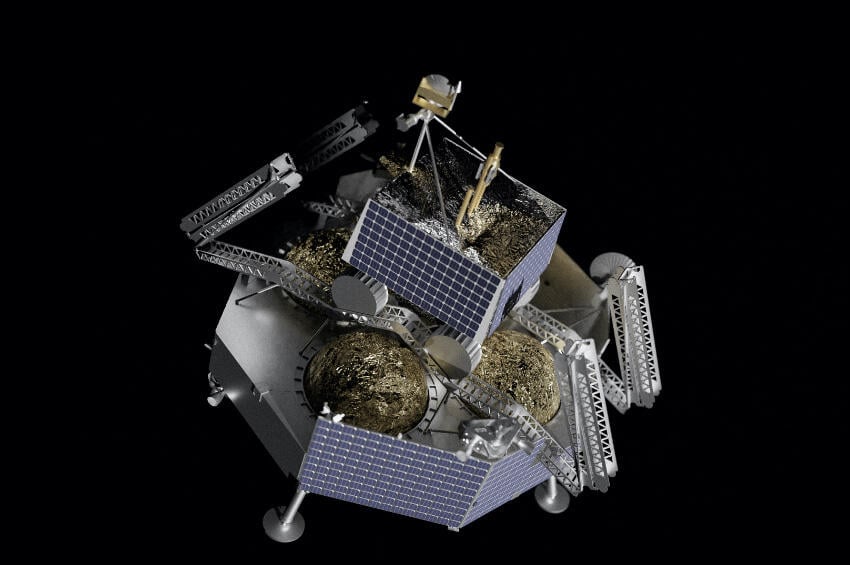
The Astrobotic Technology Griffin Lander, illustrated here, will carry NASA payloads for the Volatiles Investigation Polar Exploration Rover (VIPER) mission, also known as TO 20A. VIPER is a rover expected to land sometime in late 2024. It will conduct a 100-day mission to explore resources on the Moon. The 625-kg lander has seven main engines and four clusters of attitude control thrusters to control its orientation. 

Volatiles Investigation Polar Exploration Rover (VIPER)

Credit: NASA/Daniel Rutter

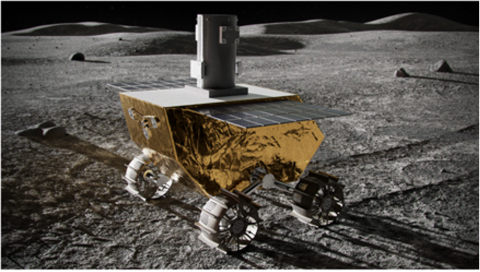
This artist’s concept illustrates VIPER, a rover payload on the Astrobotic Technology Griffin Lander planned for delivery in late 2024 that will locate surface and subsurface volatiles, or substances that vaporize easily, across a variety of thermal environments. The payload will then excavate and analyze samples of the regolith containing the volatile materials. The rover, developed by NASA's Ames Research Center, is optimized for lunar regions that have short nights and is the first NASA rover equipped with headlights to offer sight in dark areas. Its camera system allows operators on Earth the ability to see the terrain and send commands in near-real time, and the rover can move in nearly every direction, including in circles and sideways.

Laser Retroreflector (LRA)

Credit: NASA/GSFC

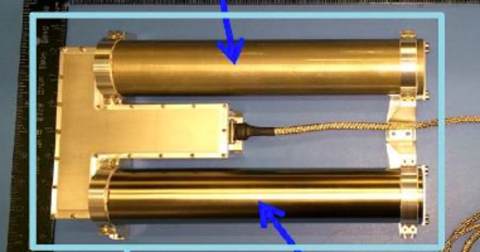
NASA's Goddard Space Flight Center developed this laser retroreflector, which is used in multiple CLPS missions, including VIPER, the Astrobotic Peregrine Mission 1 and Intuitive Machines' Missions 1 and 2. LRA is a passive optical instrument that bounces light that shines on it directly backward. The instrument consists of eight retroreflectors embedded in an aluminum hemisphere that is mounted to the lander deck, enabling the device to retroreflect laser light emitted from various directions. This payload would function as a permanent marker on the surface of the moon, and allows for precise measurements of the distance between landing or orbiting spacecraft and the LRA.

Neutron Spectrometer System (NSS)

Credit: NASA/MSFC

The neuron spectrometer system (NSS), developed by NASA's Ames Research Center and Lockheed Martin's Advanced Technology Center, assesses the hydrogen abundance up to three feet below the lunar surface along the path of NASA’s VIPER payload on Astrobotic Technology's Griffin Lander. Instead of detecting hydrogen from orbit, NSS provides more accurate readings by measuring the energy and number of neutrons that present as radiation, which are then used to infer the amount of hydrogen in the soil. NSS will also be a payload on the Astrobotic Technology Peregrine Lander scheduled for delivery sometime later this year.


Firefly Aerospace Blue Ghost Lander

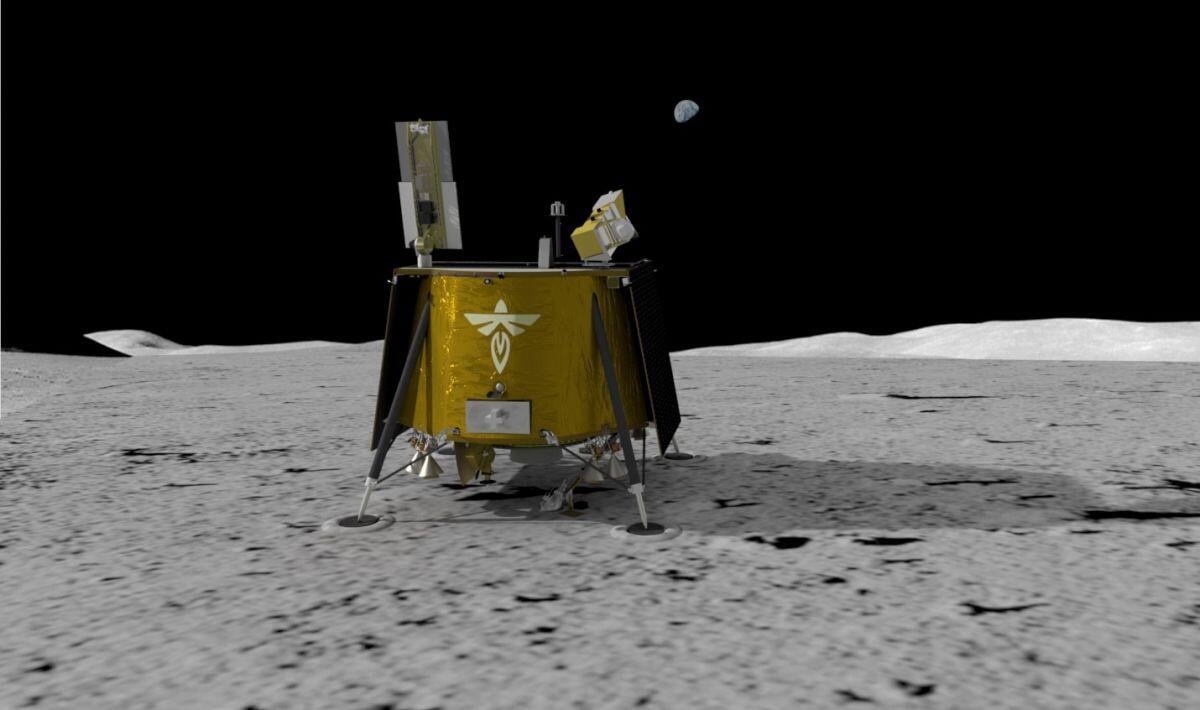
NASA awarded Firefly Aerospace a $93.3 million contract in 2021 and a $112 million contract in 2023 for two separate CLPS deliveries scheduled for 2024 and 2026 respectively. Both missions, TO 19D and TO CS-3, will use Firefly's Blue Ghost Lander, depicted here, which has a payload capacity of 155 kg. It will deliver 10 NASA-sponsored payloads to the lunar surface in 2024 as part of Blue Ghost Mission 1 and will return in 2026 to deliver payloads to the far side of the Moon and into lunar orbit.

Radiation Tolerant Computer System (RadPC)

Credit: NASA/Montana State University

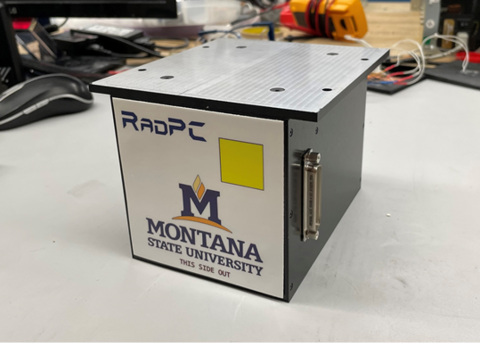
RadPC is a radiation tolerant computer system developed by Montana State University that will be delivered to the Moon on the Firefly Aerospace Blue Ghost Lander, or TO19D delivery, that will provide detailed radiation information about the lunar landing site. The computer has a set of false mitigation strategies that allows it to recover from single event effects caused by ionizing radiation. The payload consists of the computer, which runs a comprehensive test program and instrumentation on its state, as well as three dosimeters, or detectors that measure the ionizing radiation that provide radiation information about the landing site.

Regolith Adherence Characterization (RAC)

Credit: Firefly Aerospace and Aegis Aerospace

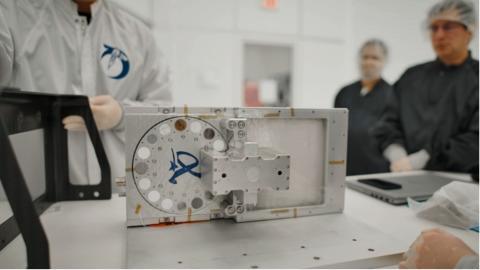
RAC is a dust collector and detector payload on the Firefly Aerospace Blue Ghost Lander that will measure the accumulation rates of lunar regolith on several different surfaces like solar cells, optimal systems, coatings and sensors to determine how well the materials can repel or shed lunar regolith. Aegis Aerospace, Inc. led the development for this payload, which is made up of a collection of panels with different materials that will be exposed to the regolith. Thirty samples have been provided, including titanium, thermal control paint, a dust collection disk and Kapton. RAC’s data will assist in the effort to make spacecraft, habitats and suits more resistant to abrasion.


Lunar Environment Heliophysics X-ray Imager (LEXI)

Credit: NASA/GSFC/Boston University

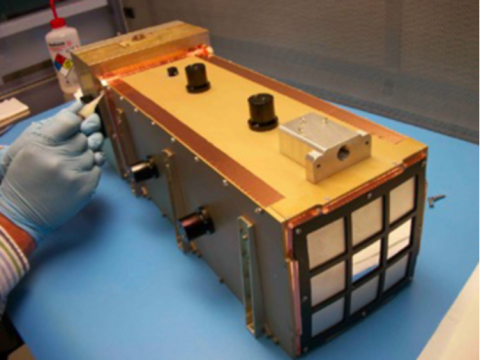
The Lunar Environment Heliophysics X-ray Imager developed by Boston University is a soft X-ray imager scheduled for delivery in 2024 on the Firefly Aerospace Blue Ghost Lander. Instead of studying the Moon itself, LEXI will look at Earth from the lunar surface and image the planet's magnetosheath and magnetopause from a wide field of view with its nine lobster-eye optical elements. LEXI's images will focus on studying how Earth's magnetic field interacts with charged particles from the sun's solar wind and will measure the photons that emitted from the exchange of charges.

Intuitive Machines Nova-C Lander

Credit: NASA

NASA awarded Intuitive Machines a $77.5 million contract in 2021 for Intuitive Machines 3, a delivery scheduled for 2024 to Reiner Gamma, a lunar swirl on the Moon's surface. The Nova-C lander, shown here, will carry four NASA payloads, including mobile robots, a data relay satellite and secondary payloads that are yet to be determined. The lander is capable of carrying 100-130 kg of payload and will carry roughly 92 kg of payload to the lunar surface.

Lunar Vertex (LVx)

Credit: NASA/KSC

This artist’s concept depicts LVx, a lander and rover payload suite on TOCP-11, the Intuitive Machines Nova-C Lander, that will investigate the origin of lunar swirls and their relation to the Moon’s magnetic field and solar wind. Lunar swirls often coincide with magnetic anomalies on the Moon, but it is currently unknown why lunar swirls form or what they are. The rover, which was developed by the Johns Hopkins University Applied Physics Laboratory, and the Nova-C lander, will both be equipped with magnetometers and an ion-electron plasma spectrometer. LVx will also implement a multispectral microscope, and Nova-C will have multiple cameras.


Cooperative Autonomous Distributed Robotic Explorers (CADRE)

Credit: NASA/JPL

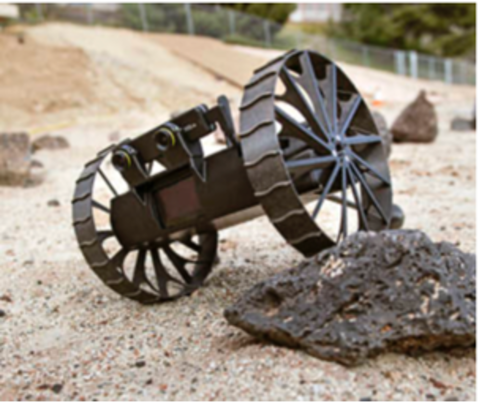
CADRE robots are autonomous mobile robots on the Intuitive Machines Nova-C Lander as part of the CP-11 delivery that are about the size of a shoebox made to explore the lunar surface. NASA's Jet Propulsion Laboratory built this set of robots with an onboard computer, wireless radio and stereo camera to sense the environment around them and capture 3D images. The robots will also be able to make scientific measurements with a Ground Penetrating Radar payload that each is equipped with.

Previous
Next

NASA's Commercial Lunar Payload Services (CLPS) initiative that was announced in 2018 involves contracting commercial vendors to send various payloads and small rovers to the lunar surface, specifically the southern region. CLPS contracts have a combined maximum value of $2.6 billion through November 2028, and there are currently 14 eligible vendors that can bid on delivering payloads. Three deliveries are scheduled for 2023 along with five more expected from 2024 to 2026. In addition to the NASA payloads, many companies will also be flying commercial payloads on the missions. Once they land on the lunar surface, the payloads will collect data, perform experiments and test technologies to further extend scientists' understanding of the Moon and prepare for human missions. 

Follow us on

Markets

  • Aerospace
  • Air Transport
  • MRO
  • Defense
  • Space
  • Business Aviation

Products

  • AWIN Intelligence Bundles
  • Market Briefings
  • Publications
  • Data Services
  • Directories
  • Resources

Contact Us

  • Subscriber Services
  • Advertising, Marketing Services & List Rentals
  • Content Sales
  • Events
  • PR & Communications
  • Content Licensing and Reprints
  • FAQ

Other Resources

  • Aviation Week Marketplace
  • Knowledge Center
  • Newsletters
  • ShowNews
  • Advertising - Media Kits
  • Japanese 日本語
  • Korean 한국인
Copyright © 2025. All rights reserved. Informa Markets, a trading division of Informa PLC.
  • Accessibility
  • Privacy Policy
  • Cookie Policy
  • Terms of Use