This article is published in Aerospace Daily & Defense Report part of Aviation Week Intelligence Network (AWIN), and is complimentary through Dec 26, 2025. For information on becoming an AWIN Member to access more content like this, click here.

Pentagon-Backed JV To Set Up Rare Earths Refinery In Saudi Arabia

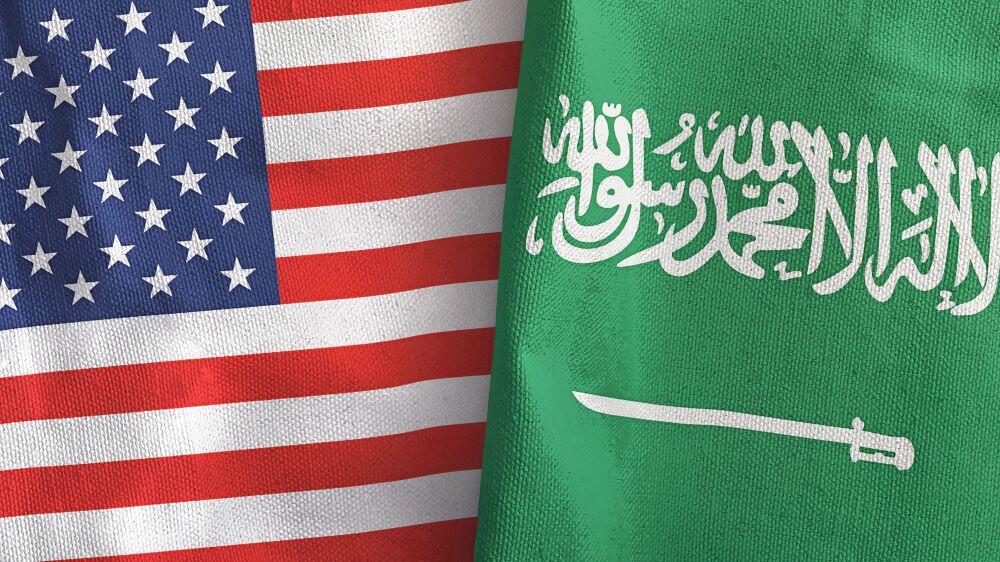
The Pentagon, Nevada-based MP Materials and Saudi Arabia’s Maaden have established a joint venture to produce rare earths in the Kingdom Image credit: Aleks Taurus/Alamy Stock Image

The Pentagon, Nevada-based MP Materials and Saudi Arabia’s Maaden have established a joint venture to produce rare earths in the Kingdom.

Credit: Aleks Taurus/Alamy Stock Image

The Pentagon is partnering with mining companies MP Materials and Maaden to establish a rare earths refinery in Saudi Arabia, the Trump administration’s latest move to reduce dependency on China for the strategic metals.

Nevada-based MP Materials, which received a $400 million Department of Defense investment in July, said in a Nov. 19 news release that the three parties would develop a refinery to process rare earths feedstock in the Middle Eastern country following the strategic framework on securing critical supply chains reached between Washington and Riyadh this week during Crown Prince Mohammed bin Salman’s visit to the U.S. capital.

The tripartite deal, structured as a joint venture (JV), is “a pivotal step toward rebalancing the global rare earth supply chain and aligns with U.S. economic and national security interests,” MP Materials said. The refined rare earths produced at the facility will support both countries’ defense sectors, be marketed to allied nations and will “support industrial resilience without reliance on adversarial sources,” the U.S. mining company added.

Under the agreement, MP Materials and the Pentagon will hold an equity position targeted at 49% in the JV, while Maaden’s stake will be “no less than 51%.” The Department of Defense will provide full financing for the U.S. contribution to the JV. MP will contribute its technical expertise in rare earth separation and also be responsible for global sourcing and marketing.

The tie-up between the Department of Defense, MP and the Middle East’s largest mining company comes as the U.S. grapples with China’s chokehold on critical minerals used by the U.S. military. While Beijing has signaled a willingness to ease export controls on minerals for commercial applications like automobiles, it is unlikely to relinquish the sizable leverage it has built up over the Pentagon.

“Given the kingdom’s substantial reserves of heavy rare earth elements, this partnership ... will play a critical role in reducing dependence on China, particularly following a year of pronounced volatility in global access to heavy rare earths,” Gracelin Baskaran, director of the Critical Minerals Security Program at the Center for Strategic and International Studies (CSIS), said in a Nov. 19 research note.

The research note highlights that per Saudi government estimates, the Jabal Sayid deposit—located about 350 km (217.4 mi.) northeast of Jeddah—holds the fourth most valuable rare earth reserves globally. The deposit contains an estimated 552,000 tons of heavy rare earths such as dysprosium and terbium as well as 355,000 tons of light rare earths such as neodymium and praseodymium.

Heavy rare earths are integral to modern defense applications. They are mainly used to build high-performance permanent magnets for the guidance systems and motors of combat aircraft, submarines, and missiles. They are also important for lasers, night vision goggles and sonar systems.

Rare Earth Exchanges, a Utah-based critical minerals business intelligence platform, noted in an Oct. 4 analysis that about 78% of the Pentagon’s weapons programs use components that require rare earth magnets. The Defense Department’s demand for these magnets “is poised to increase significantly, possibly tripling by 2030 to around 10,000 tons annually, as the U.S. military upgrades and expands its capabilities,” Rare Earth Exchanges said. 

Matthew Fulco

Matthew Fulco is Business Editor for Aviation Week, focusing on commercial aerospace and defense.