This article is published in Aviation Week & Space Technology and is free to read until May 04, 2026. If you want to read more articles from this publication, please click the link to subscribe.

Inside Saudi Arabia's Defense Localization Push

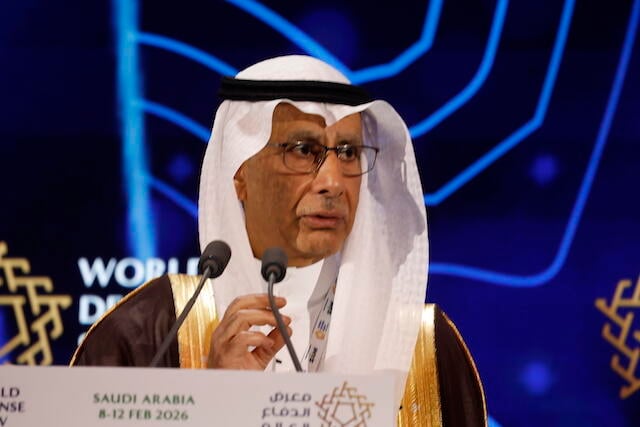
HE Eng. Ahmed bin Abdulaziz Al-Ohali

The Governor of the General Authority for Military Industries (GAMI) HE Eng. Ahmed bin Abdulaziz Al-Ohali.

Credit: BillyPix

A decade after the launch of Vision 2030, the Saudi defense industry can claim significant progress in its goal to localize more than 50% of military procurement.

The goal is also to boost local manufacturing, stimulate industrial diversification, and create secure jobs for Saudi citizens, with the defense sector projected to contribute $25 billion to GDP and create 100,000 jobs by 2030.

At the recent World Defense Show (WDS) in Riyadh, the Governor of the General Authority for Military Industries (GAMI) Ahmed bin Abdulaziz Al-Ohali highlighted the progress made by the military industries sector, announcing that domestic military spending had increased from 4% in 2018 to 25% at the end of 2024, and was on course to achieve the 2030 target.

He suggested that these investments had taken on a greater priority in a world and a region where the defense and security environment was “undergoing a lot of transformation.” Commenting that “the challenges we face today are not limited to traditional threats, they are defined by speed, complexity and asymmetry.”

He underscored the decade’s transition from transactional relationships with foreign defense companies to strategic partnerships that lead to “meaningful capability development and transfer of knowledge,” saying, “We always look for win-win arrangements where innovation can take place across countries.”

GAMI has supported the development of the Saudi private sector by providing an attractive investment environment and tailored plans for military and security needs, including zero added tax on locally manufactured military goods. In 2021, the authority provided $1.4 billion in incentives to boost the local industry and launched a supply chain localization program that rapidly identified 74 supply chain investment opportunities, worth billions of dollars.

Building on the established foundation of international partnerships, technology transfer and joint ventures with primes, the authority is now focusing on development of the local supply chain. Al-Ohali explains: “In the Kingdom, we are accelerating defense localization,” in order to “build industrial depth”, create more resilient supply chains and build national readiness. The Kingdom is now looking to small- and medium-sized local companies to provide the “backbone for long-term readiness.”

GAMI takes the lead in supporting increased private sector SME engagement in emerging defense supply chains and has created a comprehensive licensing system, which has accredited almost 350 local companies to date, with more than 140 industrial and service capabilities having been developed since 2020. Al-Ohali asserted that the sector has now generated over SAR4 billion ($1.066 billion) in jobs, with the workforce growing from 25,000 to more than 34,000, 64% of whom are Saudi nationals. Local military spending was expected to have contributed over SAR6.5 billion ($1.73 million) to GDP by the end of 2024.

Deputy Governor of the Enablement Sector at GAMI, Saleh Al-Aqili says: “The Authority focuses on developing legislation and policies that support the development of supply chains. It also encourages leading local and international companies to integrate small- and medium-sized enterprises into their existing and future contracts. Furthermore, the Authority supports investors and empowers them to address the sector’s unique challenges.”

Saudi Arabian Military Industries (SAMI), which has established subsidiaries in aeronautics, land systems, weapons and missiles, and defense electronics, also plays a major role in defense localization. Having established joint ventures with Lockheed Martin, Boeing, BAE Systems, L3Harris, Thales, Raytheon, and other major international defense contractors, the group is now focusing on supply chain support.

Speaking at WDS, Thamer Al Muhid, CEO, said: “Over recent years we have progressed confidently, from ambition to execution, from assembly to sovereign capability, from strong foundation to fully integrated national industrial ecosystem. At SAMI, the supply chain is not a support function. It is a strategic instrument of sovereignty, readiness and resilience.”

Working with GAMI, the group has launched a group local content program called RUKN, the Arabic for cornerstone, a strategic initiative designed to organize, expand, and localize defense supply chains within Saudi Arabia by engaging local small- and medium-sized enterprises and connecting them to SAMI projects. Thamer describes the program as ‘the foundation for sustainable industrial growth, where we map value chains, comprehensively identify strategic synergies, and accelerate local capability development.’

At the launch he said: “In partnership with GAMI and national enablers, we are building a fully-integrated national defense supply chain, connecting tier one partners to tier four suppliers and SMEs across the Kingdom.

“We are strengthening supply chain intelligence through advanced analytics and AI-driven planning. This allows us to anticipate disruption, manage risk proactively and make informed decisions in real time. The program is anchored in strong governance structures, clear policies and guidance, advanced digital tools, analytics and targets incentives and finance.”

The scheme is designed to ensure localization is resilient, scalable and sustainable, through an ecosystem that is open to both local and international partners.

Saudi Supply Chain

Outside of the two major movers in the sector, Saudi companies such as Zahid Industries are proving that local manufacturers are capable of more than local supply. The company is leveraging 75 years’ experience in the commercial sector supply chain to make ingress into the international defense sector supply chain. Zahid is now the sole producer of Prime Power Units (PPUs) for the Raytheon Technologies AN/TPY-2 radar, an essential component of the Terminal High Altitude Area Defense missile system.

Mohammedbarig Ahmed Siraj, Board Member, Zahid Industries, says: “We've been the caterpillar dealer in Saudi for 75 years. The engine rebuild of Caterpillar is used for both commercial and defense, so our experience overhauling on the commercial side serves both sectors. When Raytheon visited us they found that we have electrical enclosures of different kinds, as well as superstructure, which qualified us on the defense side to produce the PPU.”

The company invested in a facility in Jeddah, dedicated to manufacturing these specialized power units, and was awarded a second contract for missile interceptor canisters.

Siraj says: “When we first started, there was more than one supplier of the PPUs, including facilities in the US. Today we are the only supplier.”

And business is building. Having delivered the PPUs, Zahid received further inquiries for spare parts for older PPUs.

As the company expands, they are working to bridge the skills gap, having established a Learning Institute in 2005. Siraj says: “Zahid Group has been a top employer since 2023. Across both commercial and defense 43% of employees are Saudis, 35% of all technicians are Saudi, 30% of engineers are Saudis, 3% of all Saudis are employees with disability, and 21% of all Saudis we employ are female. We run apprentice programs and take vocational training and university graduates and give them the proper tools of knowledge they need and certification – both Saudi and expatriates. We invest in our people, and it’s something that we’ve been doing for quite some time.”

Jeddah-based Arabian International Company for Steel Structures (AIC Steel) is also a part of the program, having produced the first domestically-manufactured components for the THAAD system launcher.

Speaking during a WDS panel discussion in the Saudi Supply Chain theater at the World Defense Show, Abby Lilly, Lockheed Martin's chief supply chain officer, said: “The world is definitely shifting, and when I think about the importance of a resilient supply chain globally, Saudi is absolutely key to that.

“Given the breadth of Lockheed Martin’s supply chain, we see everything from the placement of a single purchase order for off-the-shelf commercial type components, all the way to major subcontracts. A lot of those we have implemented in the Kingdom, especially with a focus on technology transfer.”

In referencing the successful Saudi supply partners Lilly mentioned MEPC and AIC, saying “AIC is another great example developing complex structures, and some of the quality that we see coming out of Saudi is right there with some of the domestic supply chains that we have in the United States, and even better quality.” Lilly says that the programs LM has implemented for technology transfer have helped the company’s supply chain be more competitive and resilient globally. She adds: “We have to be able to deliver capability where the capability is needed, and so we will continue to develop our global partnerships to make sure that we can provide the best products to our global customers, where they are.”

Lilly also identified a specific, as yet unexplored, area where Saudi Arabia could compete globally. She says: “One of the opportunities that the Kingdom has is with the rich natural resources that are here. The development of critical raw material capability within the Kingdom could help the defense industry throughout the world.”

She pointed out that the framework of the complex supply chains was diamond-shaped, saying: “We have a few primes and OEMs at the top, but then the supply chain widens out. We have 13,500 suppliers throughout the globe, but those suppliers come back to a small number of critical material suppliers, so creating competition at that level in the supply chain is something we are focusing on.

Moving Away From Western Partners

The focus on the supply chain is not the only shift in the Saudi defense industry, as the Kingdom has made a distinct turn from West to East, actively diversifying its defense procurement and partnerships away from a heavy reliance on the United States. The Kingdom is now looking toward Asian and regional powers, predominantly China, South Korea, Turkiye and Pakistan, to fulfill its security needs, localize defense production, and acquire advanced technologies.

Following diplomatic accords between the two countries, NATO-member Turkiye has emerged as a strong partner over the last three years. The first major landmark of the cooperation was a $3 billion deal finalized in August 2023 for SAMI to acquire AKINCI Unmanned Combat Aerial Vehicles from Baykar, with the first cohort of Saudi operators for the Turkish drone program having graduated in October last year. The deal includes local manufacturing in Saudi Arabia, with a goal of 70% localization. Lucrative deals have also been signed with China and South Korea, which involve localizing of technology, including drones, missiles and anti-drone systems.

In September 2025, Saudi Arabia signed the Strategic Mutual Defence Agreement with Pakistan to deepen military cooperation between the two nations.

European partners are still important. The UK, France and Spain remain key suppliers, with Saudi Arabia exploring further partnerships with European defense firms for armored vehicles and other systems. BAE Systems marks 60 years in Saudi Arabia this year. Its business covers everything from support for Royal Saudi Air Force combat aircraft and training of aircrews, to training for Royal Saudi Naval Forces technicians.

The company’s operations in the Kingdom are contracted by the UK government, and so is reliant on that government-to-government relationship, Mark Burtonwood, VP for Commercial at BAE Systems Saudi Arabia, explains.

There is a recognition that pressure is building from potential competitors especially with the upcoming renewal of some of these contracts, including the Saudi British Defence Cooperation Program that is renewed every five years.

“We have to take competition seriously and we cannot be complacent, we always review how we are performing, in terms of aligning to the Kingdom’s Vision 2030, and the company has done that, and that stands us apart from some of our competitors, who may promise to do that but do not have a proven track record on delivery,” Burtonwood says.

“We also have to keep an eye on affordability…we are very keen to make sure we remain relevant and affordable in ever increasingly competitive landscape.”

Burtonwood says that among of the company’s secrets to success is having a now sizable Saudi workforce, this helps the company pick up on what he calls the “hot buttons”—topics that are crucial for the customer, that are picked up “organically” through Saudi colleagues and younger employers.

“In this business, you have to remain relevant, so showing and demonstrating that you can deliver and that you are a trusted partner and here through good times and also through bad times goes a long way,” Burtonwood says.

However, despite the widening of the procurement base, and landmark deals with Asian partners, the U.S. remains the top supplier, with reports in 2025 indicating a potential massive $142 billion U.S.-Saudi defense package.

With just four years to go, the Vision’s goal of 50% localization by 2030 remains ambitious, especially under current circumstances. However, the progress Saudi Arabia has made towards achieving enhanced defense industrial sovereignty is undeniable, and provides a solid foundation to continue building.

Jill Stockbridge

Jill Stockbridge covers business aviation for Aviation Week Network's Show Business.