This article is published in Aerospace Daily & Defense Report part of Aviation Week Intelligence Network (AWIN), and is complimentary through Mar 16, 2026. For information on becoming an AWIN Member to access more content like this, click here.

Saudi Arabia Embraces Air Defense Options

Lockheed
Credit: Lockheed Martin

RIYADH, Saudi Arabia—Over the past decade, the Saudi government has been forced to take its air defenses much more seriously. That's largely down to attacks by Iranian-backed Houthi militants in Yemen that have fired around 400 kamikaze drones and tactical missiles into the desert kingdom since 2015.

The most notable attack came on March 22, 2022, when a Jeddah oil depot was struck. That incident became a catalyst for improving the protection of Saudi skies.

The Royal Saudi Air Defense Forces (RSADF) operates a multi-layered integrated air defense system (IADS) that fuses together command-and-control nodes, early-warning radars and effector platforms like ground-based air defense systems (GBADs) and several types of airborne assets.

The protection of vital and economic centers, like the Aramco facilities and Riyadh, became paramount. Much of its command, control, computers, communications, intelligence, surveillance and reconnaissance (C4ISR) system became a focus of U.S. defense technologies through the U.S.-developed Peace Shield network.

These include the Lockheed Martin Terminal High-Altitude Area Defense (THAAD) which was employed by Saudi Arabia in July 2025. The combat-proven system is highly effective against short-, medium- and intermediate-range missile threats. The PAC-3 Missile Segment Enhancement (MSE) interceptor is now the weapon of choice. The THAAD pairing was used by the U.S. Army in Israel to bolster their air defenses against Iranian missiles in 2024 and 2025.

At World Defense Show in February 2024, Lockheed Martin announced that two key subcontracts had been awarded to Saudi Arabia's industry for the manufacture of the interceptor canister and missile round pallet for the THAAD—the first country outside the U.S. to produce THAAD components.

By then, Saudi Arabia had ordered 44 THAAD launchers and 360 interceptor missiles since 2017 in deals worth an estimated $15 billion. Four of the seven THAAD sites are scheduled to be completed by the end of 2026, with work on all of them completed by 2028.

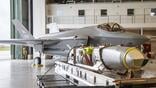
Saudi Arabia is keen to acquire the Lockheed Martin F-35, which could work in tandem with the PAC-3 missile, as part of the Saudi IADS. In November last year, U.S. President Donald Trump said he would sell up to 48 F-35As to Saudi Arabia but nothing has publicly been revealed since then.

At a media briefing in Paris, Lockheed Martin provided an insight into how the F-35, as an elevated sensor, could detect threats and feed track data to an Integrated Air and Missile Battle Command System (IBCS) that would live-fire the PAC-3.

Complementing the THAADs are the Raytheon Patriot defense systems, operated by the U.S. and Greece, which the RSADF has managed to integrate. The Greek mission commenced in Saudi Arabia in 2021 and is believed to have been extended by another year, to 2026.

Saudi Arabia, though, wants to diversify its systems so as not to rely so much on the U.S. In November 2023, Riyadh reached a $3.2 billion deal with South Korea for 10 KM-SAM Block II (also known as Cheongung-II) medium-range air defense systems. Meanwhile, the Russian Pantsir-S1M is a versatile platform that combines surface-to-air missiles and anti-aircraft artillery over short-to-medium ranges.

Then there is the Chinese Silent Hunter anti-drone weapon that uses laser technology and Singapore's Orion-H9, an advanced radar system capable of detecting and tracking multiple targets over long distances.

Collaborative combat aircraft (CCA) will also be part of the future. General Atomics Aeronautical Systems Inc. President David Alexander told reporters at the Dubai Airshow last November that the company could soon sign a huge export deal with Saudi Arabia that would include up to 200 CCAs and 130 MQ-9s. CCAs can detect missiles and drones and are being developed to shoot them down as part of a networked, autonomous defensive system.

Recent high-profile tests have demonstrated that CCAs can autonomously engage airborne threats. It is unclear what aircraft the CCAs would work with, but, from Alexander's optimism, it is not reliant on an F-35 deal.

Alan Warnes

Alan Warnes is Defense Editor of Aviation Week Network publications Arabian Aerospace and African Aerospace.