Equipping Those Who Defend Freedom: Inside Moog Space And Defense
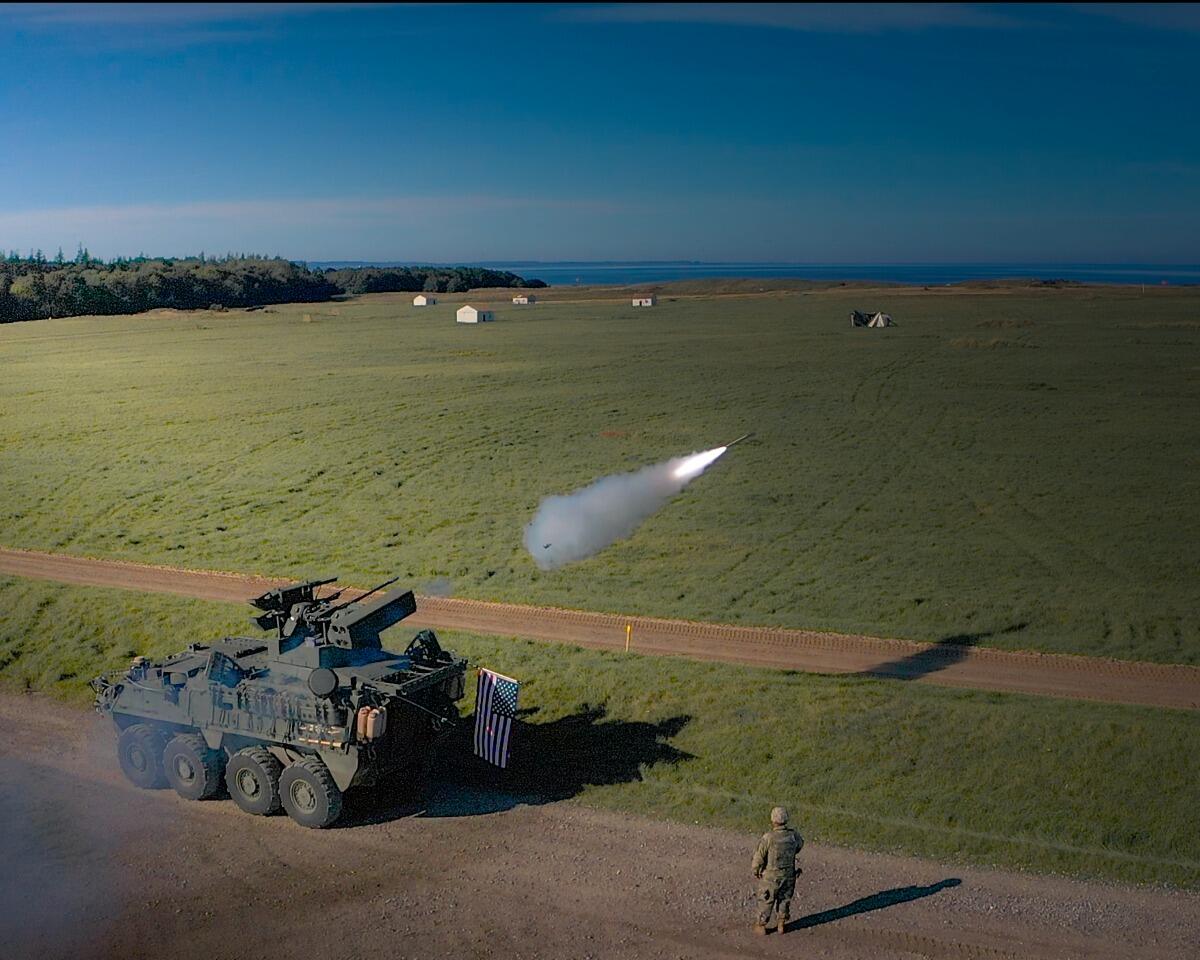
Photo credit: U.S. Army photo by Maj. Robert Fellingham
How 75 years of engineering heritage built a partner the warfighter can count on across air, land, sea and space
By Mike McClary
For Moog Space and Defense, the mission is not a slogan. It’s an operating principle: the products the company builds and supports are the difference between a mission succeeding and a mission that never gets off the ground.

"We have a broad portfolio that we support across multiple domains," said Joe Alfieri, president of Moog Space and Defense. "When I think about space, air, land and sea, we've got businesses and products and solutions that fit all those domains. But the common thread across all of them is our mission-critical technology. Missions wouldn't exist without the products that we supply and support. That can range from small components that help control systems all the way to fully integrated systems, like full turrets that are part of an integrated battlefield."
A Portfolio Built for Every Domain
That range is deliberate. Moog’s reach spans everything from motion control components to complete, ready-to-field systems, giving the company a vantage point few suppliers can match.
Mike Gruver, senior vice president of Moog’s Defense Division, described the group as sitting “at the intersection of the most important national security priorities,” delivering mission-critical components and integrated solutions across missile and weapons systems, undersea technologies, autonomous platforms, spacecraft avionics, propulsion and launch systems.

“You’ll find our products across a broad spectrum of precision motion control,” Gruver said. “Everything from Formula 1 cars to rockets that go into space, to missiles that help us defend, all the way into land vehicles, submarines. We have such a wide breadth of product capability that I think we’re positioned for the future very well.”
Operating across every domain also means lessons travel. A design refinement proven in the air can strengthen a ground system; a solution built for sea can inform space. Alfieri said that cross-pollination, drawn from across the company’s broader businesses, is a real advantage when customers need answers fast.
The company’s two mission statements — “equipping those who defend freedom” and “revolutionizing the way to space” — increasingly describe the same work.
“As space has become a warfighting domain, the overlap between the two has become even greater,” Alfieri said. “So, we are certainly finding there’s a lot more overlap, and we find ourselves in this critical role for defense, exploration and commercial services.”
Gruver agreed, framing the two missions as mutually reinforcing rather than competing. Both, he said, require innovation, precision, resilience and disciplined execution.
Trust Built Over 75 Years
Moog’s 75-year history in aerospace and defense has produced something harder to replicate than any single product: customer relationships built on decades of mutual trust.
Gruver said Moog’s legacy rests on mission-critical execution, where failure is not an option, and that the foundation of every customer relationship comes down to the same thing: trust earned through performance and strengthened through execution.
That performance shows up in the numbers. Major programs, including Patriot, THAAD and Tomahawk, run on Moog control actuation systems with 100% on-time delivery and 100% quality, Alfieri said. Moog also reinvests at nearly twice the rate of industry peers, funding new facilities and hiring ahead of need.
“Legacy gets you in the door,” Mark Covelli, senior vice president of Moog’s Space Division, said. “Performance and delivery keep you there.”
People Behind the Performance
None of that happens without the people who build it. Omar Vikin, vice president of Moog’s Power and Data Division, said the workforce is what sets Moog apart.
“The people are the differentiator here at Moog with respect to the marketplaces we serve,” Vikin said. “The products we sell are going into systems that make-or-break mission success, and the people who have been doing these designs for decades across Moog have a heritage and a knowledge base that becomes irreplaceable.”
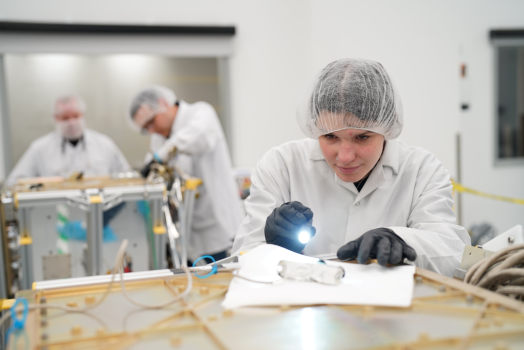
That knowledge base takes time to build — up to four or five years before a new engineer can lead a design independently — which is why Moog invests in internships, university partnerships and mentorship. That commitment has paid off: Moog was ranked the No. 1 aerospace and defense company to work for on Glassdoor, and employees who leave often find their way back.
That culture traces back to the company’s founder.
“It was true in 1951 when Bill Moog said that we believe in the people who work for us,” Vikin said. “That has carried through the 75 years of Moog’s history, where we trust our people, we believe in them, and we invest in them, so they find this a worthy place to spend their career.”
Learn more about Moog at https://www.moog.com/smd
Moog videos
Facility Expansion for the Golden Dome Initiative
Moog's Multi-Domain Solutions for America's Golden Dome
Moog Infographics
Moog Defense Infographic
Moog Space Infographic