Innovative Alternatives to Pyrovalves in Defense System Design

Traditional pyrotechnic valves are widely used in defense systems but present significant drawbacks: single-use design, explosive shock and debris, and high lifecycle costs. Aviation Week Network spoke with Jim Gabinetti of The Lee Company to explore how innovative valve alternatives address these limitations while delivering improved operational capabilities.

Aviation Week: What are the biggest risks and limitations of traditional pyrovalves for defense contractors?
Jim Gabinetti: While pyrovalves are reliable, their single-use nature — a one-time event that can’t be reset or reused — limits testing at the ATP level.
Pyrovalves require electrical input to ignite the explosive charge, making them susceptible to electromagnetic interference (EMI) from both friendly and hostile sources. EMI sensitivity is a major industry concern, often requiring additional protective measures that increase cost and complexity.
They can also generate foreign object debris (FOD), heat, and shock. Qualification for pyrovalves is costly and destructive, with strict safety, handling, and storage requirements that add operational overhead.
AW: How do alternative solutions like passive and non-passive valves differ, and how do you decide which to use in each application?
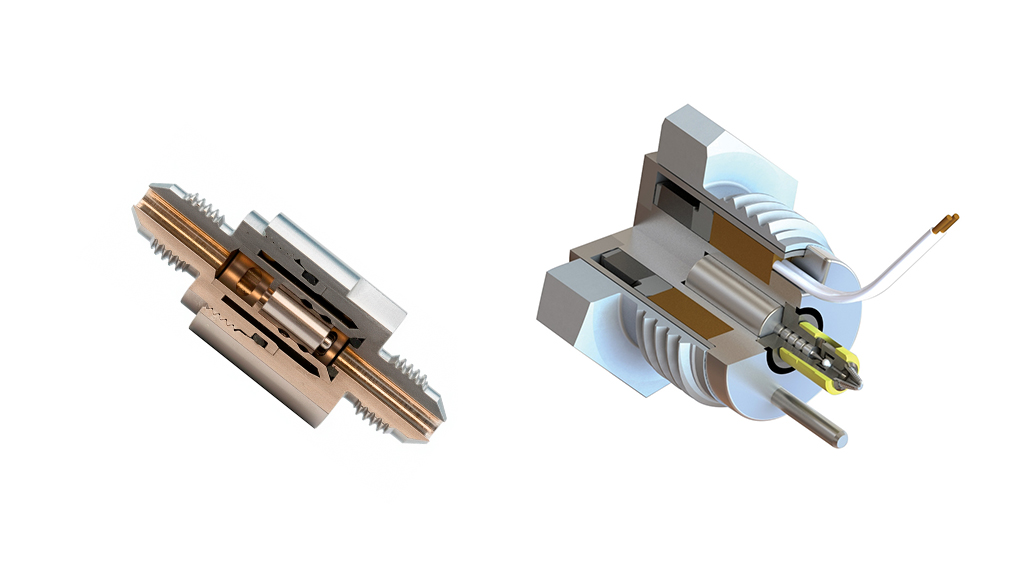
JG: Passive valves require no electrical input. Instead, they rely on environmental triggers like pressure, temperature, or flow. Our passive valves feature very tight leakage performance and an optional latching mechanism that allows manual reset.
Pyrovalves are traditionally used for fuel prevention to seal off the fuel tank in small turbine-powered missiles. They are positioned at the fuel pump outlet before the turbojet engine and must remain closed under long-term fuel storage until the engine is called for operation. The key advantage of Lee passive valves is simplicity: pump pressure opens the valve with no explosives or electrical input required, eliminating EMI concerns while meeting long storage life requirements for submerged missile components.
Non-passive valves require electrical input but provide more control. They do not require pressure from a charged bottle, compressor, or pump source. Lee latching solenoid valves contain magnets that hold the solenoid open after a single pulse and remain latched open throughout the mission.
We’ve seen applications to replace pyrovalves in everything from engine bleed air systems for tank pressurization and inerting, to high-pressure munition launchers controlling gas discharge. We began replacing pyrovalves more than 20 years ago and continue to this day.
The right choice depends on the mission profile: passive solutions offer simplicity and environmental durability, while non-passive solutions require electrical input but provide better control.
AW: What does the replacement process usually involve — are these drop-in solutions, or do they require redesign?
JG: Complete drop-in replacement is rarely possible; you’ll typically need only a partial redesign rather than a full system overhaul.
We can assist customers in replacement analysis and match standard pyrovalve fitting connections and fluidic interfaces. While our solutions differ in envelope and form factor, they’re often smaller than pyrovalves. Our components deliver critical space and weight savings while reducing risk and optimizing performance.
A smart strategy to prove out the change is testing components individually before full integration. We work closely with customers on this transition to ensure success.
AW: How do these alternatives compare to traditional pyrovalves in terms of performance and reliability, especially in mission-critical use?
JG: Our fluid control components match or exceed pyrovalves in many metrics like reliability, sealing life, and response time. The key differences: pyrovalves present significant shock and debris concerns, while Lee products exhibit minimal to virtually no such risks. Testing pyrovalves is inherently destructive; our components support non-destructive, repeatable testing.
Qualifying pyrovalves is costly due to stringent storage, handling, and employee training requirements for dangerous devices. Lee components don’t generate FOD, heat, or shock and require no special handling or storage. Our parts are easier and more cost-effective to qualify. They aren’t subject to single-use limitations and have no explosion-related safety concerns.
The Lee Company has a long-standing pedigree in defense. We have a proven track record of successfully replacing pyrovalves, with tens of thousands of parts in service.
AW: How should contractors weigh the risks of moving beyond pyrovalves against the demands of defense qualification requirements?
JG: Focus on lifecycle cost and maintainability. We’ve been a trusted defense supplier for decades, so we understand program success requirements and strict qualification standards. We offer low-risk replacement options based on our standard core valve designs. Lee components provide better long-term value with less overhead compared to pyrovalve handling precautions.
By engaging early with Lee engineers as an OEM partner, we can co-develop custom solutions leveraging our standard COTS components. Risk is minimal since internals derive from our field-proven, time-tested designs. We also provide modeling and diagnostic support — helping to optimize performance and streamline the transition.
When you add up pyrovalve costs — including storage, handling risks, and operational constraints — Lee components offer attractive alternatives. Our passive and non-passive valves help maintain mission reliability while providing significant operational advantages over traditional pyrovalves.
To learn how to replace your pyrovalve with a more reliable, cost-effective solution from The Lee Company, click here.
Related Content