https://aviationweek.com/themes/custom/particle/dist/app-drupal/assets/awn-logo.svg
Skip to main content
  • Market Sector
    • Aerospace
    • Air Transport
    • MRO
    • Defense
    • Space
    • Business Aviation
  • Markets
    • Aerospace
      • Aircraft & Propulsion
      • Connected Aerospace
      • Emerging Technologies
      • Manufacturing & Supply Chain
      • Advanced Air Mobility
      • Sustainability
    • Air Transport
      • Aircraft & Propulsion
      • Interiors & Connectivity
      • Airports & Networks
      • Airlines & Lessors
      • Safety, Ops & Regulation
      • Maintenance & Training
      • Sustainability
    • MRO
      • Aircraft & Propulsion
      • Interiors & Connectivity
      • Emerging Technologies
      • Supply Chain
      • Safety, Ops & Regulation
      • Workforce & Training
      • Sustainability
    • Defense
      • Aircraft & Propulsion
      • Sensors & Electronic Warfare
      • Missile Defense & Weapons
      • Supply Chain
      • Budget, Policy & Operations
      • Sustainability
    • Space
      • Launch Vehicles & Propulsion
      • Commercial Space
      • Space Exploration
      • Satellites
      • Budget, Policy & Regulation
      • Operations & Safety
    • Business Aviation
      • Aircraft & Propulsion
      • Interiors & Connectivity
      • Airports, FBOs & Suppliers
      • Flight Deck
      • Safety, Ops & Regulation
      • Maintenance & Training
      • Sustainability
    • In Focus
      • Middle East & Africa
  • Marketplace
  • Services
    • Services
      • Advertising
      • Marketing Services
      • Fleet, Data & APIs
      • Research & Consulting
      • Network and Route Planning
      • Marketplace
  • Store
    • Market Sector

      • Aerospace
      • Air Transport
      • MRO
      • Defense
      • Space
      • Business Aviation
    • Type View All Products
      • Intelligence Bundles
        • AWIN - Premium
        • AWIN - Aerospace and Defense
        • AWIN - Business Aviation
        • AWIN - Commercial Aviation
      • Market Briefings
        • Advanced Air Mobility Report
        • Aerospace Daily & Defense Report
        • Aviation Daily
        • SpeedNews
        • The Weekly of Business Aviation
      • Directories
        • Air Charter Guide
        • Aviation Week Marketplace
        • Route Exchange
        • The Engine Yearbook
      • Data Services
        • AC-U-KWIK
        • Aircraft Bluebook
        • Airportdata.com
        • ASM Global Route Development
        • CAPA – Centre for Aviation
        • Catchment Analyzer
        • Defense Market Analyzer
        • Fleet Discovery Civil
        • Fleet Discovery Military
        • Fleet & MRO Forecast
        • MRO Prospector
        • Tracked Aircraft Utilization
      • Publications
        • African Aerospace
        • Air Transport World
        • Arabian Aerospace
        • Aviation Week & Space Technology
        • Aviation Week & Space Technology - Inside MRO
        • Business & Commercial Aviation
        • CAPA - Airline Leader
        • Routes magazine
        • Show Business
  • Events
    • Recent webinars
    • Events View All Events
      • MRO
        • MRO Americas
        • MRO Asia
        • MRO Australasia
        • MRO Baltics & Eastern Europe Region
        • MRO Europe
        • MRO Greater China
        • MRO Latin America
        • MRO Middle East
        • MRO Southeast Asia
        • Military Aviation Logistics and Maintenance Symposium (MALMS)
      • Commercial Aviation/A&D
        • Aero-Engines Americas
        • Aero-Engines Europe
        • Aero-Engines Asia-Pacific
        • Engine Leasing Trading & Finance Europe
        • Engine Leasing, Trading & Finance Americas
      • Air Transport
        • Routes Americas
        • Routes Europe
        • Routes World
        • CAPA Airline Leader Summit - Airlines in Transition
        • CAPA Airline Leader Summit - Americas
        • CAPA Airline Leader Summit - Latin America & Caribbean
        • CAPA Airline Leader Summit - Australia Pacific
        • CAPA Airline Leader Summit - Asia & Sustainability Awards
        • CAPA Airline Leader Summit - World & Awards for Excellence
        • GAD Americas
        • GAD World
      • Aerospace and Defense
        • Defense Conference
      • Awards
        • Aviation Week 20 Twenties
        • Aviation Week Laureate Awards
        • ATW Airline Awards
        • Program Excellence Awards and Banquet
        • CAPA Asia Aviation Summit & Awards for Excellence
        • Space Tech Challenge Awards
  • About
    • About Aviation Week Network
      • Our Story
      • Content and Data Team
      • Aviation Week & Space Technology 100-Year
    • Contact Us
      • Subscriber Services
      • Advertising, Marketing Services & List Rentals
      • Content Sales
      • Events
      • PR & Communications
      • Content Licensing and Reprints
      • FAQ
  • Log In
  • Register
  • My Account
    • Profile
    • Sign Out
  • AWIN Access
  • My cart
    Back to
  1. Defense

Share

The Immortal Buff: Replacing The B-52

September 11, 2015

Credit: Boeing

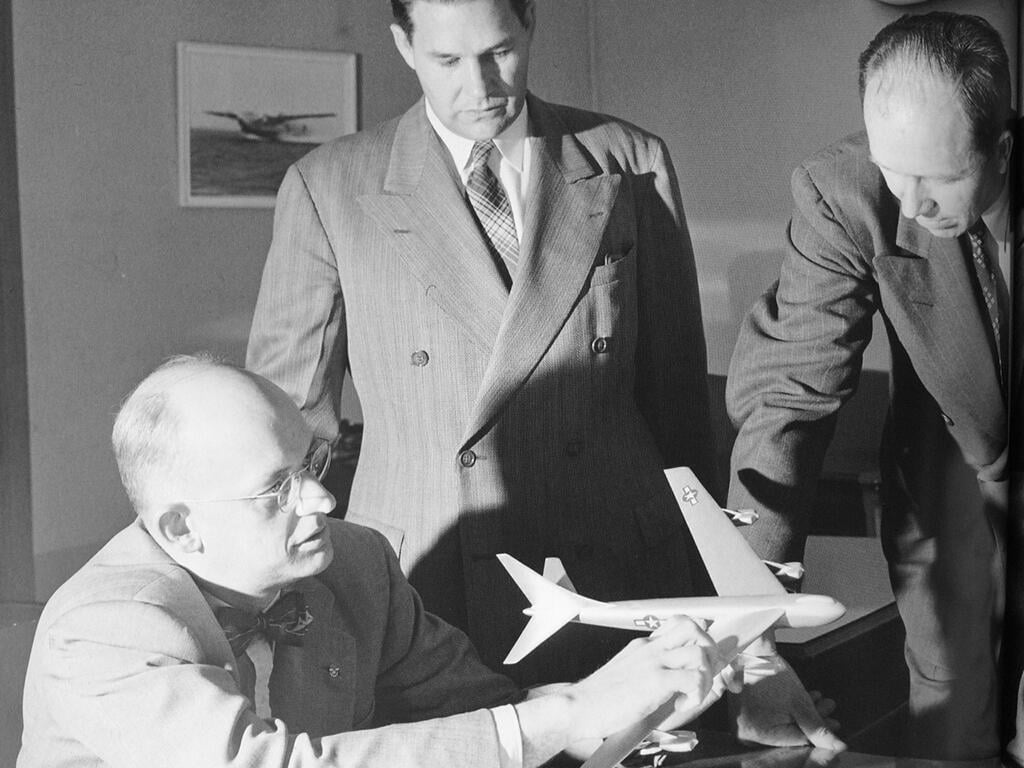
The balsa-wood plane that shook the world: Boeing aerodynamicist George Schairer holds the model he built in October 1948, in the Van Cleve Hotel in Dayton, Ohio. Boeing’s team working on a turboprop-powered XB-52 design learned late in the preceding week that the U.S. Air Force was ready to cancel it. Using data from a never-built four-jet medium bomber design, they spent the weekend on a 33-page proposal for an eight-engine bomber based on new and more efficient jet engines. Schairer built the model as a visual aid.

Credit: Boeing

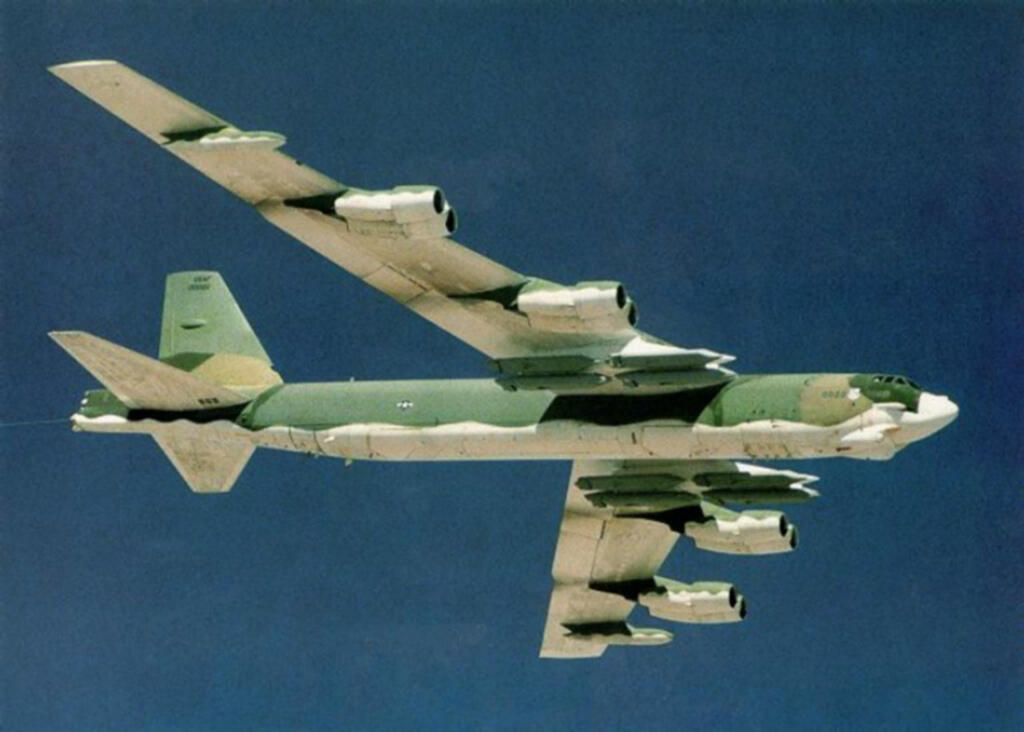
The XB-52 and YB-52 prototypes had tandem pilot and co-pilot seats. Early B-52s (designated B-52A through F) were complex aircraft for their time, were marginal in terms of range, and experienced problems with their electrical system, which used turbo-alternators in the fuselage fed by hot bleed air from the engines. Their last major assignment was conventional bombing in Vietnam, where the nickname Buff (Big Ugly Fat Person) was first used. 

Credit: U.S. Air Force

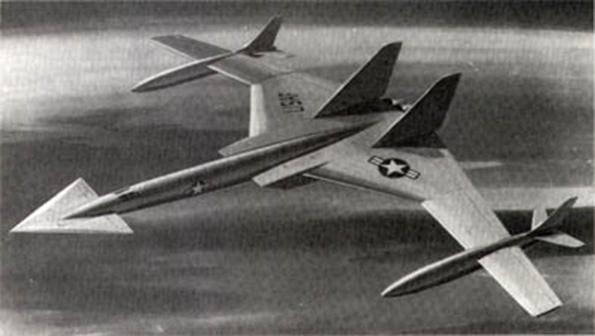
By the time the B-52 entered service, the U.S. Air Force was looking for a supersonic replacement under the Weapon System 110 requirement, but the combination of speed and range seemed unattainable. One approach was to fit a delta-winged aircraft with “floating” wing extensions carrying outsize fuel tanks.

Credit: U.S. Air Force

An even more radical concept was a nuclear-powered bomber, studied under WS-125A. This General Dynamics design for a nuclear-powered test aircraft, NX-2, had two nuclear engines in the fuselage, flanking a single reactor, and underwing kerosene-fueled engines for takeoff and climb. 

Credit: Boeing

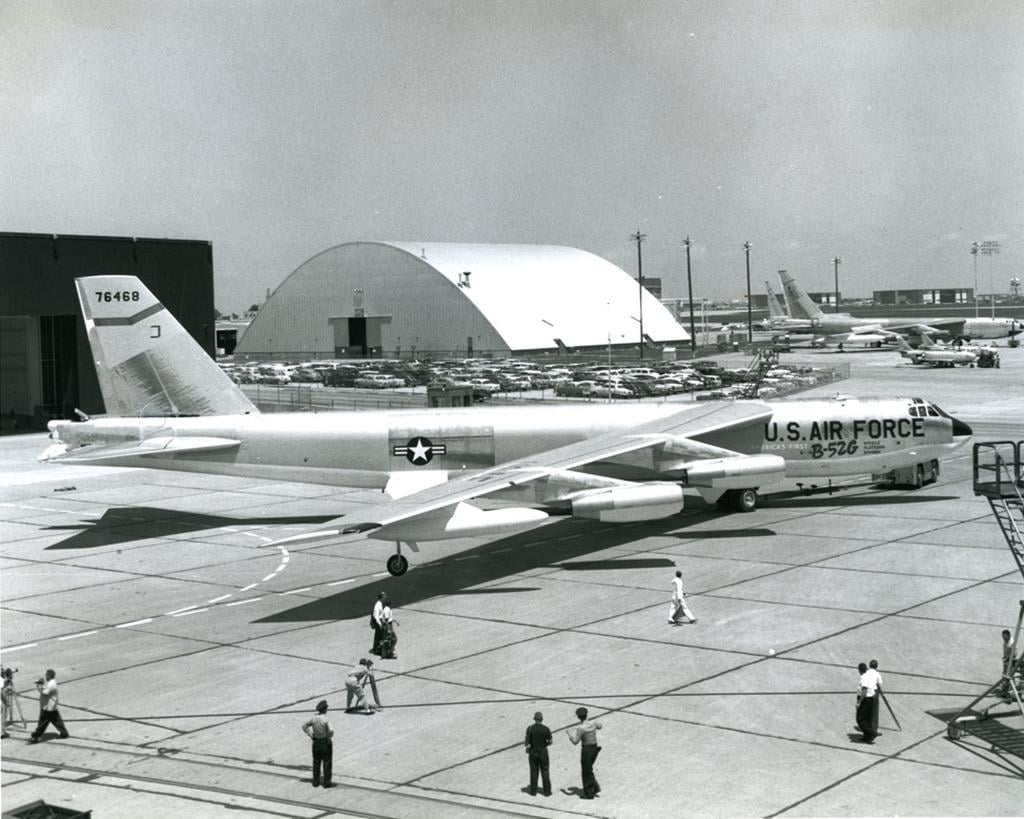
By 1956 it was clear that either the supersonic or nuclear aircraft was many years in the future and that the best follow-on to the B-52 was another B-52. The B-52G, which made its first flight in 1958, was a major redesign, with a much greater takeoff weight and increased range. It had a shorter vertical tail and revised flight controls, the wing structure was changed to accommodate integral fuel tanks, and it was fitted with pylons for AGM-28 Hound Dog supersonic cruise missiles. 

Credit: NASA

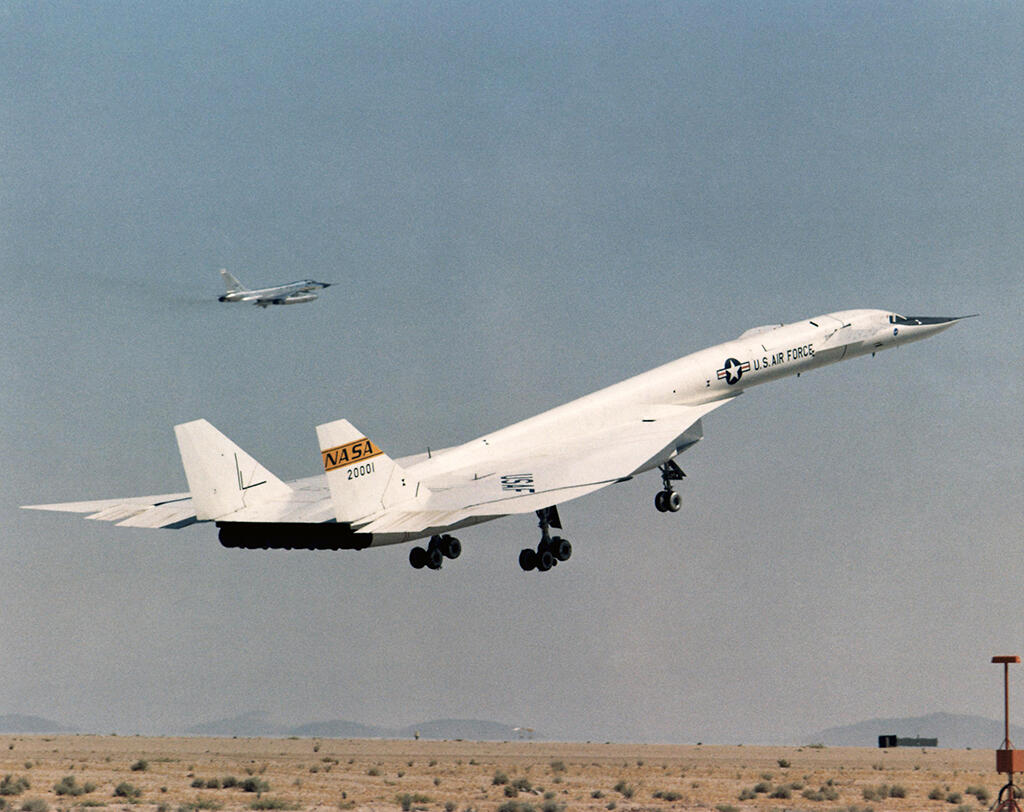
Breakthroughs in aerodynamic, propulsion and material technologies made it seem possible, by 1957, to design a bomber with a 7,500-mi. range and a Mach-3 cruising speed. The North American XB-70 Valkyrie was consequently expected to be both the world’s heaviest and fastest aircraft. Pentagon analysts doubted that it could survive against surface-to-air missiles, and funding was cut in favor of ballistic missiles. Two prototypes were completed for research, the first flying in September 1964. 

Credit: Boeing

As SAC’s chances of getting a production B-70 receded, the future of the bomber force rested on yet another B-52 version. The B-52H borrowed the more powerful and efficient engines of the latest Boeing 707-320B and was designed to carry the Douglas GAM-87 Skybolt air-launched ballistic missile, which could deliver a compact megaton-class warhead over a 1,000-nm range. Skybolt was canceled in December 1962, after being overhauled by submarine-launched missiles and better land-based weapons, but the B-52H survived. All in-service B-52s today are H models. 

Credit: General Dynamics

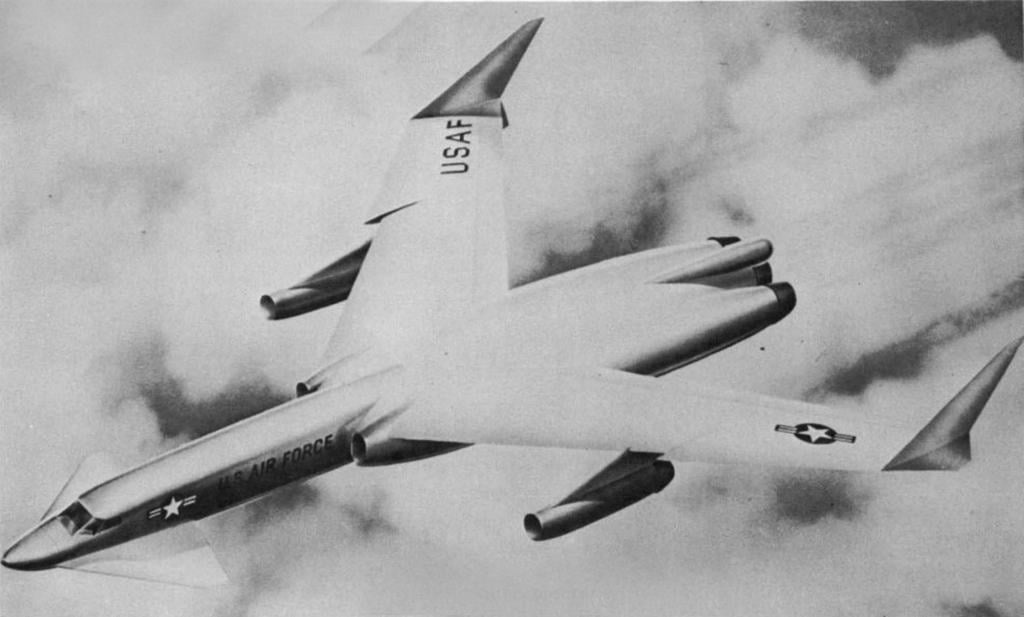
Planners in the 1960s believed that low-altitude, high-speed flight would be the way to penetrate future defenses (giving us the phrase “under the radar”). Under the Advanced Manned Strategic Aircraft (AMSA, aka “America’s Most Studied Aircraft”) project, industry studied variable-sweep aircraft with engines optimized for low-level flight. This is a General Dynamics design. 

Credit: U.S. Air Force

The Pentagon’s screen door had barely struck bomber-hating Secretary of Defense Robert McNamara’s rear end before the U.S. Air Force made AMSA a real program. Rockwell was selected to build the B-1A in June 1970. One of the first major-program designs to feature measures to reduce its radar-cross-section, the B-1A also incorporated an automated electronic warfare system and a Mach 2 high-altitude capability. Then-President Jimmy Carter canceled it in 1977, because of cost overruns, delays and the promise of newer stealth technology and cruise missiles. 

Credit: U.S. Air Force

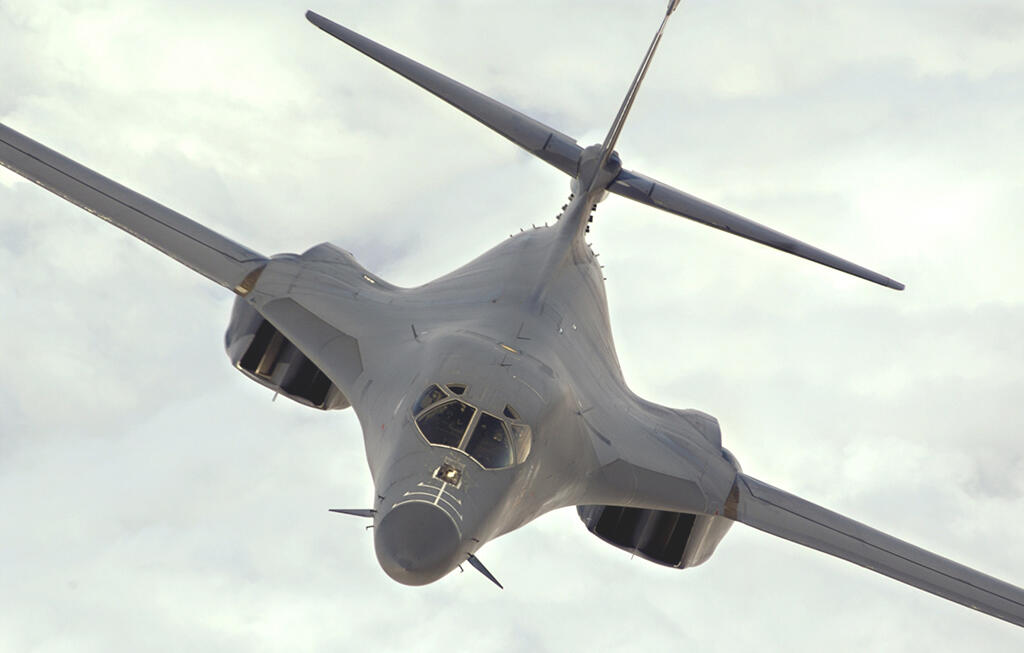
The Reagan administration revived the B-1 in 1981, although the Mach 2 capability was eliminated and provision was made for cruise missiles. The plan was to replace the entire B-52G and B-52H force with 100 B-1s and 132 new stealth bombers. 

Credit: U.S. Air Force

While the new bombers were being developed and built, the B-52 would undergo another upgrade, with new navigation avionics, the ALQ-172 jamming system, and provision for long-range cruise missiles:  first, the Boeing AGM-86, and later the stealthy General Dynamics AGM-129 (above). The Reagan plan envisaged the B-52s serving into the 1990s. 

Credit: U.S. Air Force

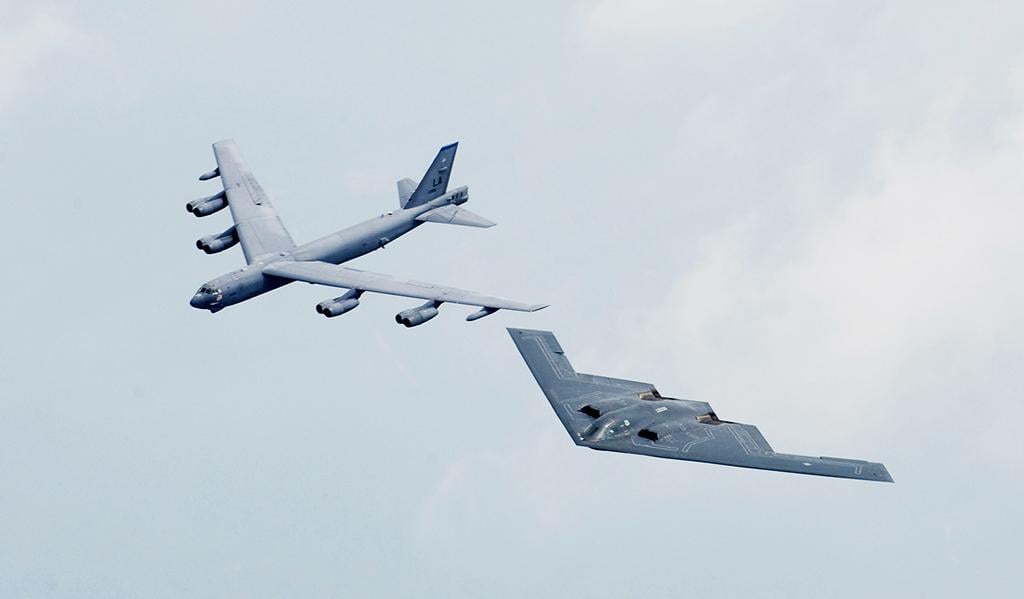
The end of the Cold War coincided with major technical problems with the Northrop B-2 bomber and public revelation of its high cost. With 100 brand-new B-1s, the Air Force was in a poor position to argue that the B-2 was necessary, and the program was terminated after 21 aircraft had been ordered. Although the B-52G was retired in 1994, the B-52H could still carry more weapons farther than the B-1B, and was retained for both conventional and nuclear missions. Today, the plan is to keep the B-52Hs until they are replaced by the new Long-Range Strike Bomber, in the late 2030s—likely outlasting the B-1. Avionics upgrades continue, and the Air Force has even called for studies of a new engine. 

Previous
Next

Few airplanes have outlived as many proposed replacements as the Boeing B-52. Designed to combine jet speed with intercontinental range, the B-52 was not only important in itself but accelerated the development of commercial jet aircraft—its aerodynamic and propulsion technology, and the need for a large jet tanker to support it, led to the Boeing 367-80, the prototype for the modern airliner.

The Art of Deception

As Aviation Week & Space Technology approaches its centennial in 2016, our senior editors cast their eyes back to iconic developments that have changed the shape of the industry – and to the future to predict the paths they might follow. In the first of a special series, we explore the art of deception: stealth.


The Development Of Stealth And Counterstealth

Stealth Technology: How Not To Be Seen

55 Years Of Aviation Week’s Stealth Reporting

The Secret Pioneers Of Stealth

Follow us on

Markets

  • Aerospace
  • Air Transport
  • MRO
  • Defense
  • Space
  • Business Aviation

Products

  • AWIN Intelligence Bundles
  • Market Briefings
  • Publications
  • Data Services
  • Directories
  • Resources

Contact Us

  • Subscriber Services
  • Advertising, Marketing Services & List Rentals
  • Content Sales
  • Events
  • PR & Communications
  • Content Licensing and Reprints
  • FAQ

Other Resources

  • Aviation Week Marketplace
  • Knowledge Center
  • Newsletters
  • ShowNews
  • Advertising - Media Kits
  • Japanese 日本語
  • Korean 한국인
Copyright © 2025. All rights reserved. Informa Markets, a trading division of Informa PLC.
  • Accessibility
  • Privacy Policy
  • Cookie Policy
  • Terms of Use