This article is published in Aerospace Daily & Defense Report part of Aviation Week Intelligence Network (AWIN), and is complimentary through Aug 16, 2026. For information on becoming an AWIN Member to access more content like this, click here.

UK Still Exploring Requirements For Nuclear F-35A Mission

U.S. Air Force
Credit: U.S. Air Force

LONDON—A year ago the UK committed to buying 12 Lockheed Martin F-35As with an eye on restoring the Royal Air Force’s ability to deliver nuclear weapons, but key decisions around eventual fleet size and other issues are still under review.

When London said it would commit to the dozen F-35As to augment its fleet of F-35Bs, it suggested the conventional takeoff and landing version would be used for training and for the nuclear mission.

But Air Vice-Marshal Jim Beck, RAF director of capability and programs says “the two are separate.” The dozen aircraft are to serve for operational conversion training.

How the UK will pursue the nuclear mission, including the ability to deliver U.S. B61-12 bombs, remains a work in progress. “We're doing the analysis to understand the size and posture of force that we will need to undertake this,” he said at the Global Air & Space Chiefs’ Conference.

The UK is effectively trying to restore a mission it has not carried out for more than two decades. The Pentagon certified the F-35A to deliver the B61-12 nuclear bomb in 2024.

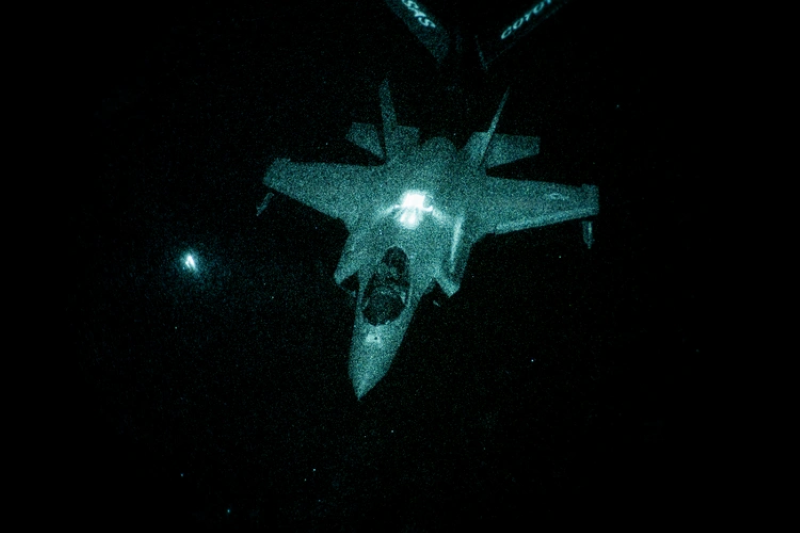
Among the issues up for discussion is how big a fleet of F-35As the UK might need as it takes on the nuclear mission, but other issues are also under study. Among those is the need to introduce a refueling boom capability the UK currently does not have with its tanker fleet.

RAF Air Chief Marshal Harvey Smyth told Aviation Week that the service is exploring options with Airtanker, the operator of the service’s Airbus A330 Multi-Role Tanker Transports, to install an aerial refueling boom.

Robert Wall

Robert Wall is Executive Editor for Defense and Space. Based in London, he directs a team of military and space journalists across the U.S., Europe and Asia-Pacific.