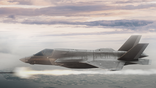
Software Can’t Wait For The Next War

Photo Credit: IAI
Barak Israel | Product manager | With over 15 years of executive experience spanning defence aviation and enterprise software, Barak leads comprehensive business development for the networking solutions aimed at global defence aviation markets. He leverages a proven track record of managing high-value defence contracts and engaging with CxO-level stakeholders to drive international adoption of state-of-the-art aviation networking capabilities.
Modern warfare evolves faster than traditional military software cycles can handle. Threats adapt in days, while many combat aircraft still rely on upgrade processes that take years. That gap is no longer just inefficient – it is operationally dangerous.
Recent operational experience has shown that advanced fighter aircraft are entering high-intensity combat environments with software that is outdated, unstable, or unable to support rapidly changing mission requirements. In some cases, software upgrades intended to improve capability became only partially usable due to integration complexity and stability issues.
This is not a procurement problem, it is an architectural problem.
Traditional combat aircraft were built around tightly integrated avionics systems. Any new capability, whether related to targeting, sensor fusion, training, communications, or electronic warfare, typically requires modifying the aircraft’s certified core software. That process depends heavily on the original manufacturer (OEM), lengthy integration cycles, and extensive regression testing across the entire platform.
The result: operational upgrades arrive far too late for modern combat realities.
Wars do not wait for software releases.
Today’s operational environment demands something different: the ability to deploy new mission capabilities during active operations, integrate lessons learned immediately, and adapt aircraft systems without touching the certified avionics core.
This is where open mission architectures are changing the equation.
Instead of embedding every new capability inside the aircraft’s native avionics software block, modern mission-layer architectures create a separate operational environment above the core systems. The aircraft remains stable and certified, while mission applications can evolve rapidly and independently.
The implementation of this innovative approach is realized/enacted in OPAL (Operational Avionics Layer) NG by IAI.
OPAL NG creates an open, software-defined operational layer that connects air, land, and naval platforms into a shared real-time combat environment. The system enables operators to deploy new applications, integrate national capabilities – and adapt operational functionality without modifying the aircraft’s original avionics baseline.
The operational impact is significant:
- Faster deployment of mission capabilities
- Reduced dependence on OEM upgrade timelines
- Real-time interoperability across platforms
- Rapid integration of operational lessons learned across different platforms
- Greater national capability introduction sovereignty
Most importantly, this approach enables continuous operational evolution while platforms remain active in combat.
Instead of waiting years for the next software block release, forces can respond to emerging threats in near real time.
That shift is becoming strategically critical.
In future conflicts, the decisive advantage may not belong to the platform with the most advanced hardware, but to the force that can adapt its software fastest. Air forces that remain dependent on slow, centralized upgrade cycles risk falling behind adversaries that evolve continuously.
Ultimately, in an era where the battlefield evolves in real time, the decisive advantage will not belong only to the force with the most advanced aircraft – but to the one that can adapt fastest, and OPAL NG is exactly what enables that pace of evolution.
Related Content