This article is published in Aerospace Daily & Defense Report part of Aviation Week Intelligence Network (AWIN), and is complimentary through Aug 24, 2026. For information on becoming an AWIN Member to access more content like this, click here.
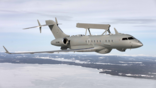
FARNBOROUGH, England—NATO’s decision to buy as many as 10 Saab GlobalEye airborne early warning aircraft could spur more orders within the alliance, according to Bombardier, which provides the system's Global 6500 airframe.
“NATO is going to be the catalyst for more orders in Europe beyond the NATO fleet,” says Steve Patrick, who heads the Canadian aircraft-maker’s defense business.
Countries could use the alliance’s contract and buy their own systems while benefiting from the “NATO purchasing power,” he says. That way they could get pricing benefits even if they acquire relatively smaller fleets of two to four aircraft.
Saab has already disclosed plans to ramp up production of GlobalEye systems in light of announced purchases or procurement plans, including from France and Canada, as well as anticipated deals.
Under the deal with Ottawa, which in May said it plans to buy six GlobalEyes, Saab has agreed that every third overall conversion of those systems will take place in Canada.
Bombardier also is gaining traction with the new Global 8000 in a special mission role, with Germany proceeding with plans to convert the business jet into a standoff jammer in what likely will be the first special-mission version of the aircraft. Patrick says Bombardier is in talks with several companies about how they might use the platform, which is larger than the Global 6500, for missionized military applications. Those talks are still at an early stage, though, he notes.
Despite the Global 8000’s greater range and size, Patrick still expects the Global 6500 to be addressing most of the special mission demand, in part because of the large number of applications already on offer. Israel Aerospace Industries, for instance, last week unveiled the Ellyon multi-mission aircraft based on the Global 6500.
In addition to the NATO GlobalEye procurement plan disclosed during this month’s summit, several alliance members used the event to launch the Crewed Airborne Warning Initiative, a multi-nation effort to field additional airborne early warning systems. Participants include Germany, Denmark, Finland, France, Poland, Spain and Turkey.