
In Modern Warfare, Interoperability Matters More Than Firepower

For decades, the U.S. military has poured billions into state-of-the-art aircraft, ships, tanks and weapons. But in modern warfare, the value of those systems is diminished if they can’t talk to one another. A stealth fighter spotting an incoming cruise missile, an Army battery in range to intercept it, and a Navy destroyer with critical intelligence should be able to share data instantly. Too often, they cannot.
That is the central challenge facing the Pentagon’s ambitious effort to build a Joint All-Domain Command and Control (JADC2) network—connective tissue linking every platform, protocol and tool across land, air, sea, space and cyber. Without it, America risks fighting tomorrow’s wars with yesterday’s communications.
The problem is both technical and cultural. Each service has built its own command-and-control framework: the Army’s Project Convergence, the Navy’s Project Overmatch, the Air Force’s Advanced Battle Management System. These systems are powerful, but they operate in silos. The result: a patchwork of incompatible formats, frequencies and protocols. Something as basic as a ground operator transmitting coordinates to an overhead platform can become a slow, error-prone process. Now multiply that problem across thousands of systems in a dynamic battlespace. The stakes are obvious.
For nearly a decade, one solution has quietly proven that true interoperability is possible. SNC’s TRAX® software has become the backbone of JADC2—used by all U.S. military branches, trusted by allies including the U.K. and Australia, and integrated across more than 50 platforms with 100,000 users worldwide.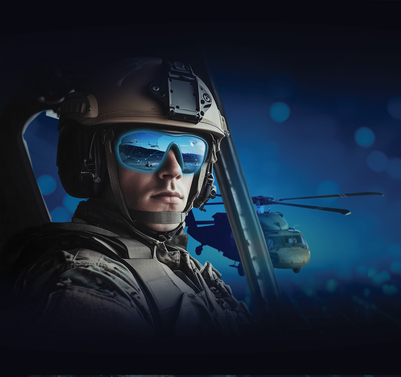
Now, SNC is taking JADC2 to the next level with a new platform it says could transform how U.S. forces share data across domains: TRAX Edge™ an advanced and secure JADC2 software-as-a-service (SaaS) model for industry and government partners. TRAX Edge does more than just translate data. It weaves disparate systems together from within, transforming formats into a unified language so intelligence can flow seamlessly. Whether connecting a drone’s sensor feed to an Army unit on the ground, linking net-enabled weapons to targeting data, or integrating across allied forces, TRAX Edge ensures that warfighters get the right information at the right time.
Its maturity is unmatched: TRAX Edge blends secure cloud-based architecture with edge computing, artificial intelligence and a wide range of certified connections with more than 65 system integrations, 15 radio links and support for 20-plus messaging protocols. These interfaces enable real-time data integration essential for live fires, intelligence and combat missions. Its design—an open architecture, backward-compatible, user-friendly interface—means that operators at the tactical edge can use it with minimal training. Unlike proprietary systems that lock in customers, TRAX Edge’s open standards allow rapid customization, ensuring both cost-efficiency and operational agility. It also promises compliance with the Pentagon’s strict Cybersecurity Maturity Model Certification standards.
Critics sometimes argue that no software can solve the Pentagon’s structural fragmentation. They’re right, no single product can. But without a proven backbone, the dream of a connected force will remain just that: a dream. TRAX Edge demonstrates that a decade of iteration, battle-testing and global adoption can bridge the gap between aspiration and reality.
Wars of the future will be won not just with faster jets or bigger missiles but with networks that fuse them into a coherent whole. Interoperability is not a luxury; it is the difference between chaos and coordination on the battlefield.