
Rome FCO Builds on Record 2025 Growth to Expand Global Connectivity
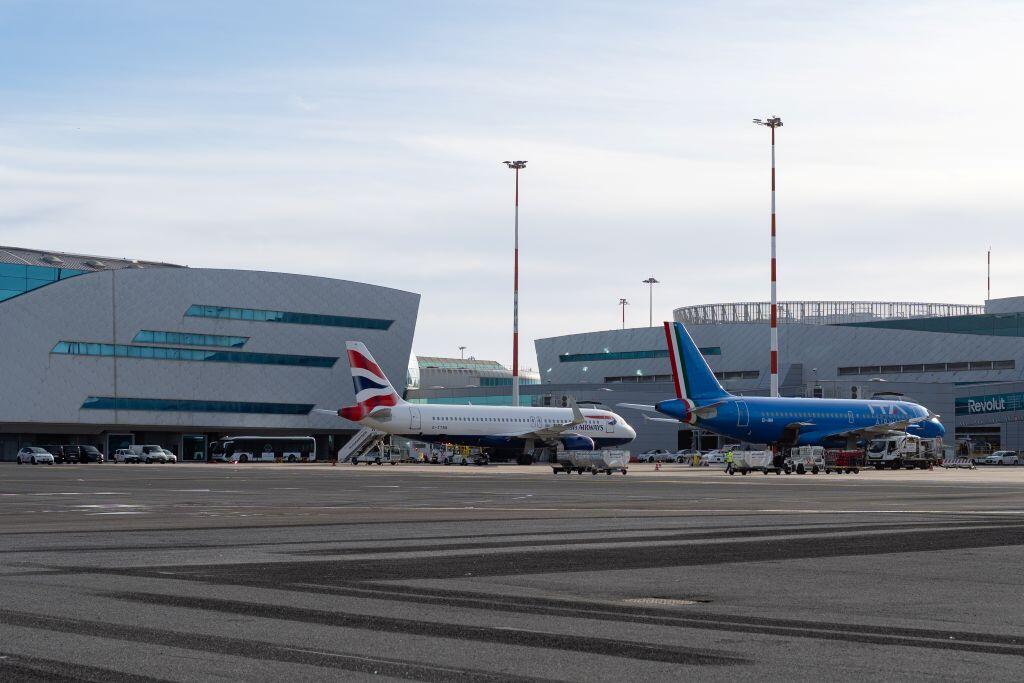
Rome Fiumicino enters the Summer 2026 season on the back of a record‑breaking year, continuing along a consistent trajectory of growth firmly anchored in quality, connectivity and long‑term strategy.
In 2025, the airport exceeded the 50 million passenger threshold for the first time, handling 51.3 million travelers, marking a +4% increase over 2024 and +18% compared with 2019 levels. This performance reflects not only the strength of international demand but also the effectiveness of a development strategy designed to support a sustainable and balanced expansion across all market segments.
A particularly significant driver of this growth has been the point‑to‑point traffic, which increased by 32% compared with 2019, adding more than 10 million passengers. This result outperformed the European average and highlighted a solid demand supported by Fiumicino’s long‑term positioning as a diversified and passenger‑centric airport.
Service quality has remained a key pillar of this strategy. In 2025, Rome FCO was awarded “Best Airport in Europe for Service Quality” by ACI World for the 9th year in a row, while also renewing its prestigious 5‑Star Airport rating from Skytrax. These recognitions confirm a sustained commitment to delivering a high‑quality travel experience, backed by continuous investment in infrastructure, operations and passenger services.
Today, Fiumicino stands among the world’s most connected airports. It ranks as the ninth best‑connected airport globally, according to Cirium, offering more than 240 destinations across five continents, in around 80 countries, served by 100 airlines. The long-haul segment represents an increasingly important driver of this strong performance, with 10.8 million long‑haul passengers achieved in 2025 alone -
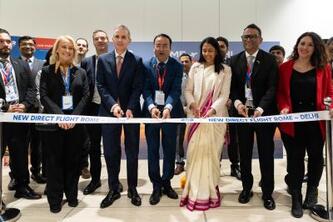
highlighting the airport’s expanding global reach.
Intercontinental expansion remains central to the airport’s 2026 plans. Among the most notable developments, Alaska Airlines has selected Rome Fiumicino as its first European airport, launching the new Seattle–Rome service, alongside Delta Air Lines, strengthening connectivity with the U.S. West Coast. ITA Airways also introduces the first ever direct Italy–Houston service, marking the carrier’s debut in the Texas market. Long‑haul connectivity is further enriched by the return of Air India’s nonstop Delhi service and the debut of Air Seychelles, which has activated flights to Rome FCO in April, entering the Italian market for the first time.
Several key intercontinental routes will also be reinforced. Qantas will extend its Perth route, reaching a daily frequency from late June through the end of the Summer season, strengthening the connectivity between Italy and Australia. In Asia, Cathay Pacific operates four weekly flights to Hong Kong, while Singapore Airlines extends the schedule period of its fifth weekly frequency. In the Americas, LATAM Airlines advances its daily São Paulo service earlier into the season, while American Airlines (Miami), Delta (Minneapolis) and United (Denver) further strengthen their presence with additional capacity.
During peak periods, Fiumicino will offer up to 42 daily departures to North America across 22 destinations, underlining the breadth of its transatlantic connectivity.
Ethiopian Airlines also further strengthens its presence by increasing Addis Ababa to two flights a day.
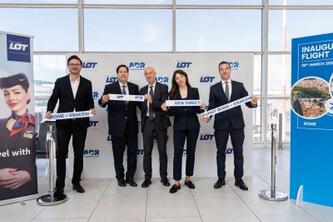
European connectivity continues to expand as a key pillar of Fiumicino’s overall network strategy. Wizz Air will base its 17th aircraft in Rome, enabling new routes including Tallinn, Alexandria, Kosice and many more. easyJet adds services to Glasgow, Birmingham, Newcastle and Belfast, while ITA Airways expands short‑haul connectivity with Marseille, Valencia and Málaga. Further additions include Norwegian (Billund), Volotea (Limoges and Oviedo) and LOT Polish Airlines (Kraków), alongside further network enhancements.
These developments define a season built on a remarkable expansion, strengthened international connectivity and a continued focus on service quality, supporting Rome Fiumicino’s long‑term growth as a key global gateway.
Looking ahead, Aeroporti di Roma (ADR) is promoting a long-term vision supported by the Sustainable Development Plan for Fiumicino Airport in order to better manage the expected traffic demand through to 2046 and welcoming around 100 million passenger per year. To support this growth, ADR has envisaged a €9 billion investment plan, entirely without public funding for new works, including major strategic airport infrastructures, such as a new terminal and a new runway, alongside additional works designed to generate tangible benefits for the surrounding area and local communities.