https://aviationweek.com/themes/custom/particle/dist/app-drupal/assets/awn-logo.svg
Skip to main content
  • Market Sector
    • Aerospace
    • Air Transport
    • MRO
    • Defense
    • Space
    • Business Aviation
  • Markets
    • Aerospace
      • Aircraft & Propulsion
      • Connected Aerospace
      • Emerging Technologies
      • Manufacturing & Supply Chain
      • Advanced Air Mobility
      • Sustainability
    • Air Transport
      • Aircraft & Propulsion
      • Interiors & Connectivity
      • Airports & Networks
      • Airlines & Lessors
      • Safety, Ops & Regulation
      • Maintenance & Training
      • Sustainability
    • MRO
      • Aircraft & Propulsion
      • Interiors & Connectivity
      • Emerging Technologies
      • Supply Chain
      • Safety, Ops & Regulation
      • Workforce & Training
      • Sustainability
    • Defense
      • Aircraft & Propulsion
      • Sensors & Electronic Warfare
      • Missile Defense & Weapons
      • Supply Chain
      • Budget, Policy & Operations
      • Sustainability
    • Space
      • Launch Vehicles & Propulsion
      • Commercial Space
      • Space Exploration
      • Satellites
      • Budget, Policy & Regulation
      • Operations & Safety
    • Business Aviation
      • Aircraft & Propulsion
      • Interiors & Connectivity
      • Airports, FBOs & Suppliers
      • Flight Deck
      • Safety, Ops & Regulation
      • Maintenance & Training
      • Sustainability
    • In Focus
      • Middle East & Africa
  • Marketplace
  • Services
    • Services
      • Advertising
      • Marketing Services
      • Fleet, Data & APIs
      • Research & Consulting
      • Network and Route Planning
      • Marketplace
  • Store
    • Market Sector

      • Aerospace
      • Air Transport
      • MRO
      • Defense
      • Space
      • Business Aviation
    • Type View All Products
      • Intelligence Bundles
        • AWIN - Premium
        • AWIN - Aerospace and Defense
        • AWIN - Business Aviation
        • AWIN - Commercial Aviation
      • Market Briefings
        • Advanced Air Mobility Report
        • Aerospace Daily & Defense Report
        • Aviation Daily
        • SpeedNews
        • The Weekly of Business Aviation
      • Directories
        • Air Charter Guide
        • Aviation Week Marketplace
        • Route Exchange
        • The Engine Yearbook
      • Data Services
        • AC-U-KWIK
        • Aircraft Bluebook
        • Airportdata.com
        • ASM Global Route Development
        • CAPA – Centre for Aviation
        • Catchment Analyzer
        • Defense Market Analyzer
        • Fleet Discovery Civil
        • Fleet Discovery Military
        • Fleet & MRO Forecast
        • MRO Prospector
        • Tracked Aircraft Utilization
      • Publications
        • African Aerospace
        • Air Transport World
        • Arabian Aerospace
        • Aviation Week & Space Technology
        • Aviation Week & Space Technology - Inside MRO
        • Business & Commercial Aviation
        • CAPA - Airline Leader
        • Routes magazine
        • Show Business
  • Events
    • Recent webinars
    • Events View All Events
      • MRO
        • MRO Americas
        • MRO Asia
        • MRO Australasia
        • MRO Baltics & Eastern Europe Region
        • MRO Europe
        • MRO Greater China
        • MRO Latin America
        • MRO Middle East
        • MRO Southeast Asia
        • Military Aviation Logistics and Maintenance Symposium (MALMS)
      • Commercial Aviation/A&D
        • Aero-Engines Americas
        • Aero-Engines Europe
        • Aero-Engines Asia-Pacific
        • Engine Leasing Trading & Finance Europe
        • Engine Leasing, Trading & Finance Americas
      • Air Transport
        • Routes Americas
        • Routes Europe
        • Routes World
        • CAPA Airline Leader Summit - Airlines in Transition
        • CAPA Airline Leader Summit - Americas
        • CAPA Airline Leader Summit - Latin America & Caribbean
        • CAPA Airline Leader Summit - Australia Pacific
        • CAPA Airline Leader Summit - Asia & Sustainability Awards
        • CAPA Airline Leader Summit - World & Awards for Excellence
        • GAD Americas
        • GAD World
      • Aerospace and Defense
        • Defense Conference
      • Awards
        • Aviation Week 20 Twenties
        • Aviation Week Laureate Awards
        • ATW Airline Awards
        • Program Excellence Awards and Banquet
        • CAPA Asia Aviation Summit & Awards for Excellence
        • Space Tech Challenge Awards
  • About
    • About Aviation Week Network
      • Our Story
      • Content and Data Team
      • Aviation Week & Space Technology 100-Year
    • Contact Us
      • Subscriber Services
      • Advertising, Marketing Services & List Rentals
      • Content Sales
      • Events
      • PR & Communications
      • Content Licensing and Reprints
      • FAQ
  • Log In
  • Register
  • My Account
    • Profile
    • Sign Out
  • AWIN Access
  • My cart
    Back to
  1. Business Aviation

Share

Gallery: Lightning Strikes - Key Learnings

October 25, 2021
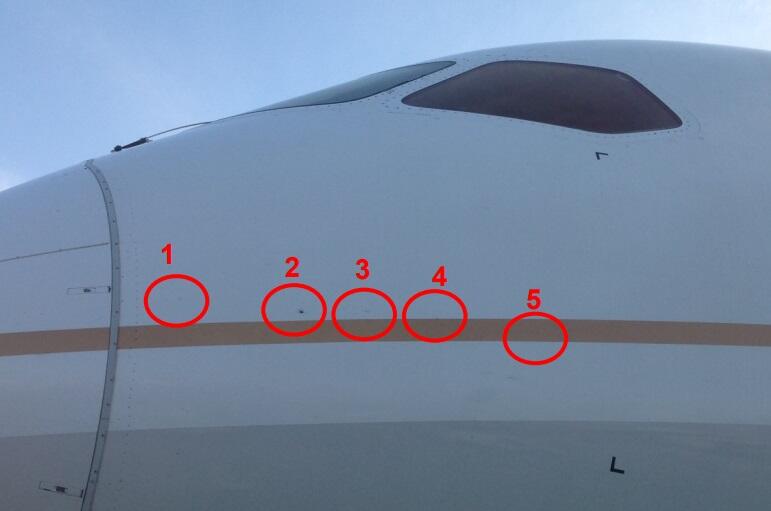
Attachment Points

Lightning causes physical damage to the aircraft due to the direct attachment of the lightning channel and conduction of the current. Additional effects include bending, melting, burning, pitting and/or vaporization of the aircraft structure or components, magnetic pinching, shock wave and overpressure, explosion of fuel vapors, electric shock and flash-blindness, and residual magnetism. It also includes the currents and voltages directly injected in associated wiring and plumbing.  Read more in Part 1 of the lightning damage article.


On Oct. 10, 2014, a United Airlines Boeing 787-824 (N26906) was struck by lightning during initial climb, a few minutes into a flight from London Heathrow Airport (EGLL) to Houston’s George Bush Intercontinental Airport (KIAH). The locations circled in red are the lightning attachment points on the forward fuselage.

Credit: NTSB

Lightning Strike

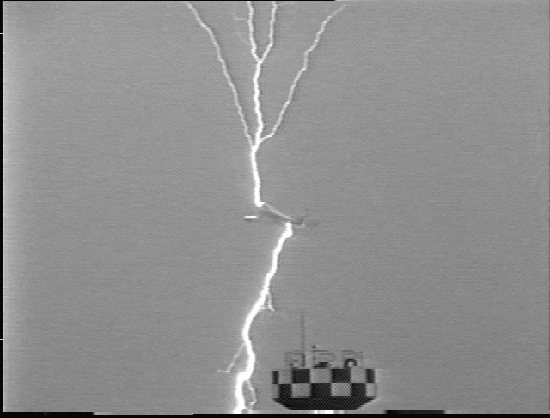
This photo captured the moment a cloud-to-ground lightning bolt struck an aircraft at low altitude. Notice that the lightning bolt entered the aircraft near the forward part of the fuselage and exited near the tail. “Entry” and “exit” points are common damage to an aircraft as a result of a lightning strike.

Credit: National Weather Service

Exit Points

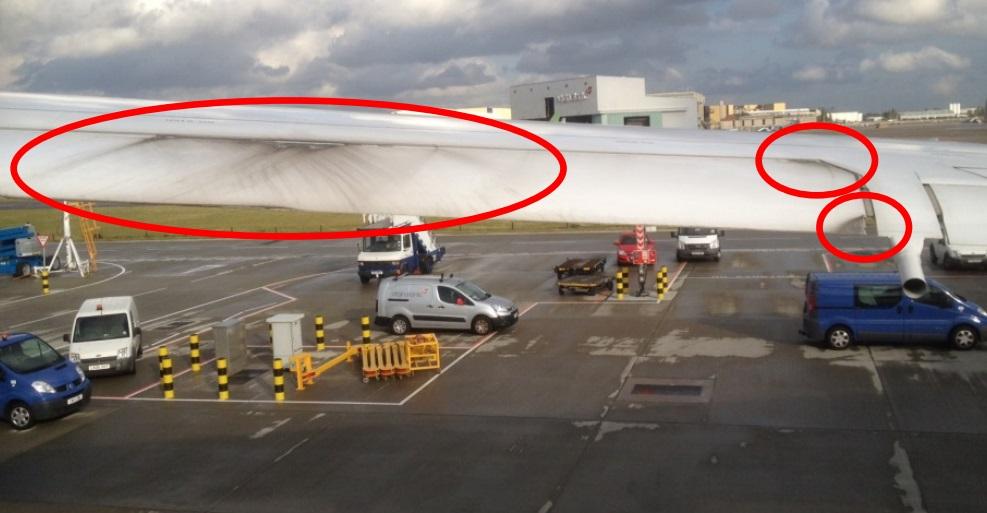
Flight controls and trailing edges of the wings and tails are common exit points for the electrical charge. Flight controls suffered damage in 39% of the turbojet and 30% of the turboprop lightning strikes. Static wicks suffered damage in 16% of the turbojet and 24% of the turboprop strikes. Read more in Part 1 of the lightning damage article.

Flight controls and trailing edges of the wings and tails are common exit points for the electrical charge. Flight controls suffered damage in 39% of the turbojet and 30% of the turboprop lightning strikes. Static wicks suffered damage in 16% of the turbojet and 24% of the turboprop strikes. Read more in Part 1 of the lightning damage article.


The locations circled in red are the lightning attachment points near the left aileron of the United Airlines Boeing 787 (N26906). Credit: NTSB

Blank Displays

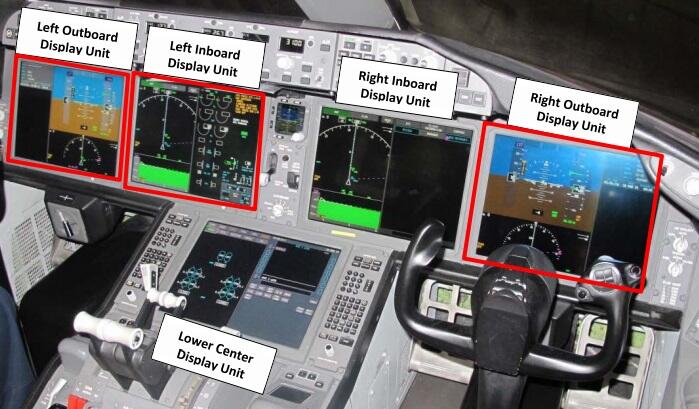
The United Airlines Boeing 787 (N26906) flight crew lost the use of three of the five head-down displays (HDDs) following the lightning strike. The displays outlined in red blanked out. After the crew elected to follow the “Loss of All Displays Checklist,” none of the affected displays recovered to an operational state.

Credit: NTSB

NOAA Storm Chaser

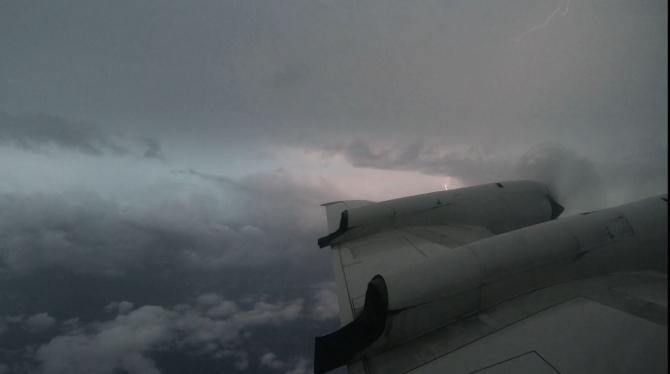
Lightning within Tropical Storm Laura as seen from a National Oceanic and Atmospheric Administration WP-3D Orion during a morning flight on Aug. 23, 2020

Credit: Nick Underwood, NOAA

US1209 Flight Path

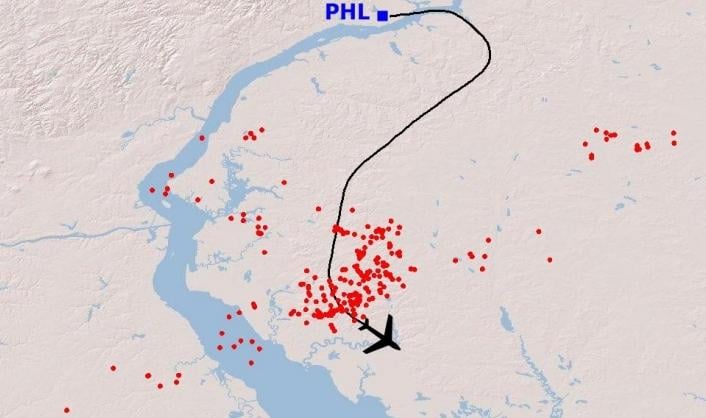
The red dots indicate lightning bolts that were detected on Aug. 14, 2011. The black line represents the flight path of US Airways Flight 1209, a Boeing 757 en route from Philadelphia to Philipsburg, St. Maarten. The aircraft was struck by lightning at approximately 16,000 ft. The crew reported smoke in the cockpit, declared an emergency, and diverted to Baltimore, where the airplane landed without further incident.

Credit: NTSB

Windshield Damage

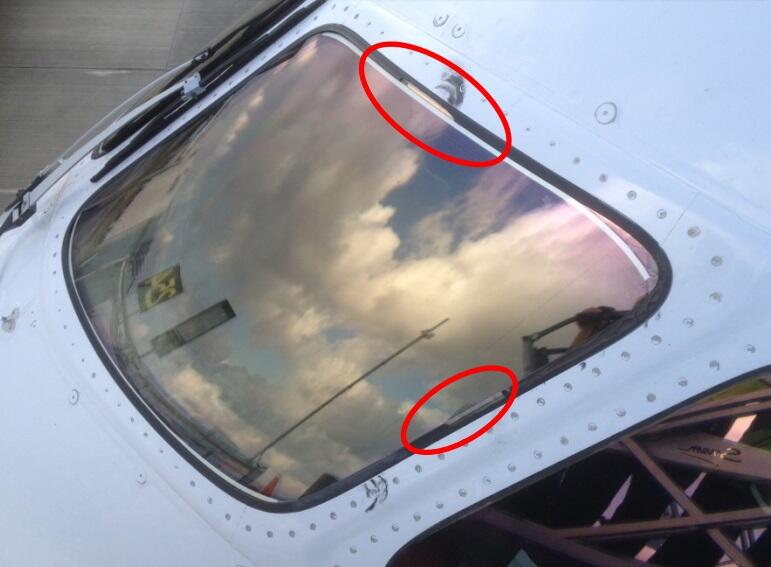
The locations circled in red are seal damage to the captain’s windshield caused by lightning strikes on the United Airlines Boeing 787 (N26906).

Credit: NTSB

Previous
Next

Lightning causes physical damage to the aircraft due to the direct attachment of the lightning channel and conduction of the current. Additional effects include bending, melting, burning, pitting and/or vaporization of the aircraft structure or components, magnetic pinching, shock wave and overpressure, explosion of fuel vapors, electric shock and flash-blindness, and residual magnetism. It also includes the currents and voltages directly injected in associated wiring and plumbing.  

Lightning damage illustrates the importance of thorough inspections done by properly trained maintenance technicians utilizing specified tools and methods to detect the damage so that aircraft are returned to service and allowed to fly only in an airworthy condition.

  • Read more in Part 1 of the lightning damage article.
  • Lightning Damage To Aircraft Part 2


Aviation Week Intelligence Network
Monitor the market and connect your business to the people, programs and proprietary data driving the Business Aviation market - only available with AWIN.

BAV_AWIN_270_thumb

Stay Connected.
Stay Informed
Grow Your Business.

Learn How

Follow us on

Markets

  • Aerospace
  • Air Transport
  • MRO
  • Defense
  • Space
  • Business Aviation

Products

  • AWIN Intelligence Bundles
  • Market Briefings
  • Publications
  • Data Services
  • Directories
  • Resources

Contact Us

  • Subscriber Services
  • Advertising, Marketing Services & List Rentals
  • Content Sales
  • Events
  • PR & Communications
  • Content Licensing and Reprints
  • FAQ

Other Resources

  • Aviation Week Marketplace
  • Knowledge Center
  • Newsletters
  • ShowNews
  • Advertising - Media Kits
  • Japanese 日本語
  • Korean 한국인
Copyright © 2025. All rights reserved. Informa Markets, a trading division of Informa PLC.
  • Accessibility
  • Privacy Policy
  • Cookie Policy
  • Terms of Use