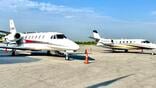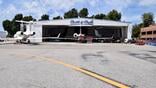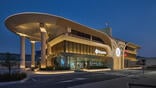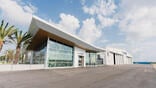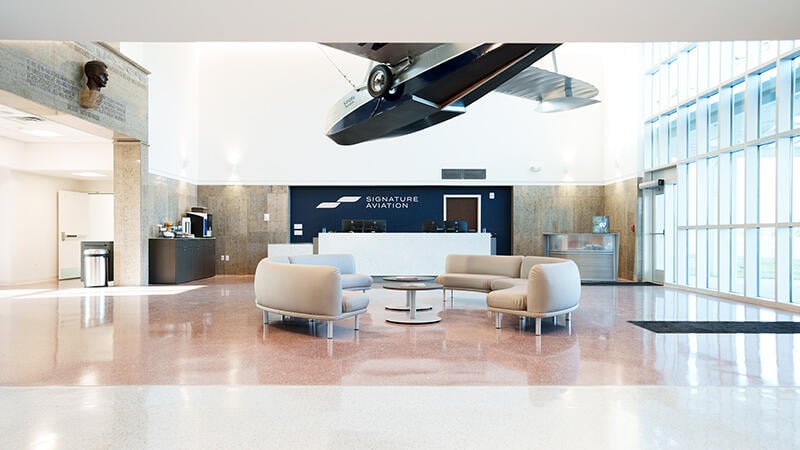
Signature Aviation’s renovated FBO at Smith Reynolds Airport in Winston-Salem, N.C. includes a bigger crew lounge, outdoor seating and expanded coffee station in the lobby.
A Signature Aviation principal customer spends an average of 192 sec. at a facility—from arriving at a fixed-based operator (FBO) to boarding an aircraft. “You have these very tight moments to make an impression on your guests and residents,” says CEO Tony Lefebvre.
To elevate the customer experience during that roughly 3 min., Signature is leveraging technology, empowering staff and investing in infrastructure to provide the least amount of friction in the process.
Signature just launched two big technology projects focused on improving the customer experience.
In August it rolled out a new customer relationship management (CRM) system that replaces a 10-year-old platform “that we hadn’t touched in 10-plus years,” Lefebvre says.
Signature’s Customer 360 CRM platform “unifies our customer and location data into a single, real-time view, allowing our team members to deliver more personalized, consistent and seamless service across our global network,” says Derek DeCross, Signature Aviation’s CCO. Delivering a bespoke “guest experience starts with knowing and understanding our Signature Aviation customers better than anyone else in the industry,” DeCross says.
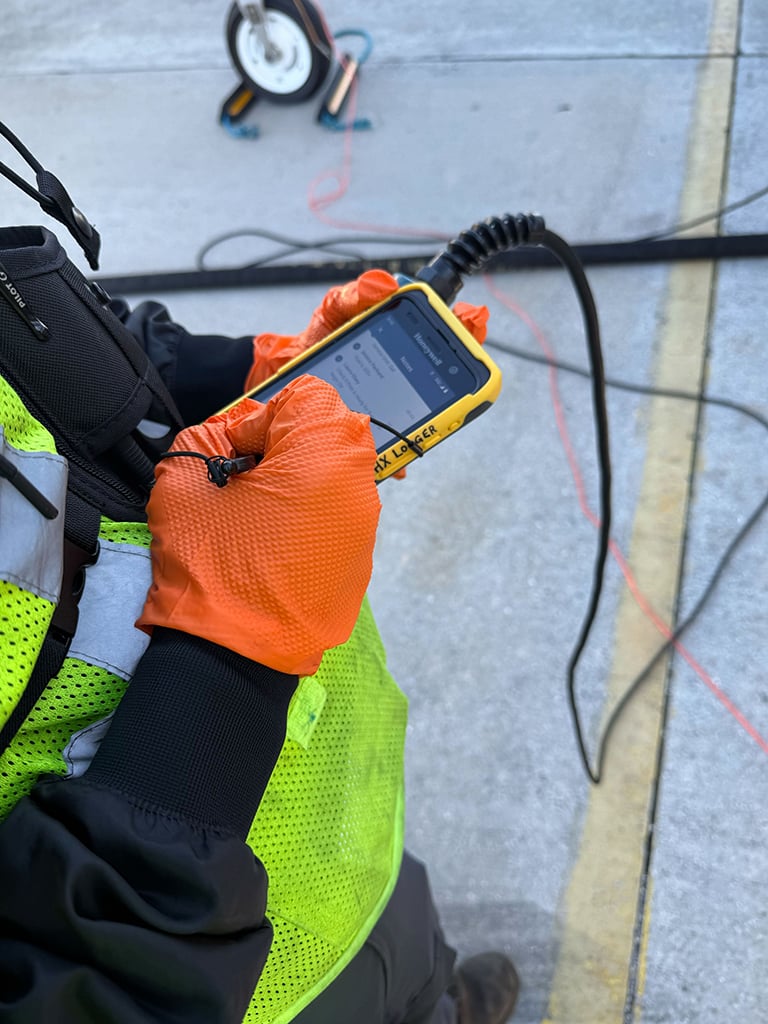
The CRM system also will provide the foundation for other initiatives—one of which is Ops Mobile, which Signature Aviation has quietly been rolling out for months.
While using mobile devices for customer services is not new, it is to Signature, which until recently has relied on walking over to another team member to place an order or “radioing it,” Lefebvre says. Now, team members use handheld devices to access guest information and order services—from fuel loads to ground power units, newspapers, aircraft towing or a valet car to meet a landing aircraft. The request goes into the central system, “where we then can dispatch a team member more efficiently,” Lefebvre says.
“It’s anticipating the needs of our guests before they actually have to ask,” he says.
The system also enables customers to select how they want to interact and receive information—whether it be text or phone.
Signature has rolled out Ops Mobile at 18 of its locations and hopes to reach 60% to 70% by year-end.
The new technologies “enable us to deliver something that is incredible for our guests, and nobody is going to come close to it,” says Lefebvre.
Another backbone of Signature’s service is its 24/7 operations center that monitors its entire global network with CCTV. Lefebvre has previously worked at airlines and says Signature runs its business similarly from an operational readiness view. “We can actually see real-time what’s going on, if somebody’s having difficulty with their aircraft or needs to have an emergency landing somewhere,” he says.
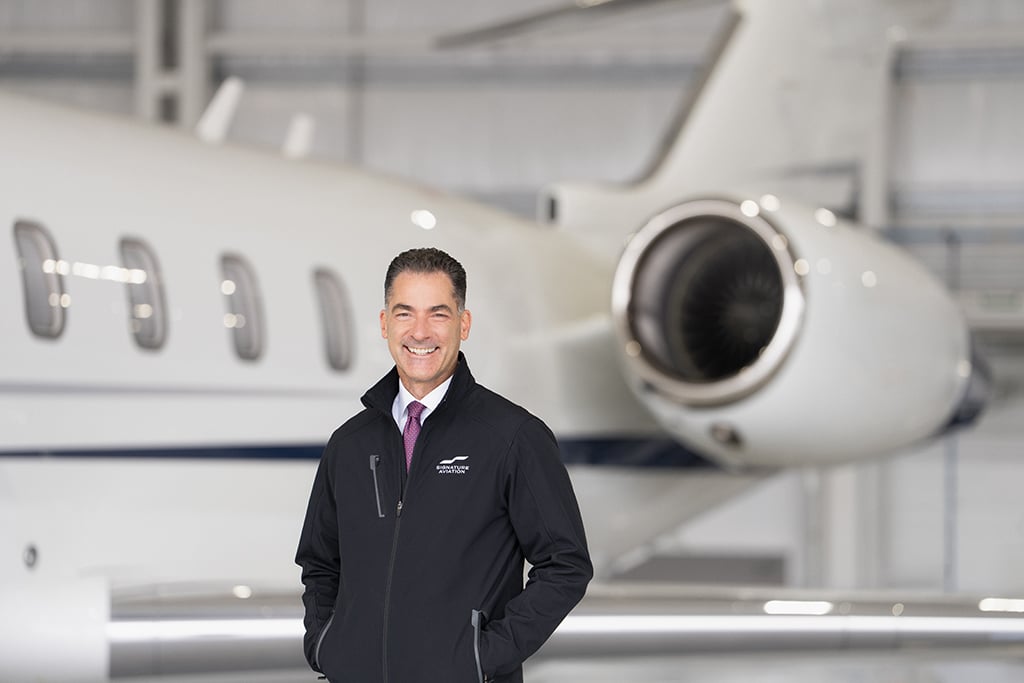
The ops center has increased its reliability and responsiveness. “While a lot of things in aviation aren’t always reliable, you need a partner that can be there for you when you have a need,” Lefebvre says. While that mission is not new, he says Signature has “been executing a lot better” since it became a private company in 2021.
That is when it transitioned from being a public company listed on the London Stock Exchange to being owned by a consortium of private equity investors, including Blackstone Group, Global Infrastructure Partners and Cascade Investments after they purchased the FBO chain for $4.7 billion.
Since the ownership change, Signature has deployed $4 billion in capital. When it was a public company, it spent $100 million to $250 million annually, Lefebvre says.
While “money is an enabler, it’s really a change in strategy as to how we approach private aviation,” says Lefebvre. It switched from being an aviation transportation and logistics provider to being a “hospitality-forward business,” the CEO notes.
That includes “consciously changing how we deploy capital” and building facilities not in a standardized, “cookie-cutter” way, but making them customer focused. It hired industrial engineers and customer service experts to evaluate how people flow through its buildings. It intentionally changed how vehicles arrive at its facilities, how customers approach the coffee bar, then flow through bespoke bathrooms and the rest of the facility before exiting to walk to the aircraft. In addition, a guest experience agent is now visible throughout so they can respond to any guest’s needs.
“I can show you hundreds of FBOs that I have no idea what the person was thinking about when they designed it,” because they include long, crowded hallways, not enough places to sit and insufficient bathroom capacity, says Lefebvre.
The facility alterations require capital, but they also necessitate that intentional focus. “You can just see the quantum scale of the investment we’ve done the last 4.5 years,” says Lefebvre.
Signature Aviation has about 80 construction projects underway—including additional ramp capacity, hangars, new terminals, terminal renovations, fuel farms and fuel capacity. “We’re really taking the time to find out what are the friction points and fixing them,” Lefebvre says.
It operates from more than 200 locations in 27 countries. “We are in 37 of the top 50 markets, and out of the top 200, we’re in over 140 of them,” says Lefebvre. He did not disclose any new locations, but notes, “We’re actively looking in places where aviation is well seeded or aviation is growing at a very rapid pace.”
Signature, which he says is “the only truly global private aviation terminal operator,” also is evaluating additional capacity at its existing footprints. “The last thing you want to do is run out of ramp space.”

Related Content