This article is published in Business Aviation & AAM Report part of Aviation Week Intelligence Network (AWIN), and is complimentary through Jul 17, 2026. For information on becoming an AWIN Member to access more content like this, click here.

Gulfstream Tests: 100% SAF Reduces Contrails At High Altitude

Gulfstream Aerospace

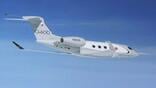
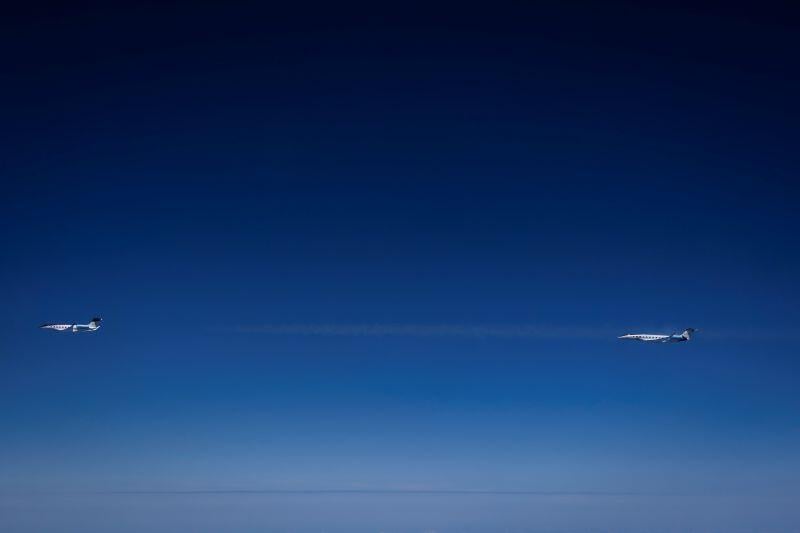
The G800 flew at up to 50,000 ft. on 100% SAF while a G700 measured its engine emissions and contrail production.

Credit: Gulfstream Aerospace

Gulfstream has conducted the first demonstration of reductions in contrail-forming emissions at high altitude using 100% sustainable aviation fuel. The flight tests used a G800 business jet powered by Rolls-Royce Pearl 700 engines.

The G800 was flown at altitudes up to 50,000 ft. on conventional Jet A fuel, low-sulfur Jet A and neat hydroprocessed esters and fatty acids (HEFA) sustainable aviation fuel (SAF). Inflight emissions were measured by a Gulfstream-modified G700 flying in formation.

HEFA SAF contains no sulfur or aromatic hydrocarbons, constituents of fossil jet fuel that are known to produce particulate emissions in the engine exhaust that can lead to the formation of ice crystals and production of contrails in certain atmospheric conditions.

Gulfstream says preliminary results of the test flights conducted in May suggest a significant reduction in the particulate emissions that contribute to contrail formation when operating on 100% neat SAF.

The first inflight study of the impact of using 100% SAF on the formation of contrail ice crystals was conducted in 2021 under the ECLIF3 project involving Airbus, Rolls-Royce, German Aerospace Center (DLR) and HEFA SAF producer Neste.

Compared to a reference Jet A-1 fuel, the number of contrail ice crystals per mass of unblended SAF consumed was reduced by 56%. The climate warming impact of contrails was estimated to be reduced by at least 26% with 100% SAF.

The ECLIF3 study involved an Airbus A350-900 powered by Rolls-Royce Trent XWB-84 high-bypass turbofans at a cruise altitude of 35,000 ft., with a DLR-owned Dassault Falcon 20 taking the near-fuel and far-field inflight emissions and contrail measurements.

The Gulfstream flights were the first to measure contrail production at the high altitudes at which larger business jets such as the G800 fly. Most contrails are formed at 32,000-42,000 ft., altitudes at which commercial aircraft cruise, while the G800 can fly up to 51,000 ft. where the atmosphere is drier and colder and contrail generation is reduced.

Two flights were performed, both of the G800’s engines operating on 100% SAF for that portion of the testing. The flights were conducted in collaboration with the FAA’s Ascent Center of Excellence for alternative jet fuels and environment, NASA, DLR, Missouri University, Aerodyne Research, Rolls-Royce and SAF suppliers Montana Renewables and World Fuel Services.

To match the performance of the G800, the G700 was used as the inflight measurement aircraft, with Gulfstream modifying the cabin to integrate emissions instrumentation. The pilots were trained to fly formation profiles to capture both engine emissions close to the G800 and contrail evolution several miles behind the test aircraft.

“Our teams continue to analyze all the data that was collected. The insights will help refine analytical models, inform future fuel standards and support the development of operational strategies to reduce aviation’s environmental impact,” Gulfstream tells Aviation Week.

Graham Warwick

Graham leads Aviation Week's coverage of technology, focusing on engineering and technology across the aerospace industry, with a special focus on identifying technologies of strategic importance to aviation, aerospace and defense.