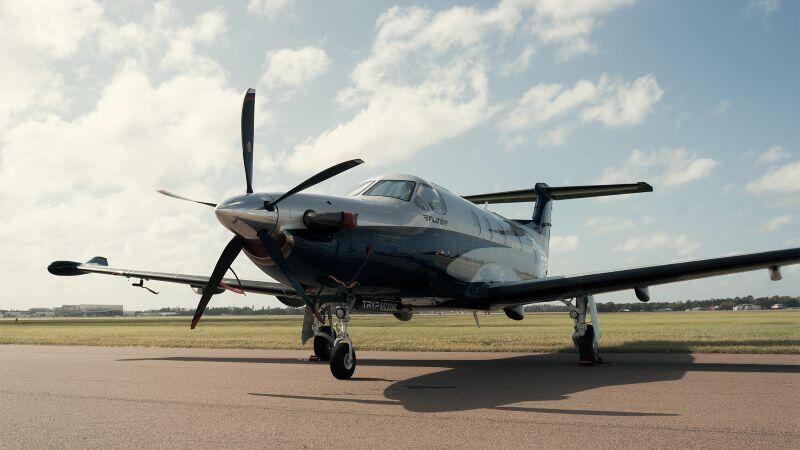
FlyUSA manages about 30 aircraft.
FlyUSA is targeting continued fleet growth and potential acquisitions as demand for private aviation remains resilient despite rising operating costs and tighter availability of newer used aircraft.
The Clearwater, Florida-based company manages about 30 aircraft, roughly half of which are in its charter pool, founder and CEO Barry Shevlin said. FlyUSA aims to add about two aircraft per quarter and is also evaluating acquisition opportunities involving smaller operators with roughly five to 15 aircraft.
“I’d be surprised if we went a full two years from now without having some type of add-on in a key strategic market,” Shevlin said.
FlyUSA began as a charter brokerage and today generates about half of its revenue from brokerage, with the remainder coming from aircraft management, charter and maintenance activities. Shevlin said the company has about 2,500 clients and has consistently added roughly 50 new customers per month over the past three years.
Demand has remained strong, although higher fuel prices and other cost pressures have affected customer behavior. Shevlin said comparable charter itineraries are now roughly 20% more expensive than a year ago, with fuel accounting for as much as 25% of flight cost.
He also pointed to higher fixed-base operator (FBO) fees, hangar costs and maintenance expenses as persistent pressures. Repair and maintenance costs for aircraft have risen significantly since 2019, he said, while consolidation in the FBO sector has contributed to higher pricing and special-event fees.
“More and more FBOs are now owned by private equity, and they’re trying to use every lever they can to squeeze additional margins out,” Shevlin said.
At the same time, FlyUSA is seeing tighter supply in the pre-owned aircraft market, particularly for later-model business jets.
“If you’re looking for a heavy or an ultra-long-range plane that’s less than 15 years old, there’s just not a lot of inventory out there,” Shevlin said.
He attributed part of that demand to wealth creation tied to AI and data-center development. While FlyUSA is not necessarily carrying employees of major AI companies, Shevlin said it has seen meaningful business from customers involved in building data centers and traveling frequently between project sites.
FlyUSA also recently launched a fractional ownership product, filling what Shevlin described as a gap in the company’s portfolio. He said some aircraft owners have sold their jets and moved into fractional programs, prompting FlyUSA to offer a way to retain those customers.
The company is also developing an internal and customer-facing technology platform called Fusion OS, which connects trip management, maintenance, flight operations and invoicing. Shevlin, who previously ran technology companies before entering aviation, said FlyUSA is trying to replace the industry’s still-common reliance on emailed PDF trip sheets with a more integrated digital experience.
Over the next 18-24 months, Shevlin expects continued evolution rather than major disruption.
“Nothing moves quickly in this industry,” he said.

Related Content