This article is published in Business Aviation & AAM Report part of Aviation Week Intelligence Network (AWIN), and is complimentary through May 28, 2026. For information on becoming an AWIN Member to access more content like this, click here.

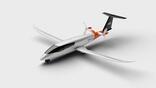
The Norwegian startup developing the Noemi electric flying boat has rebranded from its former name of Elfly and is targeting first flight of a prototype by the end of 2027. The newly renamed NOEMI Aerospace is envisioning a range of derivative versions of what the firm now describes as the Noemi platform, targeting missions including skydiving operations, military and search-and-rescue applications, and aerial fire-suppressant waterbombing in addition to its original iteration as a passenger aircraft.
“The business case always wins,” company founder Eric Lithun said during an online briefing for media held May 18. “It’s really important to keep a focus on that, because [the business case] is what will make you a successful aviation startup.”
The initial purpose for Noemi was to provide a zero-carbon link between coastal communities in Norway. Towns and cities may be relatively close, but traveling between them by road can require long drives to the first bridge across the fjord that separates them. A seaplane could complete the same journey in minutes. As development on the aircraft has progressed, the NOEMI team has begun to see broader potential in the basic design—and expanding the mission sets Noemi can carry out bolsters the business case as the company begins to look for new investment. (Lithun is the largest single investor in the company, which is presently doing a Series A funding round.)
The expansion of the mission set is possible, Lithun argues, because the firm is pursuing a clean-sheet design for a seaplane. Most current seaplanes are aircraft originally designed to fly from conventional runways, which then have floats and other marine equipment added, resulting in suboptimal performance and with limited capacity to be further adapted. Additionally, the firm has been able to identify areas for improvement in the baseline design which give yet more opportunity for operational flexibility.
“We’ve been out on the sea now for years testing subscale models with various characters, various hull types, etc.,” says Tomas Brødreskift, co-founder and chief technology officer. He argues that the bulk of the design work done on extant flying-boat platforms was carried out in the mid-20th century, and certain inescapable operational realities—such as the effect of spray during take-off and landing—were “not really taken that much into account.”
NOEMI’s subscale models have helped the firm arrive at a new geometry for the aircraft’s hull design, which incorporates two independent chines rather than the single ski-like design found on earlier seaplane hulls. A chine that runs from beneath the nose acts at lower speeds while the second, placed further back and lower on the fuselage, takes effect at higher speeds.
“This has proven to be a very, very good overall design both for the spray characteristics, but also for lower drag,” he said. “We get up on step and out of the water quicker, and we can clearly see that we’re reaching our performance levels aerodynamically.”
Those required performance characteristics include a stall speed of 58kt and being able to cruise at 110kt while drawing less than 330kW, all of which have been validated through simulation, wind-tunnel tests and subscale model flying.
The company has begun building a first prototype—TAC1—and is planning a follow-on demonstrator (TAC2) that will be more representative of the final design. Construction of the composite wing has begun—its design including space for fuel tanks, should a customer require a hybridized or traditionally fueled variant for additional range or performance.
A decision has been made to use commercially available components from the automotive industry, combined with in-house expertise, to build the powertrain for TAC1. This leaves the option open to develop and certify the powertrain as part of the platform—or to buy in a separate powertrain, should a more efficient or effective one become available.
“Effectively, the aircraft is agnostic with the propulsion system,” said Simon Bendrey, who joined the company as chief engineer and head of design six months ago, after more than 30 years with Airbus, Dufour and others. The firm will be certifying under the European Union Aviation Safety Agency’s CS-23 level three, which applies to utility and passenger aircraft with up to nine seats. But they retain the option of certifying at CS-23 level four, where weight and passenger limits can be increased.
“We’re limited to 5,670kg at level three, but the aircraft—and specifically the wing—is designed for more than that,” Bendrey said. “We can utilize that to increase the passenger capability or increase payload or add additional batteries or fuel to increase range, all of which increase operational performance to meet different requirements.” These, he said, could easily include the hull and payload expansions that would be required to support water scooping for aerial firefighting missions or taking the cabin up to 19 seats.

Related Content