
Aircraft Overview: Textron Beechcraft King Air B200GT, 250 & 26
Aircraft Overview: Beechcraft King Air B200GT, 250 & 260

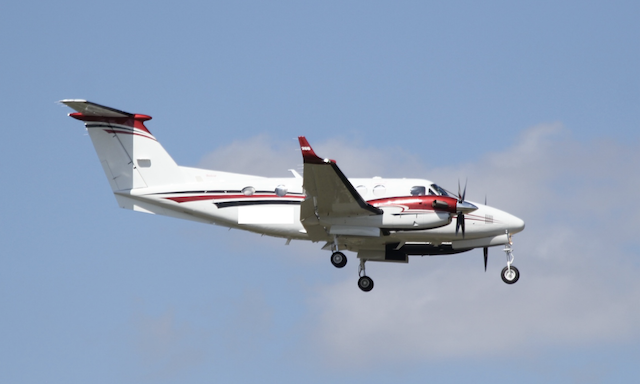
The Beechcraft King Air B200GT, 250 and 260 are commercial designations of Textron Aviation’s B200GT type.
That type received FAA approval on Nov. 16, 2007, and was initially marketed as the King Air B200GT, with the King Air 250 being unveiled by Hawker Beechcraft Corp. on Oct. 18, 2010.
Subsequently, Hawker Beechcraft announced on June 9, 2011, that the King Air 250 had been certified by the FAA.
A further-improved version of the B200GT type, marketed as the King Air 260, was unveiled by Textron on Dec. 2, 2020, with the company announcing on March 10, 2021, that FAA certification had been received.
Cabin
According to the FAA type certificate data sheet (TCDS) that includes the B200GT, a maximum of 15 seats can be accommodated, including the crew seats.
While the type is certified to have that many seats, both the King Air 250 and 260 are marketed as being able to carry nine occupants.
Passengers on those B200GT commercial designations are seated in a cabin that has a length of 16 ft. 8 in., height of 4 ft. 9 in. and width of 4 ft. 6 in.
In addition to those common cabin dimensions, the baggage capacity weight (550 lb.) and volume (55.3 ft.3) of those King Air airframes are also the same.
Avionics
All commercial designations of the B200GT type are certified to be operated by one pilot, with the airplane’s pilot(s) operating the King Air 250 and 260 by utilizing avionics from Collins Aerospace.
Although the former King Air was originally equipped with the avionics manufacturer’s Pro Line 21 integrated avionics system, Beechcraft Corp. announced the certification of the Pro Line Fusion integrated avionics system for the King Air 250 on July 20, 2015, with the same avionics also being installed on the King Air 260.
The standard features of the King Air 250 and 260’s avionics include three 14-in. displays that are touch screen, an automated flight guidance system (AFGS), engine-indicating and crew-alerting system (EICAS), dual flight management systems (FMS) and communication/navigation radios, graphical flight planning, an integrated terrain awareness and warning system (iTAWS), synthetic vision and a traffic alert and collision avoidance system (TCAS II).
Also standard on the King Air 260 is Innovative Solutions & Support’s (IS&S) ThrustSense Autothrottle, as well as Multi-Scan weather radar.
Retail Values
Mission and Performance
The operating limitations of the B200GT type include a maximum operating speed and Mach number of 260-kt. calibrated airspeed (KCAS) and 0.52 Mach, respectively, as well as a 35,000-ft. maximum operating altitude.
Beyond those certified maximum speeds, both the King Air 250 and 260 are capable of a maximum cruise speed of 310-kt. true airspeed (KTAS).
Those versions of the B200GT type also have a common 1,720-nm maximum range that assumes no wind and standard conditions, a ferry mission flown at the long-range cruise speed, and when carrying National Business Aviation Association (NBAA) instrument flight rules (IFR) reserves.
Other performance specifications shared by the King Air 250 and 260 include a 2,111-ft. takeoff distance and 2,845-ft. landing distance, the former of which is based on an airplane operating from a dry, level and hard-surface (King Air 250)/paved (King Air 260) runway.
That takeoff distance also assumes no wind, standard conditions, and an airplane at the maximum takeoff weight (MTOW), while the King Air 260’s takeoff distance is also based on sea-level altitude.
Unlock the data behind the charts with Aviation Week Intelligence Network’s Fleet & Data Services. Learn more at aviationweek.com/bcaaircraftoverview.
Utilization Overview
Variants
Powering the commercial designations of the B200GT type are two Pratt & Whitney Canada PT6A-52 engines that have takeoff and maximum continuous engine limits of 850 shp.
The King Air B200GT, 250, and 260 are also limited to the same 12,500-lb. maximum MTOW and maximum landing weight, and the King Air 260 has an 8,830-lb. basic empty weight, 3,760-lb. useful load and 2,170-lb. maximum payload.
Among the improvements introduced by the King Air 250 were composite propellers and winglets, the latter of which were provided by BLR Aerospace and promoted as improving the airplane’s “efficiency in all phases of flight.”