
Aircraft Overview: Leonardo AW169
Aircraft Overview: Leonardo AW169
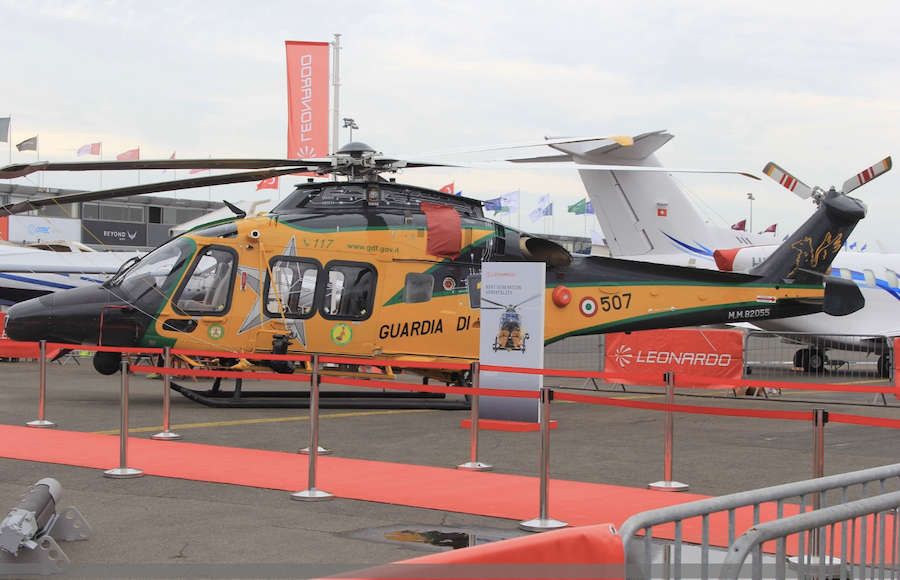
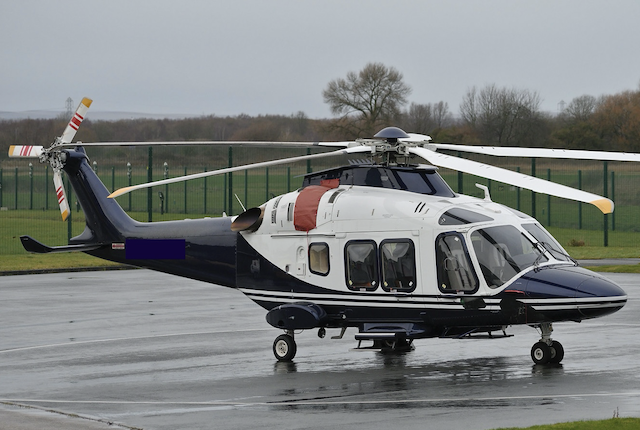
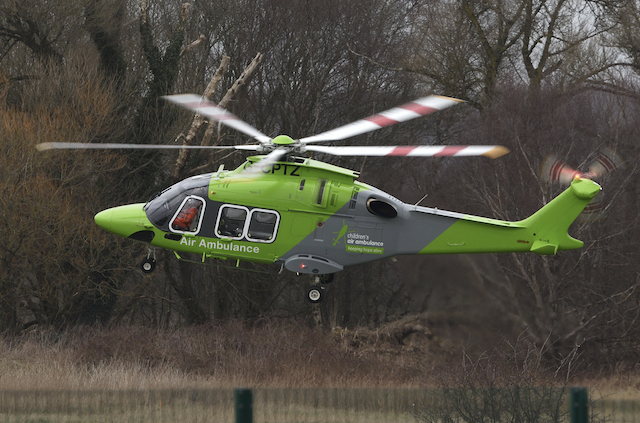
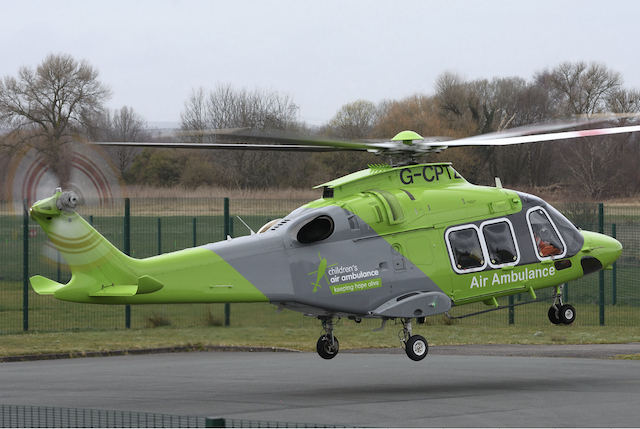
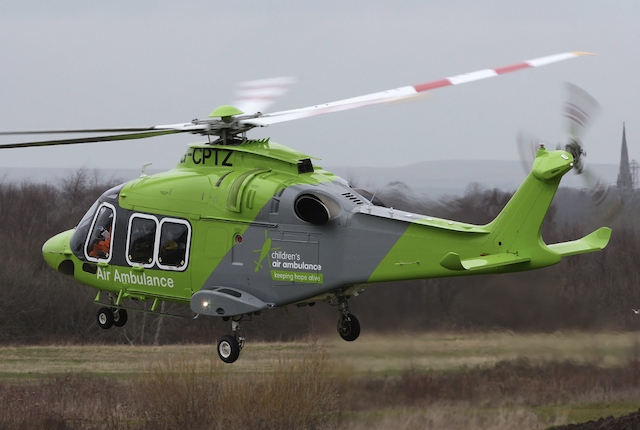
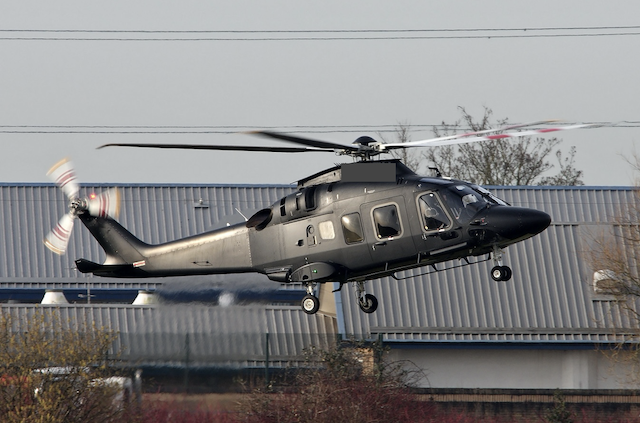
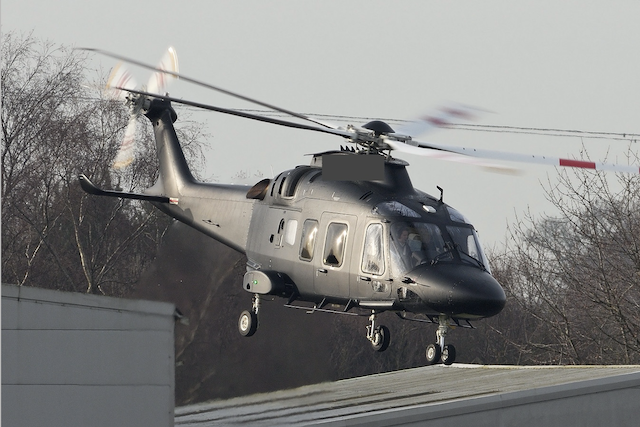
The AW169 is a twin-engine helicopter produced by European manufacturer Leonardo.
Launched in July 2010 at the Farnborough International Airshow and described as being in the light-intermediate category, the AW169 first flew on May 10, 2012.
Following the type’s first flight, the second and third AW169 prototypes flew in July and November 2012, respectively, with the fourth prototype making its first flight on Jan. 31, 2013.
The AW169 was subsequently certified by the European Union Aviation Safety Agency (EASA) on July 15, 2015.
View the Program Profile on Aviation Week Intelligence Network (AWIN).
Cabin
According to the EASA type certificate data sheet (TCDS) for the AW169, the maximum passenger seating capacity is 11, including 10 passengers seated in the passenger cabin and an additional “passenger in the cockpit in case of [a] one-pilot flight crew.”
Beyond that maximum passenger capacity, the helicopter’s cabin can be arranged in a number of different layouts, with Leonardo’s Agusta VIP brand promoting configurations that can seat between five and eight passengers.
Specific Agusta layouts for the AW169 include a six-passenger cabin with four reclining seats and two fixed seats, as well as another configuration that accommodates five passengers in reclining seats.
Marketed as having the largest in-class cabin, the cabin options for energy-services operators include a 10-seat high-density configuration and an eight-seat cabin that is International Association of Oil and Gas Producers (IOGP) compliant.
Furthermore, when conducting Harbour Pilot Shuttle (HPS) operations and maintaining wind turbine generators, cabin configurations that are “specifically tailored” and which seat as many as seven passengers are available.
When the AW169 is flown by security services operators, the helicopter’s cabin is described as being “optimized for rapid reconfiguration” and able to carry up to 10 officers.
For “medical and rescue services” missions, the cabin can accommodate as many as “[two] stretchers either longitudinally or transversely, along with a full suite of advanced life support equipment.”
Avionics
In day and night visual flight rules (VFR) conditions, as well as in instrument flight rules (IFR) conditions, the AW169 is certified to be operated by one pilot. However, during night-vision goggles (NVG) operations, two pilots— "or one pilot and one crew member”—are required.
When it was certified in 2015, Leonardo noted that this helicopter has an avionics suite that is “fully digital, NVG compatible” and which has three 8 X 10-in. displays.
Additional avionics features include automatic dependent surveillance–broadcast (ADS-B) Out capability, a helicopter terrain awareness and warning system (HTAWS) and a traffic alert and collision avoidance system (TCAS II).
Mission and Performance
The AW169’s operating limitations include an all-engines-operating (AEO) never-exceed speed (VNE) of 165-kt. indicated airspeed (KIAS), a limitation that is reduced to 152 KIAS when a “Kit Skid Landing Gear System" is installed.
The maximum operating altitude also varies depending upon the helicopter’s weight and the installation of a “Kit Enhanced Performance”.
Airframes that have wheeled landing gear and which are operated at or below a gross mass of 10,141 lb.—as well as those operated at weights greater than that which have a “Kit Enhanced Performance installed”—are limited to a 15,000-ft. maximum operating altitude.
Beyond the certified VNE, Leonardo states that the maximum cruise speeds—in International Standard Atmosphere (ISA) conditions and at 5,000 ft., maximum continuous power (MCP) and the maximum gross weight (MGW)—are 141 kt. for helicopters equipped with skid landing gear and 144 kt. when outfitted with wheeled landing gear.
Also assuming a helicopter operated in ISA conditions—as well as at 5,000 ft. and MGW—the AW169’s maximum endurance and maximum range are 4 hr. 14 min. and 424 nm, respectively.
Unlock the data behind the charts with Aviation Week Intelligence Network’s Fleet & Data Services. Learn more at aviationweek.com/bcaaircraftoverview.
Variants
This Leonardo type is powered by two Pratt & Whitney Canada PW210A or PW210A1 turboshaft engines, the latter of which are installed on airframes with the previously noted “Kit Enhanced Performance.”
The respective maximum gross weights for AW169 equipped with skid and wheeled landing gear are 10,582 lb. and 10,141 lb. Additionally, an increased gross weight of 10,582 lb. is certified for helicopters with wheeled landing gear, while an 11,243-lb. gross weight is possible for airframes equipped with skid landing gear.