Sydney Airport is Australia’s Gateway of Growth
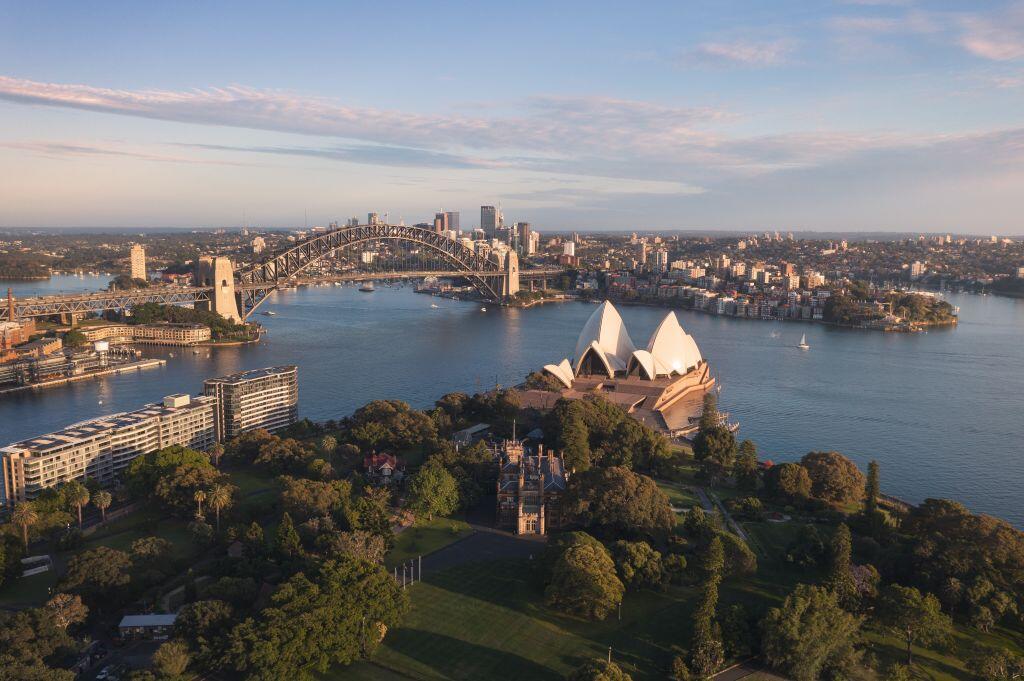
Sydney Airport (SYD) is far more than a transport hub — it’s the gateway to Australia and a key piece of the country’s economic and tourism infrastructure.
For more than a century, it has connected Australia with global markets, visitors and businesses, and today it remains the first point of entry for almost half of all international visitors arriving into the Australia (Tourism Research Australia’s International Visitor Survey December 25).
And with Greater Sydney projected by the Australian Federal Government’s Centre for Population to remain Australia’s largest city well into the future, the airport is preparing for the next phase of growth.
Today, Sydney Airport handles more than 40 million passengers a year and continues to position itself as open for business, with strong demand, major infrastructure investment and valuable peak slots still available for airlines.
The Gateway to Australia is Open for Business
For many travellers, Sydney Airport is their first experience of Australia - and it opens onto one of the world’s most recognisable and liveable cities.
Sydney was named the World’s Coolest City in Condé Nast Traveller’s 2024 Readers’ Choice Awards and continues to strengthen its reputation as Australia’s leading destination for business events and international conferences, according to the International Congress and Convention Association (2024).
The airport’s location is a major advantage. Just 8 kilometres from Circular Quay and Sydney’s eastern beaches, passengers can move from terminal to city in around 15 minutes by train. The Sydney Opera House alone attracts 10.9 million visitors annually on site (Sydney Opera House Annual Reports), while major sporting, cultural and entertainment precincts sit within easy reach of the airport.
Another of Sydney’s iconic visitor attractions is Taronga Zoo Sydney, a wildlife sanctuary and accommodation allowing visitors a unique immersive wildlife experience right in the heart of the city. Sydney Airport has become the inaugural partner of a rewilding project with Taronga Conservation Society Australia which will invest over 10-years to protect two million hectares of threatened woodlands. This effort to restore vital habitat at scale supports the airport’s ambitious Net Zero target.
Sydney’s Unmatched Advantage
Sydney Airport sits at the centre of Australia’s largest economy and wealthiest population catchment. As the country’s primary financial and corporate hub, Sydney continues to attract business investment, international talent and major events, making aviation connectivity increasingly important.
The airport services the nation’s largest catchment area, including 42 of Australia’s 45 wealthiest postcodes within the surrounding region (Australian Bureau of Statistics SEIFA 2021).
Population growth is also expected to continue strongly across Greater Sydney, with forecasts projecting almost 13% growth between 2024 and 2035 (Centre for Population projections). That growth is expected to drive continued demand for aviation, tourism, freight and business travel over the coming decades.
The Best Experience for Leisure
Sydney’s global appeal is supported by a year-round calendar of major events and international drawcards. From the New Year’s Eve fireworks on Sydney Harbour to Vivid Sydney during winter, the city continues to attract visitors across every season.
In 2025, the Sydney Marathon joined New York, London, Boston, Tokyo, Chicago and Berlin as the seventh member of the Abbott World Marathon Majors, while Sydney will also host the Men’s Rugby World Cup 2027 final.
Building for the Future
Sydney Airport CEO, Scott Charlton, says Sydney Airport is continuing to work closely with government and airline partners to support future growth.
“We’re creating the right environment for airlines to commit, by demonstrating the demand, building strong partnerships and working closely with both government and airlines to turn interest into new services,” he says.
Sydney Airport forecasts it will continue to handle around 80% of passenger traffic across the Sydney basin through to 2045.
Sydney Airport’s draft 2045 Master Plan, published in September, projects annual passenger numbers to grow to 72 million by 2045 - around 75% higher than current levels - with international passengers expected to make up roughly half of total traffic.
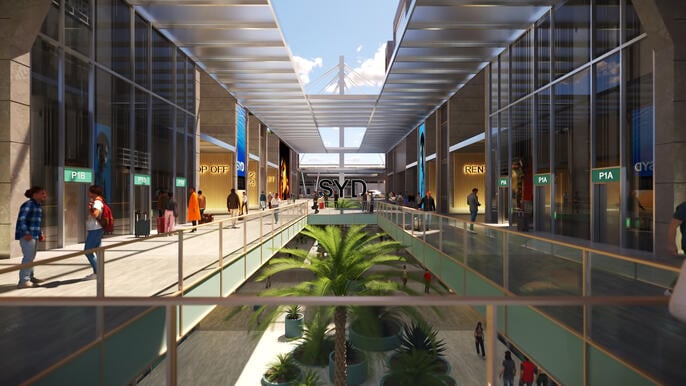
To support that growth, Sydney Airport is progressing a major pipeline of infrastructure upgrades. This includes the A$200 million ($130 million) T2 upgrade program aimed at reducing kerb-to-gate times to around 15 minutes, alongside longer-term plans to transform and integrate the T2 and T3 precinct into a more connected domestic terminal experience.
The broader T2/T3 redevelopment will also support additional international capacity, with up to 12 new international gates planned through the project and a further two international gates to be added through expansions at the T1 international terminal.
“This will be a first for Sydney Airport and will make it easier for passengers to move between regional, domestic and international flights, while improving comfort, efficiency and flexibility,” Charlton says.
Cargo also remains a major part of the airport’s long-term growth strategy. Annual airfreight volumes are forecast to more than double from 600,000 tonnes to 1.4 million tonnes by 2045, supported by investment in taxiways, aircraft parking stands and upgraded freight infrastructure.
Sydney Airport released its draft Master Plan 2045 on 15 September with the final version scheduled for publication this June.
The Future is Bright for Sydney Airport
Sydney Airport’s role continues to evolve beyond simply moving passengers from one destination to another. As Australia’s largest international gateway, it remains central to the country’s tourism industry, business connectivity and economic growth ambitions.
With significant investment planned across terminals, airfield infrastructure and passenger experience, the airport is positioning itself to accommodate future growth while maintaining its role as the primary gateway to Australia for decades to come.
Related Content