This article is published in Air Transport World part of Aviation Week Intelligence Network (AWIN), and is complimentary through Aug 24, 2026. For information on becoming an AWIN Member to access more content like this, click here.
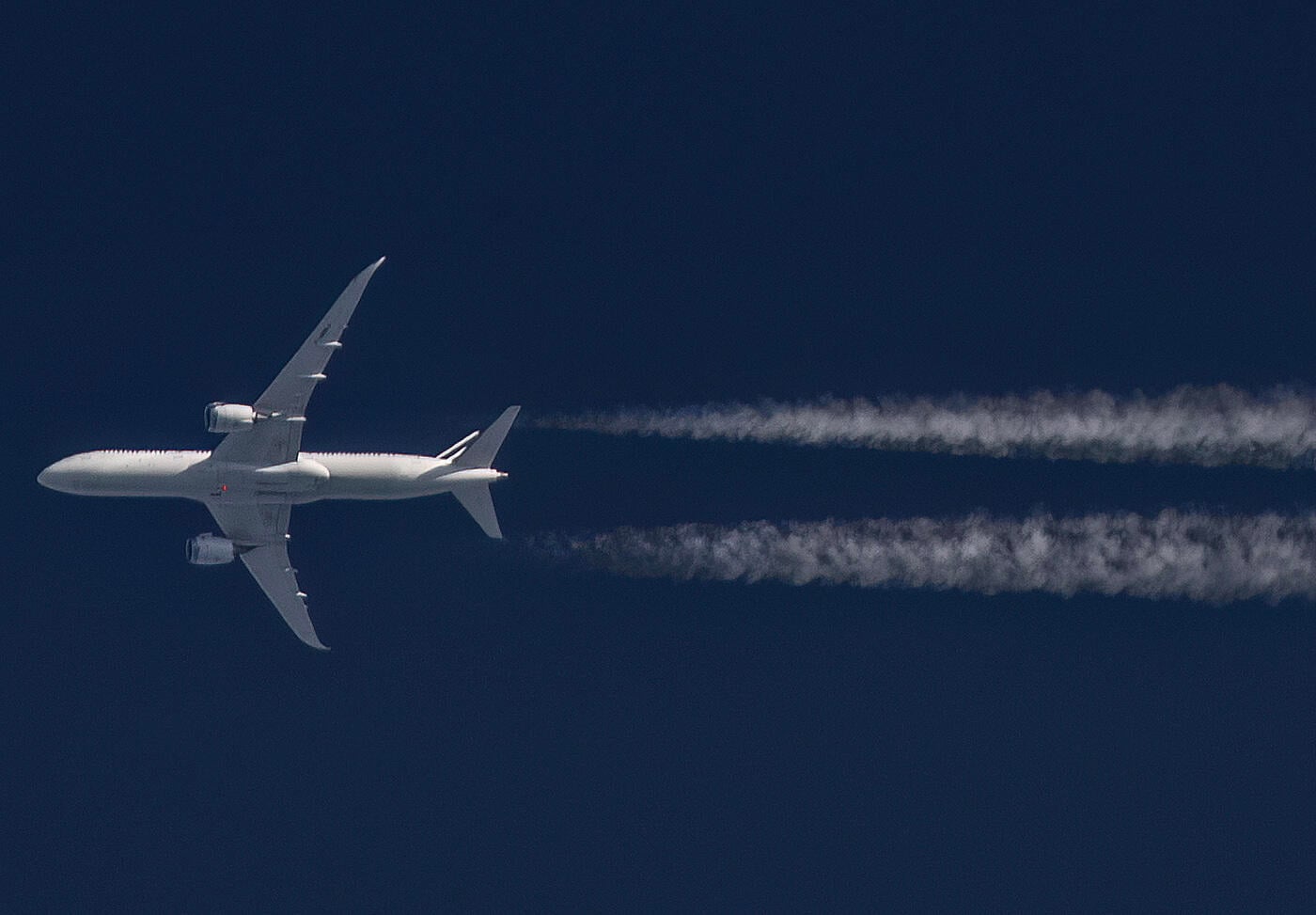
FARNBOROUGH, England—UK air navigation service provider NATS plans to stage a major contrail management trial later this year, as attempts to limit or reduce the warming effects of contrails intensify.
Non-CO2 climate-warming phenomena like contrails have come under increasing scrutiny in recent years as potentially having as great an effect on the climate as aircraft exhaust emissions.
“We’ve been working with government and a collection of organizations like Google, the [UK] Met Office and Cambridge University, at the behest of the government, to run a large-scale contrail management trial over the North Atlantic this winter,” NATS’ sustainability director, Ian Jopson told ATW at the air show.
“We’re waiting for ministerial sign-off [for the trial],” Jopson said. “We’ve been working with airlines like EasyJet on individual contrail avoidance flights. It’s quite easy to do a single flight, but in a network that handles 2.5 million flights a year, it’s more difficult.” Noting that the air traffic control system operates at all hours, “It’s a bit like trying to change the tires on a Formula 1 car while it’s moving,” Jopson said.
The trial is provisionally scheduled for the relatively quiet winter months, from November until February. This is partly to take advantage of lower volumes of traffic across the North Atlantic at that time and partly because the ice-supersaturated regions (ISSRs) that cause contrails are more prevalent over the winter.
The trial will identify ISSRs and look at several potential ways of minimizing contrail creation. “There is a range of solutions,” Jopson said. “One is flight planning, so pilots know where ISSRs are and can file flight plans to avoid them. There is also the option of controllers directing aircraft to climb or descend to avoid them; ISSRs are quite large, but quite thin, so it’s a case of deflecting aircraft by a couple of flight levels.”