This article is published in Aviation Week & Space Technology and is free to read until Jan 14, 2026. If you want to read more articles from this publication, please click the link to subscribe.

Opinion: A New Approach To Resilient Performance In Aviation Safety
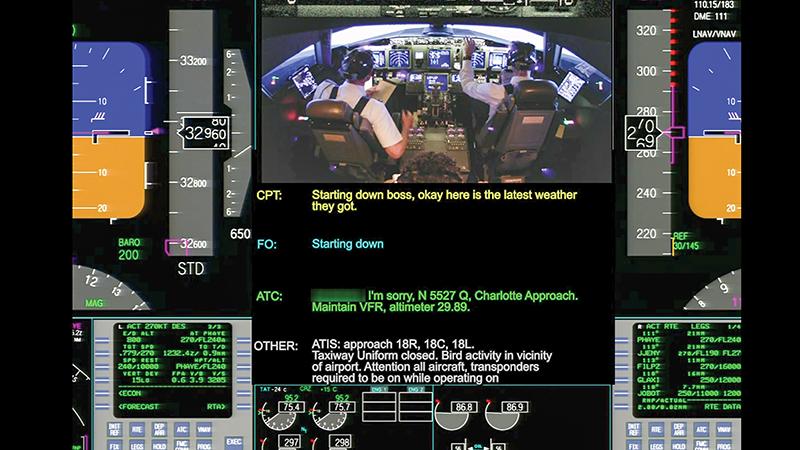
flight simulator monitor

An Embry-Riddle and NASA team analyzed captioned video from simulator sessions to identify positive pilot performance.

Credit: Embry-Riddle

While aviation tends to focus on learning from mistakes—and rightly so—the potential to learn from positive outcomes often goes unrecognized.

Jon Holbrook, a cognitive scientist specializing in aviation at NASA’s Langley Research Center, says that pilot intervention has “kept millions of flights safe.”

Pilots intervene to manage aircraft malfunctions on a fifth of routine flights, according to a 2013 joint report by a team that analyzed safety and operational data from the Line Operations Safety Assessment program.

Holbrook, by extrapolating this finding to worldwide jet data on 266 million flights between 2007 and 2016, estimated that pilots kept flights safe from aircraft malfunctions nearly 49 million times during that period. According to Holbrook, this means that crews intervened 157,000 times for every time human error was implicated in an accident during that same 10 years.

The reasons for that success are harder to measure. Investigative resources to date have focused on negative outcomes, for good reason. But as a result, the system is not designed to capture the routine yet unexpected events that pilots manage safely.

Research has also shown that pilots are not likely to reflect on their day-to-day challenges—from sick passengers to traffic conflicts—and how their planning, adaptation and coordination help them overcome these challenges. That is why a team of researchers from Embry-Riddle and NASA is working to find ways to capture systematically the practices that keep the U.S. aviation system—the largest and most complex in the world—so safe.

A key objective is collecting and analyzing data on specific pilot actions taken to manage operational difficulties. Researchers have already begun to address this knowledge gap.

First, they are using automatic speech recognition to analyze audio and video from simulator sessions in which pilots navigate real-world challenges, including heavy traffic, weather diversions, shifting winds and wake turbulence. The recordings also capture video of the pilots reviewing their performances as they narrate play-by-plays of their flights.

The Embry-Riddle and NASA team is now applying coding and natural language processing to identify resilient performance and evaluate the impact of the pilot debriefing sessions.

“When we analyze those data, we are looking for evidence of resilient performance—what did the crews do that helped them anticipate problems, plan for possibilities and coordinate their response?” explains Kristy Kiernan, associate director of the Boeing Center for Aviation and Aerospace Safety at Embry-Riddle and the project’s lead investigator.

Second, the team is developing a large language model to analyze NTSB accident reports and dockets for evidence of resilient performance, with the goal of maximizing lessons learned from these unfortunate events.

Major airlines are working with their pilots on various debriefing methods. Both American Airlines and Southwest Airlines have dedicated teams and resources for programs that collect data on positive performance. Directors of these programs say they have seen results.

Capturing more granular information about operations on the 45,000 daily flights in the national airspace will require new approaches. Fortunately, newer aircraft are collecting more data. Tools and techniques for analyzing it, including artificial intelligence, hold promise for “insights into routine performance that were not possible before,” Kiernan says.

Finally, aviation is entering a new era of automation and autonomous flight. An already congested airspace will need to accommodate a growing number of new entrants, including more drones and breakthrough categories such as advanced air mobility aircraft. Flight controls are evolving, and pilots will need to learn new technologies and flight capabilities.

For now, however, it is in the “human element where most of the resilience resides,” Kiernan says, and that resilience is what needs to be captured to reinforce safety in this emerging system.

Aviation has always benefited from a culture of continuous learning, and our industry must learn from all operations for this positive, resilience-based approach to work. We have created the world’s safest form of transportation through obsessively reporting our errors. Imagine what our industry could achieve if we examine our successes with equal rigor.

P. Barry Butler

P. Barry Butler is president of Embry-Riddle Aeronautical University.