This article is published in Aviation Daily part of Aviation Week Intelligence Network (AWIN), and is complimentary through Oct 23, 2026. For information on becoming an AWIN Member to access more content like this, click here.
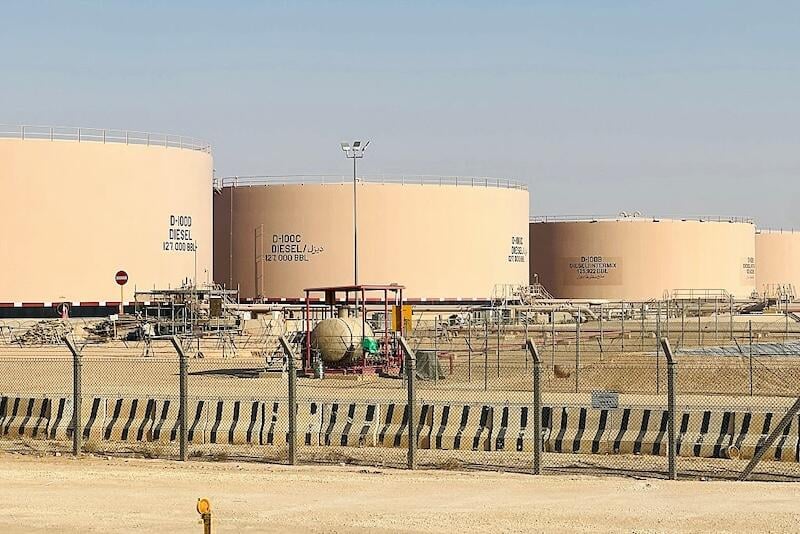
Fuel storage tanks near King Khalid International Airport in Riyadh, Saudi Arabia, on Sept. 19, 2026.
Airlines flying to or over Saudi Arabia face months of disruption from missile and drone attacks, according to an aviation risk management consultancy.
Speaking Oct. 15 during a webinar on the escalating Saudi-Houthi conflict, Osprey Flight Solutions Chief Intelligence Officer Matthew Borie said carriers needed to review the risks to each flight, taking account of where attacks were occurring, when they were happening and how air defenses were responding. Government advisories alone would not provide a complete picture, he added.
Osprey put the likelihood of continued fighting without a ceasefire over the next three to nine months at up to 60%, with Saudi airstrikes in Yemen and Houthi attacks on Saudi airports, shipping and energy facilities continuing. It assessed the chance of a new ceasefire during that period at 25%.
For airlines, that means preparing for further interruptions even where airports remain open, Borie said.
He explained that flights serving Jeddah and Dammam had repeatedly entered holding patterns during October, with some diverting as Saudi authorities responded to security threats. Carriers needed to carry additional fuel and reconsider their diversion options as airport availability changed, he said.
“If you lost access to using Riyadh Airport and are looking at other airports, you’re going to need to reevaluate these divert plans,” Borie added. “Carrying extra fuel is also necessary.”
He said the attacks on Riyadh’s King Khalid International Airport had begun before the fatal strikes in October.
According to Osprey, satellite imagery confirmed damage to fuel storage tanks following a ballistic missile attack Sept. 19. Another attack damaged two warehouses Oct. 5, before strikes Oct. 8, 10 and 11 hit passenger terminal areas. Osprey estimated that at least five commercial aircraft had been damaged, along with severe damage to parts of Terminals 3 and 4 and further damage to apron areas.
Borie also highlighted differing guidance from authorities including the FAA and European Union Aviation Safety Agency, stressing the need for airlines to assess their specific exposure.
The implications extended to flights serving neighboring Gulf states through Saudi airspace, he said. Airlines therefore need to account for both the Saudi-Houthi conflict and the separate confrontation involving Iran.

Related Content