This article is published in Air Transport World part of Aviation Week Intelligence Network (AWIN), and is complimentary through Aug 24, 2026. For information on becoming an AWIN Member to access more content like this, click here.

Narrowbody Cabin Upgrades Mean More Comfort But Potential Delays

Unum Aircraft Seating VP business development Alan McInnes foresees certification pinch-points for new single-aisle lie-flat seats.

Unum Aircraft Seating VP business development Alan McInnes foresees certification pinch-points for new single-aisle lie-flat seats.

Credit: Alan Dron

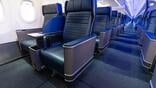
FARNBOROUGH—Single-aisle, lie-flat is shaping up as the next big airline cabin seating trend as more carriers join the move towards "premiumization," a UK seat manufacturer believes.

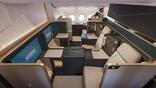
Unum Aircraft Seating showed a single-aisle version of its Unum 1 widebody business-class seat at the AIX expo in Hamburg in April and the seat generated significant interest, Unum VP business development Alan McInnes told ATW during this week’s Farnborough Airshow.

“One of the things that was clear from Hamburg was that we got a lot of enquiries about single-aisle. Single-aisle lie-flat was on people’s shopping lists, for platforms including the [Airbus] A321, [Boeing] MAX and even the [Airbus] A220.  People are seeing the commercial advantage they could have from operating the capability of the aircraft. The three aircraft are happy on a regional hop to a six-hour sector,” McInnes said.

“What I talk about to airlines is consistent comfort,” McInnes said. “Passengers don’t book an aircraft type, they book a seat and a cabin and they want consistency.”

The growth of premium travel demand means that more airlines are opting for a premium economy offering, which McInnes sees as increasingly becoming a "business minus" product rather than an "economy plus" one.

However, this trend could bring its own problems. For several years now, the increasingly complex certification of new seats has led to log jams that have left airlines waiting for long periods to receive their new seats. This is particularly so with business class, where seats are complicated pieces of machinery containing motors, actuators and electronics.

“I know from feedback from OEMs and airlines that premium economy is going to be the next pinch point in cabin seating,” McInnes said.

“At the moment, there’s a bottleneck at the regulatory level. [Seats] are a complex piece of certification.”

Further complicating the situation is the need to modify a seat for different aircraft types, which have differing cabin widths and track placings. Each version must go through the certification process.

McInnes noted that the UK CAA “is recruiting like billy-o to provide extra capacity, but it takes a little time for that capacity to spool up.”

Meanwhile, Unum is planning to install the first production units of its herringbone-configured Unum 1 business-class seat by the end of this year onboard four Airbus A330s—two -200s and two -300s—operated by Spanish ACMI carrier Wamos Air. Similar seats will then be installed on TAAG Angola Boeing 787s.

The Unum 1 was going through its final dynamic testing during the airshow. The company’s next product, the forward-facing staggered business-class Unum 2, is targeted for production around late 2027/early 2028.

Alan Dron

Based in London, Alan is Europe & Middle East correspondent at Air Transport World.