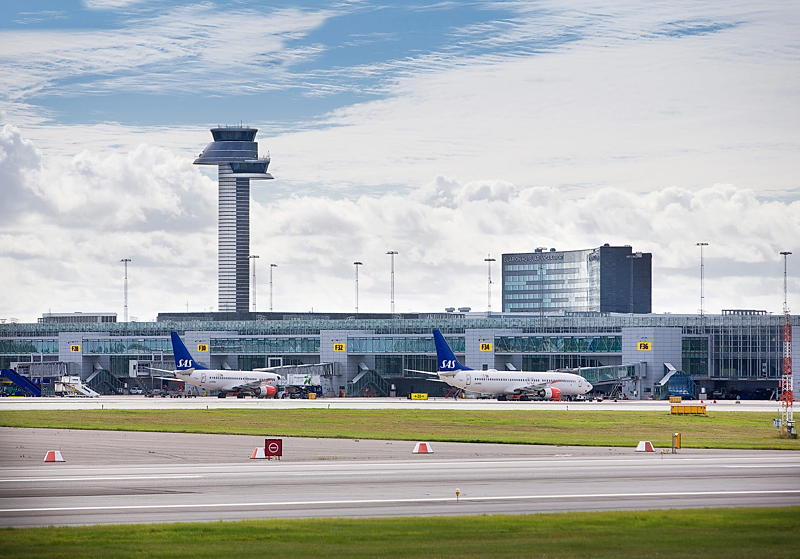
Stockholm Arlanda Airport.
Swedavia is prioritizing new links to North America and India as it seeks to strengthen Sweden’s international connectivity.
The state-owned airport operator has secured 30 new routes and welcomed nine new airline customers across its network so far this year, according to Aviation Business Director Elizabeth Axtelius.
Recent wins include China Eastern Airlines’ launch of flights between Shanghai Pudong International Airport (PVG) and Stockholm Arlanda Airport (ARN), alongside new Cairo services by EgyptAir and Air Cairo. Etihad Airways has also entered Goteborg Landvetter Airport (GOT) with flights from Abu Dhabi.
“Our key route development priorities are North America, India and an additional major hub in Asia or the Middle East,” Axtelius told Routes. “Strengthening connectivity to these markets is critical for Sweden’s accessibility, competitiveness and long-term economic growth.”
OAG Schedules Analyser data shows airlines offered approximately 14.1 million departure seats from Swedish airports during summer 2026, up 2.4% from 13.8 million a year earlier. Scheduled departures increased by a similar rate to about 93,300.
More News And Analysis From Routes World 2026
The number of airport pairs served rose from 366 to 391, while the number of scheduled operators increased from 55 to 63. Stockholm Arlanda remained the country’s dominant gateway, accounting for approximately 9.76 million departure seats, an increase of 2.4%. Goteborg Landvetter capacity grew 4.1% to 2.19 million seats.
However, Sweden lacked scheduled nonstop flights to India during summer 2026, while direct North American connectivity remained concentrated on a handful of routes from Stockholm. Air Canada served Toronto, Delta Air Lines operated to New York John F. Kennedy International Airport and SAS Scandinavian Airlines flew to Newark Liberty International Airport.
European operators are also driving much of Sweden’s current capacity growth. Ryanair increased its summer capacity by 10.7% to about 1.71 million departure seats, Norwegian grew 5.7% to 2.17 million and Wizz Air expanded 39.5% to approximately 359,300.
By contrast, SAS remained Sweden’s largest airline but reduced capacity by 5.9% to 4.85 million seats. Lufthansa mainline capacity fell 15% to about 521,100 seats, although Lufthansa City Airlines entered the market with approximately 64,300 seats.
“We see a clear market opportunity to strengthen Sweden’s direct connectivity, particularly as the competitive landscape in Scandinavia evolves and capacity increasingly concentrates around other hub airports,” Axtelius said.

Related Content