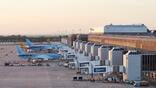
Amsterdam Schiphol Airport (AMS) is investing €10 billion ($11.2 billion) through 2035 to overhaul aging infrastructure, improve operational reliability and restore the passenger experience that once distinguished it among Europe's leading connecting hubs.
The investment is central to strengthening Schiphol's competitive position while accommodating future growth under restrictions on aircraft movements.
“We're still growing,” Royal Schiphol Group Chief Operating Officer Patricia Vitalis told Routes at Routes World 2026 in Frankfurt. “There are people thinking that we are shrinking the airport, but it's actually growing in terms of passengers,” she said, citing the use of larger aircraft as one factor.
Schiphol handled 66.8 million passengers in 2025 and expects approximately 69 million in 2026. Longer-term planning anticipates 90 million to 95 million passengers annually, with larger aircraft allowing traffic growth without a corresponding increase in movements.
OAG's 2026 Megahubs ranking placed Amsterdam third worldwide for international connectivity, behind Istanbul and London Heathrow. “We want to maintain the top three position in connectivity, but also ... in terms of operational performance,” said Joery Strijtveen, Schiphol's head of aviation partnerships.
The overhaul reflects an acknowledgment that traffic growth over the years has outpaced maintenance and infrastructure investment. “For the next decade, our plan is to invest in quality,” Vitalis said.
Schiphol invested a record €801 million in the first half of 2026 to address overdue maintenance, terminal improvements and electrical infrastructure. “We had to raise our charges to make up for ... the backlog of maintenance work that needs to be done,” she said, acknowledging the challenge of balancing investment with airline competitiveness.
A key milestone will be the opening of the new A-pier in April 2027, providing 11 aircraft stands and capacity for 7 million passengers annually. The wider master plan includes a proposed Terminal South, renovated piers, upgraded baggage systems and refurbished lounges, while retaining the single-terminal concept that supports short connections.
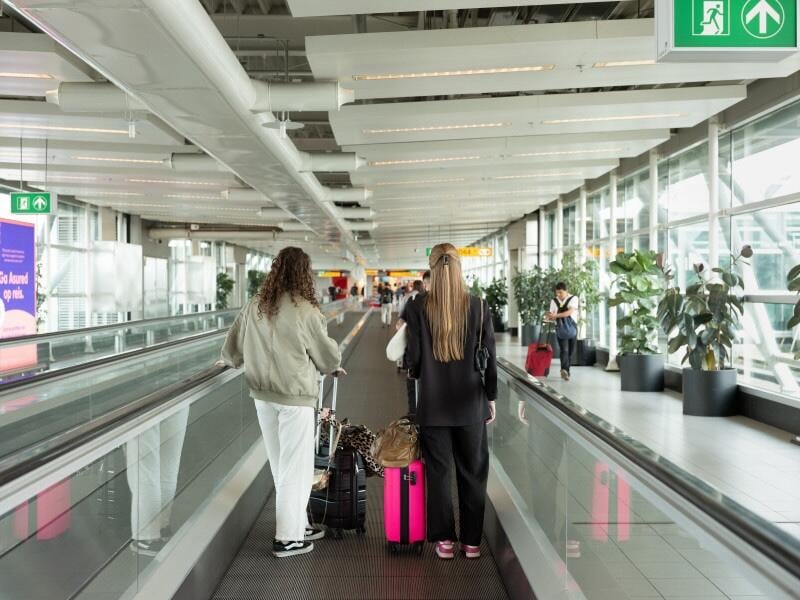
Vitalis said years of expansion and retail development had complicated the passenger journey. “We have to declutter,” she said. “We want to bring back the Schiphol DNA.” Lounge 1 has already been renovated, with improvements planned for Lounges 2 and 3.
Investment also extends to ground operations. Schiphol is testing baggage-handling automation and mechanical lifting aids to reduce physically demanding work, while electrifying ground operations and trialing aircraft towing procedures to reduce fuel consumption and emissions. Reducing employees' exposure to ultrafine particles is another priority.
Vitalis said the measures are increasingly important amid labor shortages, an aging workforce and high housing costs near the airport. “There's a new angle towards sustainability,” she said. “It's also to keep us as an airport attractive for employees to keep on working there.”
Airline costs remain a challenge. Schiphol introduced temporary discounts on airport charges to help carriers manage higher fuel prices, but Vitalis acknowledged the difficult balance between affordability and financing the overhaul. “We also feel our responsibility to make sure that in these kind of difficult times that we also help ... airlines,” she said. “At the same time, if you look back in the last 10 years, I think we were maybe too cheap as an airport.”
Vitalis said further tariff increases are not planned through 2030 under the current framework.
Strijtveen said Schiphol's strongest selling point is reliable operations rather than large financial incentives. “The times of big incentives are over for us,” he said. “Airlines do not fly for charity.”
That approach also means prioritizing network depth rather than simply adding destinations. Schiphol is targeting stronger frequencies and economically valuable connections, with nonstop service to Australia among its ambitions.
However, operational quality remains an immediate priority. Vitalis said the airport wants to rank among Europe's top international hubs for punctuality and passenger experience. “We're aspiring to be there,” she said.

Related Content