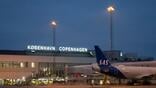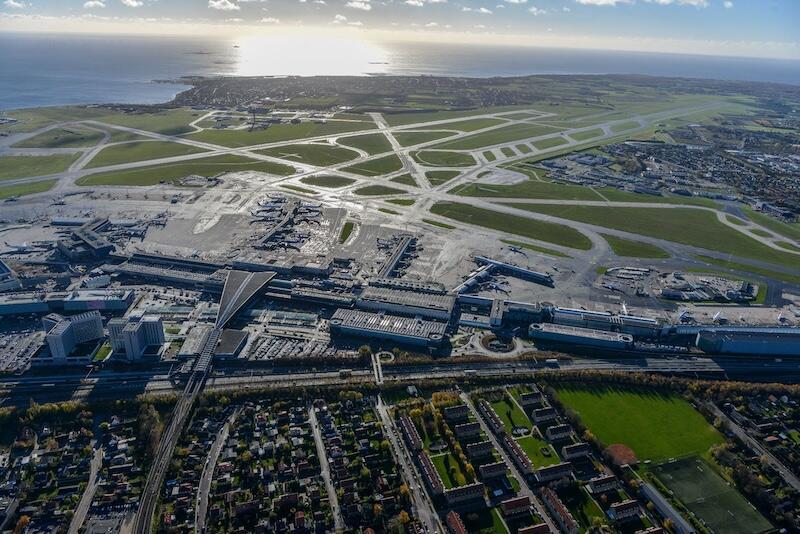
Copenhagen Airport (CPH) has outlined plans to handle up to 55 million passengers a year within its current site.
The potential capacity would be almost 60% above the 34.5 million passengers the airport expects in 2026. However, no target date has been given for reaching that level, and individual projects would require further approvals before construction could begin.
The framework would allow new stands for larger aircraft in the airport’s northwestern area, relocation and shortening of the crosswind runway, and expansion of terminals and passenger facilities. It is envisaged that development would proceed in line with demand.
“As a small country with an open economy, Denmark is deeply dependent on connections to the rest of the world,” CEO Christian Poulsen says. “They give Danish companies access to markets, bring tourists and investment to Denmark and connect us with the world.”
Denmark’s Agency for Planning and Rural Development is preparing the framework, with work expected to be completed in 2028. Its timetable provides for draft plans to be circulated to a government working group and the municipalities of Dragor and Tarnby in early 2027, followed by an eight-week public consultation in late 2027.
The process follows a December 2021 political agreement and land-use legislation adopted two years later to enable more efficient use of the airport’s existing site.
The expansion plans come as SAS Scandinavian Airlines continues to grow its share of capacity at its Copenhagen hub following Air France-KLM’s investment in the carrier in 2024. SAS will account for about 3.81 million departure seats in winter 2026-27, an increase of 8.4% from a year ago, lifting its share from 45.1% to 47.9%. Other airlines’ combined capacity is down about 3%. Norwegian and Ryanair are the next-largest operators, with approximately 755,000 and 670,000 departing seats, respectively.
The winter schedule follows a summer 2026 season with 13.35 million departure seats from CPH, up 5.9% from summer 2025. SAS’s summer capacity rose to 5.69 million seats from 4.93 million.
Environmental assessments will accompany the planning changes, while the Danish Civil Aviation and Railway Authority will prepare updated noise regulations.
“We are very aware that the many benefits of a strong airport come with a disadvantage for the environment,” Poulsen said. “Therefore, we must keep finding new ways to reduce our footprint. It is our responsibility to ensure that the increase in routes and travelers does not mean a corresponding increase in noise and pollution.”

Related Content