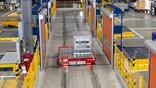
According to airport leadership, Brucargo Central's new development will increase storage capacity by 30% while reducing paved areas by 20% to create more green space and a more pleasant working environment.
Credit: Brussels Airport
Brussels Airport (BRU) has opened a redeveloped logistics site, expanding cargo storage capacity by 30%. The project, started in 2022, involved replacing eight buildings that BUR described as “outdated” with three larger facilities combining warehouse and office space. The overall site, called...

Subscription Required
Brussels Airport Opens $81 Million Cargo Logistics Center is published in Aviation Daily, an Aviation Week Intelligence Network (AWIN) Market Briefing and is included with your AWIN membership.
Already a member of AWIN or subscribe to Aviation Daily through your company? Login with your existing email and password
Not a member? Learn how to access the market intelligence and data you need to stay abreast of what's happening in the air transport community.
Related Content