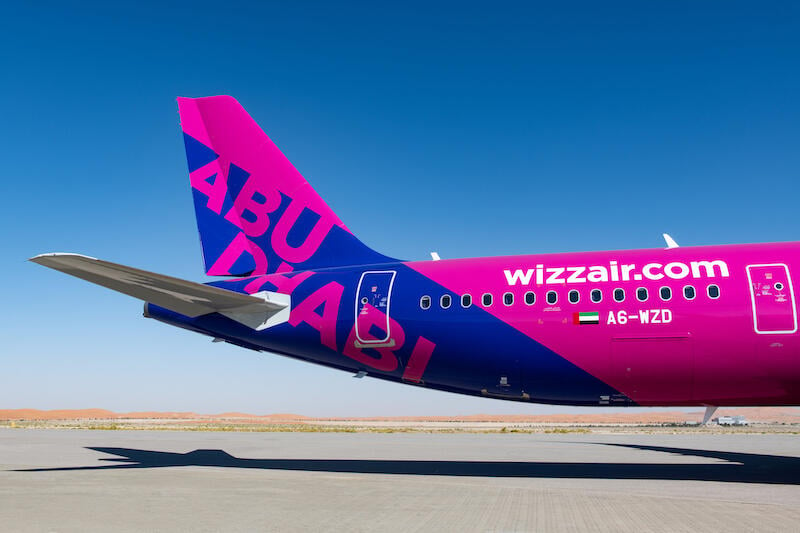
Wizz Air To Exit Abu Dhabi Venture, Refocus On Core European Markets

Wizz
Credit: Wizz Air

Wizz Air will close its Abu Dhabi-based joint venture from September, ending a four-year effort to establish a foothold in the Gulf that was hampered by operational constraints, regional instability and restricted market access.

The move represents a significant shift in strategy for the Hungarian ULCC, which will now refocus its growth on core European markets where it sees stronger long-term potential and profitability.

“We have had a tremendous journey in the Middle East and are proud of what we have built,” CEO József Váradi said July 14. “However, the operating environment has changed significantly. Supply chain constraints, geopolitical instability and limited market access have made it increasingly difficult to sustain our original ambitions.”

Wizz Air Abu Dhabi, a joint venture with Abu Dhabi sovereign wealth fund ADQ, launched in January 2021 and currently operates 148 weekly departures from Zayed International Airport (AUH) to 25 destinations. Seventeen of those routes are currently not operated by any other carrier, according to analysis of OAG Schedules Analyser data, meaning that destinations such as Astana, Chișinău and Tashkent will be left unserved from Abu Dhabi.

Operations will be suspended from Sept. 1. Wizz Air has begun contacting passengers with bookings beyond that date to arrange refunds or rebooking options. “While this was a difficult decision, it is the right one given the circumstances,” Váradi said.

Alongside its Abu Dhabi-based operations, Wizz Air also serves AUH from Krakow and previously operated flights from Budapest, Vienna, Rome, Katowice and Bucharest during the 2024–25 winter season.

The decision to close the Abu Dhabi subsidiary follows a broader strategic reassessment as Wizz Air grapples with engine reliability issues affecting its Airbus A321neo fleet—particularly in “hot and harsh” environments like the Middle East—coupled with persistent geopolitical tensions that have led to airspace closures in the region.

Earlier this month, the airline suspended several routes from Abu Dhabi. In June Váradi had signaled a pullback from regions with extreme operating conditions. He cited the need to optimize performance and extend engine life by reallocating aircraft to less challenging markets.

“Hot and harsh is a significant issue which we are going to address,” Váradi explained at the time. “That will not only lower operating costs and [extend the] engine lifetime, but it will also give more productivity on sectors.”

The carrier says the closure will allow it to redeploy aircraft and resources to core growth regions in Central and Eastern Europe, as well as select Western European markets such as Italy, Austria, and the UK.

According to the CAPA – Centre for Aviation Fleet Database, Wizz Air Abu Dhabi operates a fleet of 12 aircraft, comprising eight A321s and four A321neos. The carrier currently accounts for about 9% of seat capacity at AUH, behind Etihad Airways at 64% and Air Arabia Abu Dhabi at 9.1%, with approximately 34,400 weekly departure seats.

David Casey

David Casey is Editor in Chief of Routes, the global route development community's trusted source for news and information.