This article is published in Aviation Daily part of Aviation Week Intelligence Network (AWIN), and is complimentary through Mar 25, 2026. For information on becoming an AWIN Member to access more content like this, click here.
U.S. Airlines Navigate Fuel Spikes With ‘Natural Hedge,’ Strong Demand
Though faced with rising fuel prices just ahead of busy spring and summer travel, strong demand is helping U.S. airlines navigate the headwind, even allowing some to raise their revenue targets for the first quarter while contending with higher costs.
To offset expenses, carriers are raising fares and seeing no pullback—thus far—in bookings. Notably, the sudden fuel shock is the first such event to occur with no U.S. airlines still hedging for fuel, observed Delta Air Lines CEO Ed Bastian during the J.P. Morgan Industrials conference on March 17. Instead, airlines are using a “natural hedge,” United Airlines CFO Mike Leskinen noted. “And that is, that we pass through to the consumer, as the price of fuel rises.”
American Airlines, Delta, and United each cited a $400 million spike in fuel costs during the first quarter in comments made at the investors event, yet all highlighted strong demand trends, evidenced by some upward revisions to first quarter revenue. Delta now projects growth in the high single digits year-over-year compared to its previous forecast of a 5-7% increase. American expects growth of more than 10% versus an earlier forecast of an 8.5% rise.
“Sales for us have been very strong all quarter long,” Delta CEO Ed Bastian said. The carrier has posted eight of the ten highest sales days in its history so far this year, five of which were in March, with sales up by 25% in the last week.
That demand strength is spanning all segments–corporate, international, premium leisure, main cabin and domestic markets, explained Bastian. He pointed to a “very” modest decline in “exit Europe since the war started,” while noting that less than 20% of the company’s point of sale originates from the region.
American recorded eight of its top ten revenue weeks during the first quarter and is expecting greater than 10% unit revenue performance in March, with that strength continuing into April. United recorded the 10 biggest booking weeks in its history in the first 10 weeks of 2026 and has outlined a goal for revenue to fully offset fuel prices this year, a $4.6 billion target.
“To do that, we need RASM to be up another 8.5 points,” United CEO Scott Kirby shared. Pointing to booking trends and yields, “you can certainly make a credible case that—at least as the environment sits today—that we recover 100% of that increase in fuel price.”
Still aiming to reach margins in the low double-digits, rising fuel prices may actually push United into the mid-double-digits margin range, Kirby suggested, should the headwind persist and accelerate industry restructuring.
“If fuel prices stay higher for longer, that’s really where it gets interesting,” Kirby said. “There’s a reasonable chance that that happens and, if it does, I think it’s going to further accelerate the gap between the brand loyal airlines and everyone else.”
Tankers And Tailwinds
Delta believes its premium brand gives it a “position of strength” from which to price for higher fuel.
“We’ve shown over the last number of years an ability to cover and recapture fuel increases generally on kind of a two-to-three month lagging basis by the time you get the price increase,” Bastian said. But “we’ve seen pricing increase twice in the industry in just the last two weeks, [which] shows you that the industry also understands” the sense of urgency about covering higher fuel costs, he observed.
Delta is in a somewhat unique position by owning its Monroe Energy refinery in southeast Pennsylvania. The facility provides Delta with a meaningful hedge on crack spreads—refining margins for converting crude oil into jet fuel. It will not cover the jump in crack spreads entirely, and the upside isn’t likely to occur in the first quarter, “because it’s a little too soon,” Bastian explained. “But, starting in the second quarter, I think you’ll see the Monroe profits start to generate that.”
Meanwhile, Alaska Air Group described itself as “a little disadvantaged on the West Coast,” exposed to higher refinery margins and volatility. Overall, it pays roughly $0.20 more per gallon than other carriers, Alaska CEO Ben Minicucci said, describing an “audacious plan” underway to close that gap.
Alaska’s acquisition of Hawaiian Airlines gave the company access to fuel supply from Singapore, which—tankered to Hawaii—costs less per gallon than what Alaska pays on the West Coast, Minicucci shared, for “context of the disparity.” Prior to Hawaiian, 65% of the company’s fuel came from the West Coast. Post-Hawaiian, that stands at 56%, and Alaska is working, over the next two years, to take that reliance down to the low-to mid-40% range. To do that, it plans to tanker fuel from Singapore to Seattle.
“We’re working with some partners to build the infrastructure ... and reduce our gap of what we pay per gallon down from the rest of the industry,” Minicucci said. “We could see somewhere in the order of hopefully, a $0.10 impact per gallon within two years, if it works.”
Currently, Alaska uses about 100 million gal. of fuel per month, meaning a $1/gal. increase would equal roughly $100 million in extra monthly costs. On average, a fare increase of roughly $20/ticket can offset that cost, the carrier said.
“Right now, it’s sticking, and there’s a possibility of offsetting—even if it’s $1 per gallon at the worst case—but it would have to stick,” said Minicucci. “Fares have to go up to offset fuel, and we’ve been pleased that we’ve been able to get people to buy at the higher level so far.”
Alaska did not change its first quarter guidance, also seeing demand as the bright spot.
Watching The Wildcard
ULCC Frontier Airlines was among those to update its first quarter guidance, expecting higher fuel prices to add roughly $45-$50 million in costs for the three-month period, and widened its projected net loss per share range. But “our fuel burn per passenger is 40% below our peer set,” CEO James Dempsey said. “We start from a better place on a per passenger basis, given the high density business model we have, and the predominance of new aircraft in the fleet.”
With current supply-demand dynamics allowing airlines to pass on higher prices through fares, “We haven’t seen volumes skip a beat in terms of bookings ... since the oil crisis started,” Dempsey said. For now, Frontier will plan “on the basis that there’s going to be elevated fuel for a while,” he added. Strong demand, moderating competitive capacity, and ongoing revenue management initiatives are factors driving “meaningfully higher unit revenues,” and Frontier expects RASM to be up by a mid-teens percentage this quarter, versus prior guidance of greater than 10%.
For now, strong demand is supporting Frontier’s decision to maintain current capacity plans and watch how fuel and fares evolve. Any capacity adjustments, should they become necessary, would most likely fall in the fourth quarter, the carrier said.
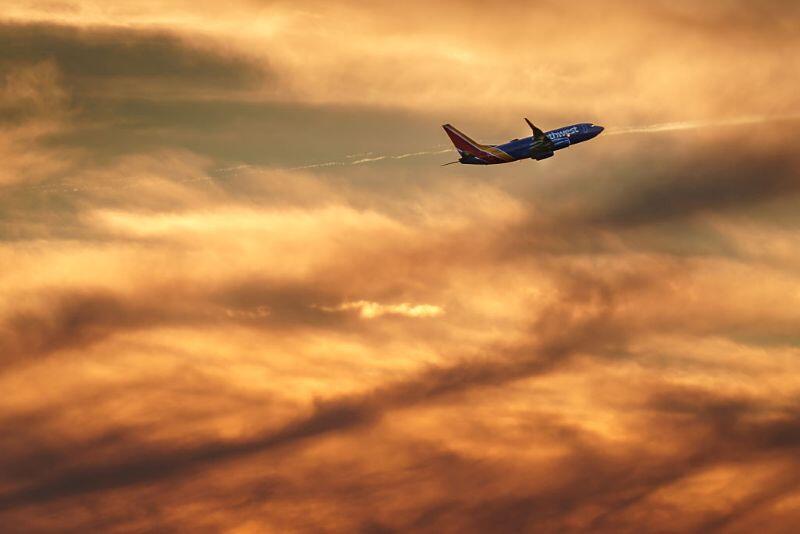
At Southwest Airlines, which just one year ago terminated its remaining fuel hedge portfolio, ongoing transformation initiatives are fully on track. “The only wildcard is fuel,” said CEO Bob Jordan. The carrier did not update guidance; EPS projections given in January still stand.
“Like you’ve heard from others, we’re seeing broad-based demand strength,” said Jordan. “That strength is in all geographies, it’s across all fare structures, it’s across business, it’s leisure, and as far as we have visibility, that demand strength is across all forward months.”
New products and offerings are “uniquely helping support and offset” the higher fuel costs, he told investors.
Whether rising fuel will be a short-, medium-, or long-term challenge remains unknown, hinging on the duration of the conflict in Iran and the status of the Strait of Hormuz. But airlines appear prepared to react as the situation evolves. “I think we’re getting used to this volatility,” United Chief Commercial Officer Andrew Nocella said. “If it’s not one thing, it’s another.”
For now, United is among the carriers readying itself for the potential of a drawn-out challenge.
“It is a possibility that oil prices stay higher for longer,” Kirby told investors. “There’s a lot of, ‘this is going to be over soon’ [commentary] with definitiveness. I’m not definitive about that. It’s certainly a possibility, but we’re going to prepare for it to be deeper and longer.”