This article is published in Aviation Daily part of Aviation Week Intelligence Network (AWIN), and is complimentary through Nov 12, 2026. For information on becoming an AWIN Member to access more content like this, click here.
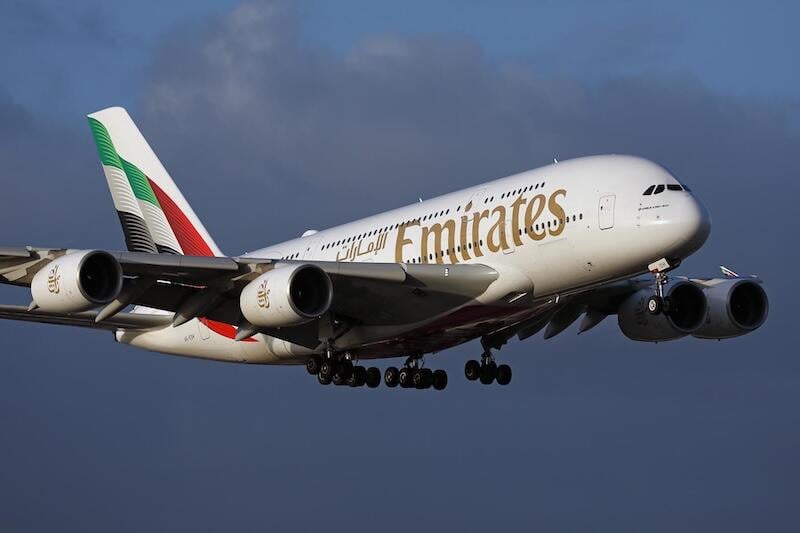
Emirates has suffered a massive fall in passenger demand in the first half of its fiscal year but still managed to remain profitable.
Demand for Emirates as measured in revenue passenger miles (RPM) dropped 25% on 17% less capacity in the March-September period. The load factor dropped from 79.5% to 72% in the six-month period. Cargo tonnage was down 1%.
The airline attributed the reduction to the fallout of military action in the region. The U.S. and Israel began attacking Iran in late February and the country retaliated with strikes against U.S. allies in the Gulf, including the United Arab Emirates (UAE). Drones and missiles even caused damage at Dubai International Airport. The UAE's airspace was only closed for a short period and Emirates has been rebuilding the network since March. However, many long-haul travelers from Europe and Asia temporarily avoided connecting in Gulf states and went for direct services.
“It has been a demanding six months,” Emirates Group Chairman and CEO Ahmed bin Saeed Al Maktoum stated. But he pointed out that the business model “stood the test” and highlighted cooperation among various stakeholders that “ensured the safe resumption of air transport in the aftermath of military activity across the Gulf region. The government's measures have also led to the easing of travel advisories to and through the UAE,” he said.
Emirates Airline saw revenues drop 13% to $15.5 billion as a result of the crisis. The reduction was lower than the fall in RPM, showing that the airline was able to raise fares to counter the higher fuel costs. However, operating profit was still down by two-thirds and reached $1 billion.
Total operating costs dropped by 2%, significantly less than capacity. The airline used 12% less fuel for the smaller program, but costs before hedging rose 60% more than in the first half of fiscal 2025-26. Because of its hedging programs, the airline actually only paid 13% more for jet fuel, which was the largest single cost item at 34%.
While passenger traffic was down significantly, the airline benefited greatly from the scarcity of sea freight capacity following the closure of the Strait of Hormuz. The relatively small reduction of 1% in cargo tonnage came at 52% higher revenues.
As of September 30, the airline was operating 91% of its previous network, although the number of passengers was down 22% over the two quarters.
“Throughout this time, we have not paused our investments,” Al Maktoum said. “Emirates and [the Dubai National Air Travel Agency] continue to commit significant resources to expand our fleet, enhance our products and services, and develop capabilities that will shape the future of our business. This is how we stay ahead and stay resilient to external challenges.”

Related Content