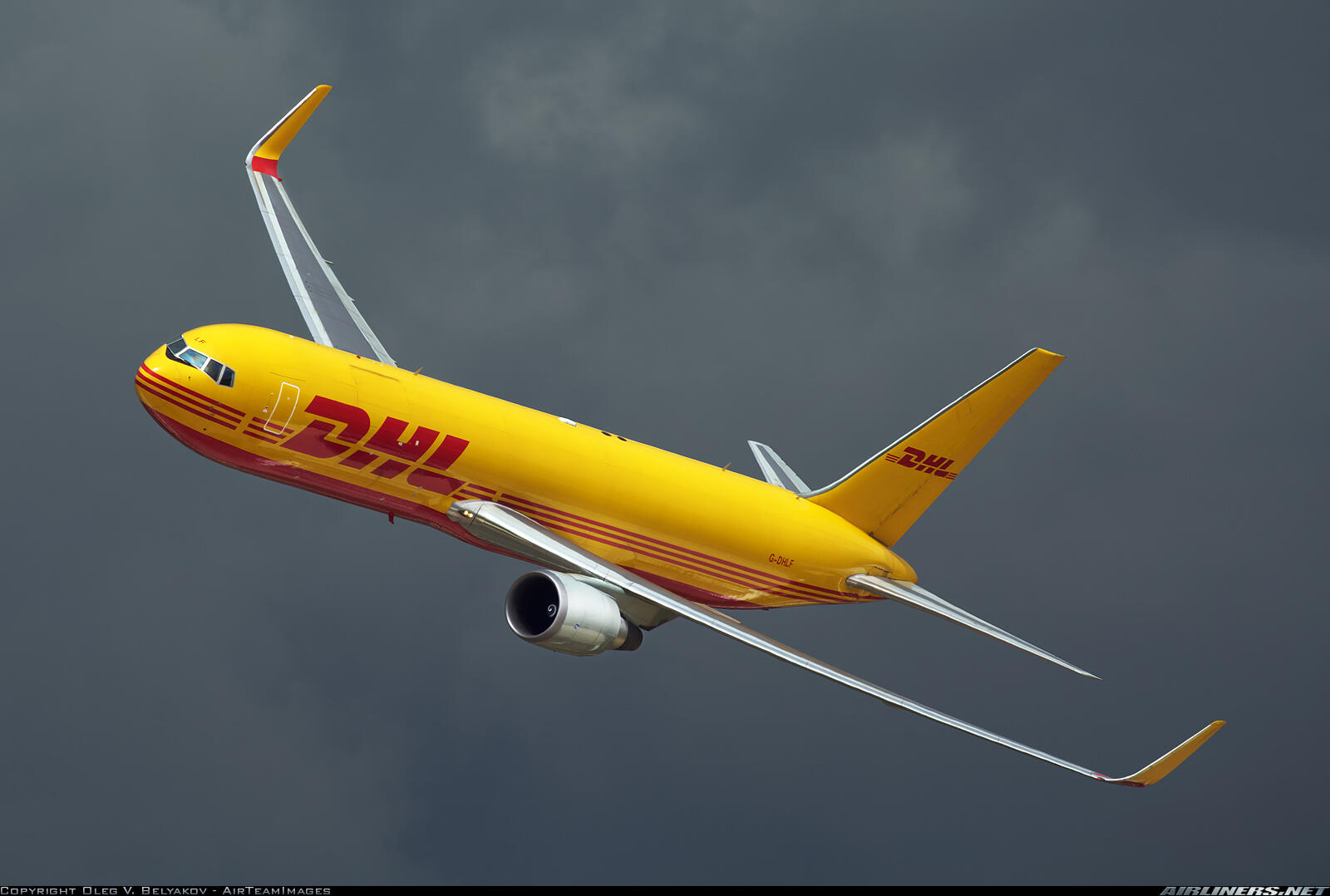
DHL upped its earnings outlook for the year by nearly 5% after a better-than-expected second quarter reflecting a more favorable environment for air cargo following last year’s trade turbulence.
“Compared with the prior-year quarter, which had been impacted by customs and other trade policy conditions, [DHL] recorded a return to significant revenue growth,” the Bonn, Germany-based cargo delivery giant said.
DHL will not release its full second-quarter earnings report until Aug. 5, but the company outlined a strong quarter in a preliminary earnings report issued July 7. DHL’s performance aligns with positive air cargo traffic numbers for May recently released by International Air Transport Association (IATA), which reported 6% year-over-year growth in cargo ton kilometers (CTKs) for the month, including 6.5% growth in international operations.
DHL said group revenue increased by more than 10% year over year in the second quarter, leading to earnings before interest and taxes (EBIT) of €1.85 billion ($2.11 billion), up 29.4% over the 2025 second quarter. The air cargo-driven DHL Express division posted EBIT of €1.2 billion for the June quarter, up 39.2% year over year.
DHL said full-year group EBIT is now expected to exceed €6.5 billion, up 4.8% over the previous outlook of €6.2 billion.
Lowered trade tensions between the U.S. and China following a May summit and the U.S. Supreme Court’s February rejection of the majority of President Donald Trump’s tariffs on countries around the world appear to be having a positive effect on air cargo. Airlines have also adjusted to shifting trade patterns that became apparent in 2025.
“May’s strong [global air cargo] performance coupled with macro-economic factors give cautious optimism for air cargo’s prospects over the remainder of the year,” IATA Director General Willie Walsh said in the organization’s May cargo report released in late June. “Trade and manufacturing output are both growing. Airlines have adapted operations to align with shifting demand patterns and supply chain needs. Meanwhile, yield growth and higher load factors are helping to recoup higher fuel costs.”
Walsh added that 2026 is “still a tough year, particularly as Middle East uncertainties weigh heavily on parts of the industry, but robust demand and airline resilience are clear.”
IATA noted that “Gulf-linked [air cargo] corridors were still severely disrupted [in May] by the ongoing conflict in the Middle East.”
Europe-Middle East CTKs declined 19.8% year over year in May, the third consecutive month of contraction, according to IATA. Similarly, Asia-Middle East CTKs were down 16.5% in May, also the third consecutive month of contraction.
In contrast, Europe-Asia CTKs rose 10% year over year in May, the 39th consecutive month of growth. Asia-North America CTKs, which contracted in 2025, grew 19.9% in May, the fourth consecutive month of growth. Europe-North America CTKs were up just 0.4% year over year in May.

Related Content