
Building On An Engine That Performs
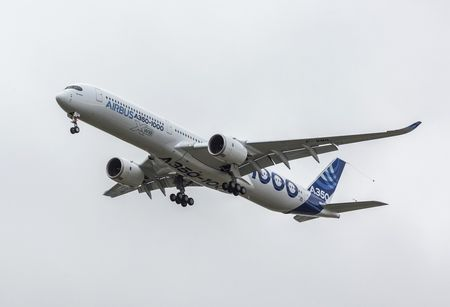
The Trent XWB-97 is the most highly utilised civil engine in service, powering aircraft for more than 13 hours per day on average. That position reflects both the operational demands placed on the engine and the confidence operators have in its day-to-day performance across long-haul networks.
Rolls-Royce is investing significantly in upgrading the Trent XWB-97 with a third phase of durability upgrades. The Phase 3 upgrade is firmly grounded in this experience. It is not a clean-sheet change, but a disciplined evolution of the current engine, built on its well-understood architecture and extensive in-service learning from the existing fleet.
Insight-led development
As experience across the fleet has increased, now surpassing 4 million engine flying hours, Rolls-Royce’s engineers have gained greater clarity on where incremental improvements deliver the most value. Today’s engine lasts 3-4 years in a benign operation and with data from more than 300 overhauls and inspection of over 40,000 parts from the core of the engine Rolls-Royce have amassed valuable data, from scans, imagery, and laboratory tests.
The Phase 3 upgrade package has been shaped directly by these operational insights, with the clear focus on time on wing and robustness under sustained high-demand operations for both passenger and freighter aircraft that provide the ultimate in long range capability.
Development activity is progressing well, and Rolls-Royce has completed a series of component-level and system-level tests across key elements of the upgrade package within the core of the engine’s High Pressure Turbine and Combustor designed to maximise life of the components. These tests are confirming that the performance achieves design intent, and the modifications are compatible with the current Trent XWB-97 configuration. These results have given Rolls-Royce confidence to move towards the next stage of the programme, ground assurance testing and flight test.
Evidence from in-service–representative engine strip
As part of this activity, Rolls-Royce has completed a detailed engine strip and inspection of upgraded hardware that had been operated under conditions representative of a heavy in-service duty. When assessed at a replicated cyclic life, the condition of the components was better than expected, with results reinforcing the understanding of durability margins and long-term robustness. Rolls-Royce completed over 400 days of maturity testing, and these tests coupled with a deliberately early thermal paint test have been used to refine and fine tune the component designs for the Entry into Service standard for 2028.
Testing focus
This is a busy year in the programme with seven engines being built. In the first half of the year, Rolls-Royce will conduct further validation testing using testing regimes aligned to expected operational profiles. This testing is aimed at providing greater evidence to demonstrate the long-term robustness and give confidence in the design going into the final phase of ground testing.

Before the year end the down-selected configuration will undergo durability testing to confirm the time on wing benefit. A further thermal paint test will also take place to confirm Rolls-Royce digital twin models are representative for their designs.
In the second half of the year, Rolls-Royce will progress into the assurance testing phase of the programme with engine builds for performance and systems tests as well as endurance testing.
Applying lessons to deliver at pace
The upgrade programme is also benefitting from lessons learned by the team on recent Rolls-Royce development programmes, for example the Trent XWB-84 EP where agile delivery approaches were taken, resulting in a new standard in delivering product attributes to specification and programme execution. Trent XWB-84 EP has surpassed its targeted 1% SFC improvement with in-service evidence demonstrating 1.8%.
In practice, this has sharpened Rolls-Royce’s focus on early learning, accelerated test-and-feedback cycles, early thermal paint testing, and clearer decision points as the programme matures. The goal is to reduce uncertainty earlier, maintain momentum through development, and ease assurance testing.
Confidence in delivery
The Phase 3 upgrade is being delivered using proven technologies, established production methods, and clear certification pathways. It is supported by the same engineering, industrial, and development team that sustain the Trent XWB fleets today.
In-service progress and 2026 highlights
Alongside upgrade development, the in-service fleet continues to mature and expand:
- The Trent XWB-97 fleet has now exceeded four million engine flying hours of operation
- Three new customers, Air India, Ethiopian and StarLux, joined the programme during 2025
- Dispatch reliability rose to 99.94% and is ahead of the Trent XWB-84 at this point in its life cycle
This growing service base remains central to how Rolls-Royce prioritises and validates both product upgrades and ongoing support.